
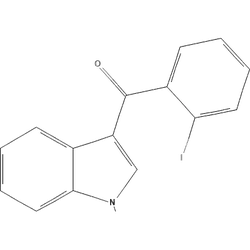
AM-694 Stats & Data
FCCCCCN1:C:C(C(=O)c2ccccc2I)c2ccccc12Receptor Profile
Receptor Actions
Effect Profile
CuratedMild visuals, headspace, and auditory effects with moderate body load
Tolerance & Pharmacokinetics
drugs.wikiTolerance Decay
User reports indicate tolerance builds within several consecutive days and decays over 1–4 weeks with abstinence; cross-tolerance with THC and other synthetic cannabinoids is expected but unquantified.
Legal Status
| Country | Status | Notes |
|---|---|---|
| Finland | AM-694 is scheduled in the "government decree on psychoactive substances banned from the consumer market". |
Harm Reduction
drugs.wikiAM-694 is an extremely potent CB1-preferring agonist originally developed for PET imaging; sub-milligram accuracy is mandatory. Consider volumetric dosing to mitigate measurement error with such potency. Forum-era reports describe a calm, plateauing high in some, but acute anxiety, tachycardia, confusion, and brief psychotic symptoms in others; several reports of short hospitalisations occurred shortly after its appearance in 2010. Severe and unpredictable adverse effects (e.g., agitation, seizures, loss of consciousness, acute kidney injury) are well documented for the synthetic cannabinoid class; AM-694’s safety profile is poorly characterised. Avoid unknown ‘herbal blend’ products and homemade sprays—batch-to-batch variability and mislabeling were common in early markets. Combining with CNS depressants (opioids, alcohol, benzodiazepines, GHB) increases risk of dangerous respiratory/CNS suppression; with stimulants it increases cardiovascular strain and panic risk. Start with very low test doses, wait full onset (especially oral), and avoid redosing loops—rapid tolerance and compulsion to redose are typical with potent synthetics. Prefer controlled vaporisation over direct flame to limit unknown pyrolysis byproducts; do not heat solutions on coils to charring. Reagent kits are generally unreliable for identifying synthetic cannabinoids; only lab-grade analysis can confirm identity/potency. Long-term safety is unknown; avoid frequent use and consider extra caution if you have cardiovascular, seizure, or psychiatric risk factors.
References
Data Sources
Cited References
- Bluelight forum: AM-694 and smoking blends WARNING (2010)
- Donohue BL et al. Synthesis and biological evaluation of AM-694 (2008)
- Donohue SR et al. Preclinical evaluation of [18F]AM-694 as CB1 PET imaging agent (2009)
- Drug Users Bible: AM-694
- EMCDDA: Europol 2011 Report on AM-694
- Grigoryev et al. Detection of urinary metabolites of AM-694 (2013)
- PubChem: Compound Summary for CID 10491092 (AM-694)
Additional references
- PubChem Compound Summary for AM-694 (CID 9889172).
- Bluelight thread: “AM-694 and smoking blends WARNING” (2010) incl. early dosing cautions and adverse reports.
- Bluelight thread: “AM-694 and smoking blends WARNING” later discussion of potency speculation and safety.
- Drugs-Forum: AM-694 experiences (user reports on vaporized doses and variability).
- The Health Effects of Cannabis and Cannabinoids – Synthetic cannabinoids section (National Academies/NCBI Bookshelf).
- MedGen: Synthetic cannabinoid withdrawal
- Toronto Drug Checking Service: AMB-FUBINACA alert (synthetic cannabinoid toxicity and depressant combo cautions).
- TripSit: Harm reduction and volumetric dosing tool (general guidance for precise dosing).