
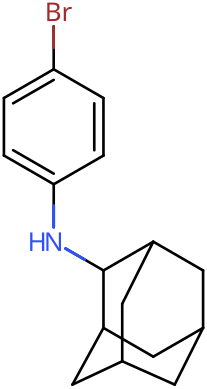
Bromantane Stats & Data
Brc1ccc(cc1)NC1C2CC3CC(CC1C3)C2LWJALJDRFBXHKX-UHFFFAOYSA-NPharmacology
DrugBankDescription
Bromantane/bromantan (Ladasten) is a drug developed in Russia in the 1980s. Derived from adamantane, bromantane is an actoprotector, which is a kind of drug that enhances physical activity under extreme environmental conditions (such as low oxygen or high temperature) 1, 2. Bromantane purportedly increases energy, reduces anxiety, inhibits fatigue, promotes learning, and improves movement coordination. All of these effects are claimed to combine to help increase both mental and physical performance. In Russia, bromantane is approved for the treatment of neurasthenia. It does not possess any addictive potential and has no serious side effects according to the limited scientific research. However, it is banned from many sports competitions, including the Olympics.
Receptor Profile
Receptor Actions
Effect Profile
CuratedStrong focus with moderate stimulation and euphoria, mild anxiety/jitters
Tolerance & Pharmacokinetics
drugs.wikiTolerance Decay
Anecdotal reports frequently describe rapid tachyphylaxis over 1–2 weeks of daily use, with partial reset after 2–8 weeks off. No controlled human tolerance studies located; values are heuristic and conservative for harm reduction. Consider limiting continuous runs and schedule breaks.
Cross-Tolerances
Legal Status
| Country | Status | Notes |
|---|---|---|
| Germany | Bromantane is not a controlled substance under the BtMG ( Narcotics Act ) or the NpSG ( New Psychoactive Substances Act ). | According to §2 AMG ( Medicines Act ) it would fall under the definition of a medicine because it induces pharmacological effect. By a decision of the European Court of Justice, this definition was declared ineffective because it was not compatible with EU law. Bromantane can be considered legal. |
| Russia | In Russia Bromantane has been discontinued in 2017 and will not be available in the nearest future. | |
| Switzerland | Bromantane is not controlled under Buchstabe A, B, C and D. | It could be considered legal. |
| United States | Bromantane is uncontrolled in the United States and has not been approved by the FDA for human use. | However, this has led nootropic vendor websites to sell bromantane under the label of "not for human consumption." |
Harm Reduction
drugs.wiki• Distinct from classic stimulants: clinical summaries emphasize activation without hyperstimulation and anxiolytic properties; this profile underlies its inclusion among actoprotectors and why some users feel it as “smooth” rather than jittery. However, experiences vary widely.
• World Anti‑Doping Agency prohibits bromantane (S6 stimulants); athletes risk sanctions and detection around competition periods.
• Take earlier in the day to reduce insomnia; evening doses and higher totals increase sleep disruption risk.
• Blood pressure and heart rate can rise—especially when combined with other stimulants or high caffeine—so avoid combos and monitor if you have hypertension.
• Reports suggest rapid tachyphylaxis in some users; cycling (e.g., limited 2–4 week runs followed by breaks) may mitigate tolerance.
• Some literature indicates induction of hepatic cytochrome P‑450 and reduced barbiturate hypnosis; this implies potential interactions (weaker effect of sedative‑hypnotics, altered clearance of co‑meds). Avoid mixing with anesthesia/sedatives without medical oversight.
• Anecdotes conflict on MAOI combinations; because bromantane increases dopaminergic tone, combining with MAOIs may unpredictably elevate catecholamines—treat as a do‑not‑mix unless a specialist is supervising.
• Product quality varies across vendors (different odors, inactive lots reported); pharmaceutical‑grade sources are rare outside Russia. Use caution, seek third‑party analysis when possible, and be skeptical of sudden formulation changes.
• Lipophilicity likely favors administration with dietary fat or oil for steadier effects; dry sublingual use is often reported as inconsistent.
• High single doses can become paradoxically flattening or fatiguing for some; titrate slowly and stop if you develop apathy or headache.
• People with bipolar spectrum, psychosis history, uncontrolled hypertension, significant liver disease, or pregnancy/breastfeeding should avoid non‑medical use due to unknowns and potential risk amplification.
References
Cited References
- Bluelight: Bromantane Discussion Threads
- CFSRE: NPS Discovery Monograph (2024)
- Iezhitsa et al. (2002) - Toxic Effects Study
- Mikhaylova et al. (2007) - Dopaminergic Neurotransmission
- Oliynyk & Oh (2012) - Pharmacology of Actoprotectors
- PubChem: Bromantane
- Reddit: Bromantane & Amphetamine Synergy Warning (2021)
- Reddit: Bromantane Withdrawal & Long-term Use (2025)
- Reddit: Starting Dose Discussion (2025)
- Vakhitova et al. (2005) - Gene Expression Changes
- YourInception - Bromantane Review (2022)
- Pharmacology of Actoprotectors (Biomolecules & Therapeutics, 2012)
- EvitaChem product data
Additional references
- Bluelight thread — ‘Bromantane first time’ (includes Lancet 1997 doping reference and Russian review pointers)
- Bluelight thread — ‘Anyone know anything about bromantane?’ (mechanism and WADA S6 via Russian sources)
- Bluelight thread — ‘Layman’s interpretation of bromantane study’ (P450 induction; thiopental interaction; dose-tox points)
- Reddit r/NooTopics — bromantane MAOI experiences (mixed anecdotes)
- Reddit r/MAOIs — Nardil + Bromantane?
- Reddit r/anhedonia — user reports on dosing, lipophilicity and taking with food/oil
- Bluelight — ‘Bromantane, how good is it?’ (TH/AADC upregulation context; mixed efficacy)
- Biomolecules & Therapeutics (2012) — The pharmacology of actoprotectors (background on actoprotectors incl. bromantane)