
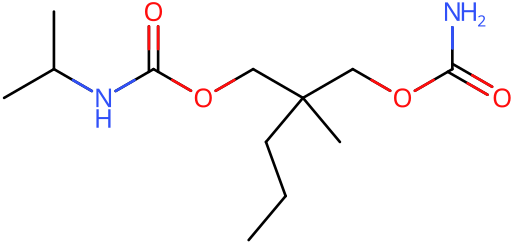
Carisoprodol Stats & Data
CCCC(C)(COC(N)=O)COC(=O)NC(C)COFZCIYFFPZCNJE-UHFFFAOYSA-NPharmacology
DrugBankDescription
Originally approved by the FDA in 1959 , carisoprodol is a centrally acting muscle relaxant used in painful musculoskeletal conditions in conjunction with physical therapy and other medications . This drug is available by itself in an oral tablet or combined with aspirin, or in a fixed-dose combination with both aspirin and codeine FDA label, F4060, F4069. In January 2012, this drug was classified as a Schedule IV substance under the controlled substances act in several US states due to alarming rates of abuse despite having a low potential for abuse in addition to a low risk of dependence .
Mechanism of Action
The mechanism of action of carisoprodol in relieving discomfort associated with acute painful musculoskeletal conditions has not been confirmed. In studies using animal models, the muscle relaxation that is induced by carisoprodol is associated with a change in the interneuronal activity of the spinal cord and of the descending reticular formation, located in the brain . The abuse potential of this drug is attributed to its ability to alter GABAA function . This drug has been shown to modulate a variety of GABAA receptor subunits . GABAA receptor modulation can lead to anxiolysis due to inhibitory effects on neurotransmission .
Pharmacodynamics
Carisoprodol is a centrally acting skeletal muscle relaxant that does not act directly on skeletal muscle but acts directly on the central nervous system (CNS). This drug relieves the painful effects of muscle spasm . A metabolite of carisoprodol, _meprobamate_, possesses both anxiolytic and sedative properties . Clinical studies have shown that this drug causes impairment of psychomotor performance in neuropsychological tests .
Metabolism
The main pathway of carisoprodol is liver metabolism is by the cytochrome enzyme CYP2C19 to form meprobamate. This enzyme exhibits genetic polymorphism, which may affect the metabolism of this drug .
Absorption
The absolute bioavailability of carisoprodol has not yet been established. The mean time to peak plasma concentrations (Tmax) of this drug was about 1.5-2 hours in clinical studies . Co-administration of a fatty meal with carisoprodol (350 mg tablet) had no impact on carisoprodol pharmacokinetics .
Indication
Carisoprodol is indicated for the relief of discomfort related to acute, painful musculoskeletal conditions . **Important limitations of use** : • Should only be used for acute treatment periods up to two or three weeks • Adequate evidence of effectiveness for more prolonged use has not been established • Not recommended in pediatric patients less than 16 years of age
Half-life
The terminal half-life is approximately 2 hours .
Elimination
Carisoprodol is eliminated by the kidneys as well as other routes. The half-life of meprobamate is approximately 10 hours .
Volume of Distribution
0.93 to 1.3 L/kg, according to 4 different clinical studies .
Clearance
Following an oral dose of carisoprodol, the oral clearance (Cl/F) was 39.52 ± 16.83 L/hour .
Receptor Profile
Receptor Actions
Receptor Binding
History & Culture
1956–1959
Frank M. Berger at Wallace Laboratories (later Carter-Wallace) synthesized carisoprodol in 1956. Berger had also been part of the team responsible for creating meprobamate, which had become a widely used pharmaceutical during the 1950s. The development of carisoprodol arose from ongoing efforts to create and test various meprobamate derivatives. The critical structural modification involved substituting one hydrogen atom with an isopropyl group on one of the carbamyl nitrogens, intended to produce a compound with distinct pharmacological properties. In June 1959, several American pharmacologists convened at Wayne State University in Detroit, Michigan to discuss the newly discovered structural analogue. Building upon meprobamate's established pharmacological effects, carisoprodol was designed to provide improved muscle relaxing properties while offering reduced addiction potential and a lower risk of overdose. The FDA approved the drug later that year. Early publications described it as exhibiting properties similar to both mephenesin and meprobamate, though its effect profile differed significantly from its parent compound, demonstrating stronger muscle relaxant and analgesic effects.
1960–1978
During the 1960s, animal research indicated that carisoprodol produced clear EEG changes without causing significant sedation at low doses. In this respect, researchers likened its profile to atropine. The prevailing discussion about the substance during this period suggested it possessed low abuse potential and minimal risk of physical dependence. This perception began to shift in 1978 when a report appeared demonstrating the drug's abuse potential, ultimately contributing to growing concern about its effects and marking the beginning of a reevaluation of its safety profile.
1990–2008
Following additional reports documenting physical dependence and recreational use during the 1990s, concerns about carisoprodol increased considerably. Research from this period revealed that only a small percentage of physicians understood carisoprodol's status as a prodrug of meprobamate, with most believing it carried a lower abuse risk than its metabolite. The DEA recommended federal scheduling in 1996, though the FDA opposed this action at the time due to insufficient evidence. Carisoprodol was designated as a "drug of concern" instead. By 1998, it ranked eighteenth out of 123 drugs involved in emergency department visits in the United States. Reports increasingly documented the drug being used to potentiate the effects of opioids, and sometimes benzodiazepines, cocaine, and alcohol. The practice of combining carisoprodol with opioids and benzodiazepines became colloquially known as "The Holy Trinity" due to the reported intensification of euphoric effects. The dangers of such combinations were illustrated by actress Dana Plato's death in 1999, which occurred after taking carisoprodol along with a hydrocodone and acetaminophen painkiller. In 2014, actress Skye McCole Bartusiak died from an overdose involving the combined effects of carisoprodol, hydrocodone, and difluoroethane. Even without federal scheduling, individual states began implementing their own controls. SAMHSA reported a doubling of nonmedical use between 2004 and 2008. The National Forensic Laboratory Information System listed carisoprodol among the top 25 most abused drugs in the United States in 2008, during which year approximately 10.5 million prescriptions were dispensed. The availability of carisoprodol through online sellers significantly contributed to this rise in nonmedical use.
2007–2013
Multiple countries began removing carisoprodol from the market or implementing stricter controls during this period. Sweden withdrew the drug from the market in November 2007 due to problems with dependence and adverse effects. Evidence from Norway demonstrating its addictive potential both as a prodrug of meprobamate and as a potentiator of opioids led to its removal from the Norwegian market in May 2008. The European Medicines Agency recommended member states suspend marketing authorization the same year. In January 2012, carisoprodol became a Schedule IV controlled substance in the United States following documented increases in misuse and adverse events. The scheduling decision noted that the drug possesses barbiturate-like effects in vitro, exhibits discriminative stimulus effects similar to other Schedule IV drugs such as barbital, meprobamate, and chlordiazepoxide, and that excessive use produces toxicity and withdrawal symptoms comparable to other controlled depressants. Indonesia removed carisoprodol from the market in September 2013 due to concerns about diversion, dependence, and adverse effects. Despite its removal, a tragic incident occurred in Kendari, Indonesia in September 2017 when pills containing a combination of paracetamol, caffeine, and carisoprodol were mixed into children's drinks at elementary and junior high schools, resulting in one death and 50 children suffering seizures.
Carisoprodol likely has moderate toxicity relative to dose. However, carisoprodol is potentially lethal when mixed with depressants like alcohol or opioids. Carisoprodol has been taken off the market is several countries such as Sweden and Indonesia due to side effects and abuse. It is strongly recommended that one use harm reduction practices when using this drug.
Carcinogenicity
No indication of carcinogenicity to humans (not listed by IARC).
Liver injury risk
No documented concern
Toxicity (DrugBank)
**LD50 values** The LD50 values of carisoprodol for rats are 450 mg/kg for intravenous (IV) and intraperitoneal injection, and 1,320 mg/kg for gavage dosing. In mice, the LD50 values are 165 mg/kg for intravenous injection, 980 mg/kg for intraperitoneal injection, and 2,340 mg/kg for gavage dosing. The LD50 value for rabbits given carisoprodol by intravenous injection is 124 mg/kg . **Overdose** An overdose of carisoprodol leads to CNS depression, and in severe cases, induction of a coma. Shock, depression of respiratory function, seizures and death have also been reported in rare cases. Several symptoms may be associated with carisoprodol overdose, such as horizontal and vertical nystagmus, blurred vision, mydriasis, mild tachycardia and hypotension, respiratory depression, euphoria, CNS stimulation, muscular incoordination, and/or rigidity, confusion, headache, hallucinations, and dystonic reactions. Alcohol or other CNS depressants or psychotropic agents can exert additive effects on carisoprodol even when one of the agents has been ingested at the normal, therapeutic dose. Fatal accidental and non-accidental overdoses have both been reported with carisoprodol ingestion alone or ingestion of carisoprodol in combination with alcohol or psychotropic drugs . **A note on dependence and withdrawal** In the postmarketing reports after carisoprodol use, cases of dependence, withdrawal, and abuse have been reported with long-term use.
Tolerance & Pharmacokinetics
drugs.wikiNo tolerance chart. Our decay curves for these drugs were estimates, and a curve can make tolerance look longer-lasting than it is, which is the dangerous direction.
How fast tolerance to these drugs fades after a break has not been measured well enough to draw, so don't count on a dose you used to take still being safe: after time off, start with a much smaller amount and don't use alone. Mixing sedatives with each other, with alcohol or with opioids sharply raises the risk of a fatal overdose. If you've been using regularly, don't stop suddenly: withdrawal from benzodiazepines, alcohol or GHB/GBL can cause seizures or delirium, so get medical help to cut down gradually.
Sources: FRANK: benzodiazepines · Alcohol and Drug Foundation: GHB · FDA 2020: benzodiazepine boxed warning · FDA 2019: gabapentinoids and breathing · NHS: alcohol use disorder
Cross-Tolerances
Demographics
Gender Distribution
Age Distribution
Reports Over Time
Effect Analysis
Erowid + BluelightEffects aggregated from 45 experience reports (30 single-substance Erowid + 15 Bluelight)
Effect Sentiment Distribution
Confidence Distribution
Each bar is the share of reports mentioning the effect; its whisker, and the band on the rows below, is the 95% interval: where the share could plausibly be with other reports of the same kind.
Rows resting on fewer than 20 reports show a count (“3 of 7”) instead of a bar. Why 20?
Positive Effects 22
Adverse Effects 18
Show 16 neutral or unclassified mentions
Also reported in combinations. In the 27 Carisoprodol reports where another drug was taken too, 6 (22.2%) mention hospital, emergency services or an overdose, 2 (7.4%) a seizure and 0 (0.0%) psychosis. In the 30 single-substance reports: 30.0%, 10.0% and 0.0%. These are not in the figures above: they cannot be put down to Carisoprodol alone, and a mention is not always something that happened to the writer.
Dosage Distribution
Dose distribution from experience reports, one dose per report (the first listed). Doses above Q3 + 3×IQR, far above what people typically take, are left out of the median and range and listed under each route: most are real heavy doses or overdoses, not mistakes.
2 reports gave a dose above the typical range (4,875–4,900 mg), so they are not in the figures above. 1 of them mentions hospital, emergency services or an overdose. Listing a dose here does not mean it is safe.
Real-World Dose Distribution
ErowidFrom 72 of 91 recorded dose entries: those that state a weight (mg, g or µg), in routes with at least five of them. Values above Q3 + 3×IQR, far above what people typically take, are left out; they can include real heavy doses and overdoses, not only mistakes.
Oral (n=67)
Common Combinations
Most co-occurring substances, as a share of all 57 reports filed under Carisoprodol; whiskers are 95% intervals
Form / Preparation
Most common forms and preparations, as a share of the 45 reports that give one; whiskers are 95% intervals
Body-Weight Dosing
Dose per kg of body weight, one dose per report (the first listed), from reports giving a weight of 30–250 kg. Doses above Q3 + 3×IQR, far above what people typically take, are left out of the median and range and listed under each route.
3 reports gave a dose above the typical range (47.458–93.156 mg/kg), so they are not in the figures above. 2 of them mention hospital, emergency services or an overdose. Listing a dose here does not mean it is safe.
Show the reports
- 93.156 mg/kg · mentions hospital, emergency services or an overdose
- 71.691 mg/kg · another drug taken too
- 47.458 mg/kg · another drug taken too · mentions hospital, emergency services or an overdose
Redose Patterns
Redosing behavior across 46 reports
Legal Status
| Country | Status | Notes |
|---|---|---|
| Australia | No longer registered | Removed from the Australian Register of Therapeutic Goods. Access is still possible through the Special Access Scheme for individual patient needs. |
| Canada | Schedule V Controlled Substance | As of April 14, 2025, carisoprodol was removed from the Prescription Drug List and reclassified as a Schedule V Controlled Substance. No pharmaceutical forms are currently marketed in Canada. |
| European Union | Marketing authorization withdrawn | The European Medicines Agency recommended member states suspend marketing authorization in 2008 due to concerns about dependence and insufficient benefit-risk profile for acute back pain treatment. |
| Finland | No longer available | Carisoprodol is no longer available in Finland, including as a prescription medication. Previously marketed as Somadril. |
| Germany | Prescription only (Anlage 1 AMVV) | Classified as a prescription medicine under Anlage 1 of the Arzneimittelverschreibungsverordnung (AMVV). Available only with a valid medical prescription. |
| Indonesia | Withdrawn from market | Taken off the market in September 2013 due to concerns about diversion, dependence, and adverse effects. |
| Mexico | Available without prescription | Sold over-the-counter, though typically in lower doses than those available in the United States. Commonly advertised in border cities. |
| Norway | Withdrawn from market | Removed from the market in May 2008 following reports demonstrating addictive potential as a prodrug of meprobamate and as a potentiator of opioid medications including hydrocodone, oxycodone, and codeine. |
| Spain | Over-the-counter (unconfirmed) | Reports indicate carisoprodol may be available without prescription, though this has not been officially confirmed. |
| Sweden | Withdrawn from market | Taken off the market in November 2007 due to problems with dependence and side effects. The Swedish pharmaceutical regulatory agency determined that alternative medications offered comparable or better efficacy without the associated risks. |
| Thailand | Over-the-counter (unconfirmed) | As of 2005, reported to be available without prescription in combination formulations with phenylbutazone or paracetamol. Status may have changed since then. |
| United States | Schedule IV | Placed on Schedule IV of the Controlled Substances Act by DEA ruling in December 2011, effective January 2012. Classification followed rising rates of abuse and diversion. Requires a valid prescription for legal possession; unauthorized possession or distribution is a federal offense. |
Harm Reduction
drugs.wikiCarisoprodol is a centrally acting muscle relaxant with sedative and anxiolytic properties, commonly prescribed for short‑term treatment of acute musculoskeletal pain. It is metabolized by CYP2C19 to meprobamate, a longer‑acting sedative‑anxiolytic; this can prolong impairment, especially with redosing or in poor CYP2C19 metabolizers, who can have markedly higher carisoprodol exposure and lower meprobamate exposure at the same dose. Because the parent half‑life (~2 h) is shorter than meprobamate (~10 h), stacking doses within a session increases cumulative CNS depression. Even at therapeutic doses, drowsiness and psychomotor impairment are common and have been linked to motor vehicle accidents; avoid driving or hazardous tasks until fully baseline. Polydrug use with CNS depressants (alcohol, opioids, benzodiazepines, barbiturates, GHB, Z‑drugs, gabapentinoids) can cause synergistic respiratory depression, coma, and death; numerous fatalities involve such combinations. Rare cases of serotonin syndrome have been reported; exercise caution if combining with serotonergic agents (SSRIs/SNRIs, tramadol, MAOIs). Label guidance limits use to 2–3 weeks and single doses of 250–350 mg up to 3–4 times daily; exceeding labeled single or daily doses substantially increases risk. The EU suspended carisoprodol marketing due to an unfavorable risk–benefit profile and abuse concerns; outside regulated supply chains, counterfeit or mis‑sold tablets are possible—some “pharmaceuticals” in illicit markets contain unexpected potent sedatives/opioids—so use drug checking where available and verify imprint/strength. Oral use is the intended route; community harm‑reduction forums report insufflation as unpleasant, irritant, and not more effective. Withdrawal after chronic/high‑dose use (often due to meprobamate accumulation) can be severe (anxiety, tremor, insomnia, hallucinations, seizures) and warrants medical supervision—do not abruptly stop after sustained heavy use. Avoid use in acute intermittent porphyria and in older adults (Beers criteria) when possible; use extra caution in hepatic or renal impairment. Combination products exist (e.g., with aspirin ± codeine); verify ingredients to avoid inadvertent opioid or NSAID exposure. Naloxone will not reverse carisoprodol/meprobamate effects, though it may reverse co‑ingested opioids; always prioritize airway and call emergency services in suspected overdose.
References
Data Sources
Cited References
Additional references
- DrugBank: Carisoprodol (DB00395) – pharmacology, Tmax, half‑lives, overdose and additive depressant effects
- NCBI Bookshelf: StatPearls – Carisoprodol (adverse effects, driving risk, toxicity incl. serotonin syndrome; EU suspension; Beers criteria; hepatic/renal cautions)
- NCBI Bookshelf: Medical Genetics Summaries – Carisoprodol Therapy and CYP2C19 Genotype (poor metabolizer exposure changes; inhibitor/inducer cautions)
- DrugBank Article: Formation of meprobamate from carisoprodol is catalysed by CYP2C19 (Dalen 1996)
- DrugBank Article: CYP2C19 genotype and carisoprodol:meprobamate ratios (Bramness 2003)
- NCBI Bookshelf: LiverTox – Carisoprodol (recommended dose 250–350 mg 3–4× daily; 2–3 weeks)
- Erowid Experience Vaults – Carisoprodol health problem reports (polydrug incidents)
- Bluelight thread: Snorting Soma (carisoprodol) – community consensus against insufflation
- Drugs‑Forum thread: Soma/Carisoprodol 350 mg – ROA discussion; insufflation discouraged
- NCBI Bookshelf: LactMed – Carisoprodol/meprobamate in breastmilk; infant sedation monitoring
- EUDA (EMCDDA) – Non‑medical use of medicines and counterfeit/fake medicines in EU markets (context for mis‑sold pills)
- DrugBank – Carisoprodol brands and combination products (with aspirin, with aspirin+codeine)
- DrugWise – Carisoprodol harms & UK status update (Nov 2025)