
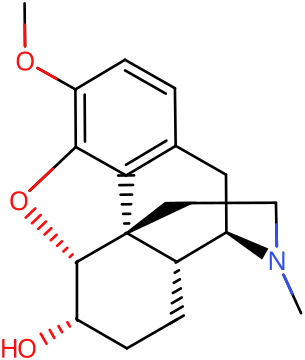
Dihydrocodeine Stats & Data
COc1ccc2CC3N(C)CCC45C3CCC(O)C5Oc1c24RBOXVHNMENFORY-DNJOTXNNSA-NPharmacology
DrugBankDescription
Dihydrocodeine is an opioid analgesic used as an alternative or adjunct to codeine to treat moderate to severe pain, severe dyspnea, and cough. It is semi-synthetic, and was developed in Germany in 1908 during an international search to find a more effective antitussive agent to help reduce the spread of airborne infectious diseases such as tuburculosis. It was marketed in 1911.
Mechanism of Action
Dihydrocodeine is metabolized to dihydromorphine -- a highly active metabolite with a high affinity for mu opioid receptors.
Pharmacodynamics
Possible opioid related side effects include, but are not limited to, drowsiness, nausea, headache, dry mouth, constipation, difficulty passing urine, and mild euphoria.
Metabolism
Metabolized in the liver by CYP 2D6 into an active metabolite, dihydromorphine, and by CYP 3A4 into secondary primary metabolite, nordihydrocodeine. A third primary metabolite is dihydrocodeine-6-glucuronide. The time for mean peak concentration in acid metabolites is 1.76h and 1.98h for a 30 and 60mg dose, respectively. The concentrations achieved were 563 ug/1 and 1476 ug/1, respectively.
Absorption
Bioavailability is low (approximately 20%) if administered orally. This may be due to poor gastrointestinal absorption. It is also likely due to pre-systemic metabolism by the liver and intestinal wall. The AUCs after oral and intravenous administration are similar (3203ug/l/h and 3401ug/l/h, respectively). Time to peak values are 1.6 and 1.8hours for a 30mg and 60mg dose, respectively. The concentrations achieved were 71.8 ug/1 and 146 ug/1, respectively.
Indication
Dihydrocodeine is used for the treatment of moderate to severe pain, including post-operative and dental pain. It can also be used to treat chronic pain, breathlessness and coughing. In heroin addicts, dihydrocodeine has been used as a substitute drug, in doses up to 2500mg/day to treat addiction. http://www.ncbi.nlm.nih.gov/pmc/articles/PMC2014322/
Elimination
Renal elimination and urinary excretion.
Volume of Distribution
The disposition of dihydrocodeine is described as a two compartment model.
Clearance
Plasma clearance is approximately 300ml/min. The pharmacokinetics of dihydrocodeine and active metabolite dihydromorphine have been reported to be linear. The decline in plasma dihydrocodeine concentrations after intravenous administration has been described as bi-exponential, with a sleep decline in the initial 2h following administration, followed by a mono-exponential decline thereafter. Clearance was not dose dependent.
Receptor Profile
Receptor Actions
Receptor Binding
History & Culture
1908–1911
Dihydrocodeine is a semi-synthetic opioid that was developed in Germany in 1908 during a period of intensive research into more effective antitussive agents. This effort was motivated by the urgent need to limit the transmission of airborne infectious diseases, particularly tuberculosis, pertussis, and pneumonia, which were major public health concerns during the late 19th and early 20th centuries. The compound entered the market in 1911 and was later granted formal regulatory approval for medical use in 1948.
In clinical settings, dihydrocodeine has been employed as a substitution therapy for individuals with heroin dependence, with doses reaching up to 2500mg daily. Japan represents a notable exception in global drug policy, where dihydrocodeine remains available without prescription. It appears in over-the-counter cough preparations such as New Bron Solution-ACE, serving as an alternative to dextromethorphan. Japanese manufacturers typically formulate these products with caffeine to counteract sedative effects and reduce the potential for recreational misuse.
Subjective Effects
Physical
The physical effects of dihydrocodeine can be broken down into several components which progressively intensify proportional to dosage.
- Pain relief: This component is subjectively different from other anaesthetics as it does not necessarily remove the pain entirely whilst still remaining equal in terms of its effectiveness. Instead of directly suppressing pain, these substances simply dull the perceived sensation and cover it up with feelings of physical and emotional pleasure.
- Physical euphoria: This particular substance can be considered as less intense in its physical euphoria when compared with that of morphine or diacetylmorphine (heroin) due to the upper limit of how much can be converted into its active form through metabolism. The sensation itself can be described as extreme feelings of hyper intense physical comfort, snugglyness, warmth and physical blissful euphoria which emanates throughout the body.
- Itchiness: It presents greater amounts of itchiness due to higher amounts of histamine release.
- Respiratory depression: At low to moderate doses, this effect results in the sensation that the breath is slowed down mildly to moderately, but does not cause noticeable impairment. At high doses and overdoses, opioid-induced respiratory depression can result in a shortness of breath, abnormal breathing patterns, semi-consciousness, or unconsciousness. Severe overdoses can result in a coma or death without immediate medical attention.
- Sedation: At higher dosages, this compound can result in feelings of sedation and is considerably more sedating than that of oxycodone and hydrocodone.
- Constipation
- Cough suppression
- Difficulty urinating
- Pupil constriction
Cognitive
The cognitive effects of dihydrocodeine can be broken down into several components which progressively intensify proportional to dosage. The general head space of dihydrocodeine is described by many as one of intense euphoria, relaxation, anxiety suppression and pain relief.
- Cognitive euphoria: This particular substance can be considered as less intense in its cognitive euphoria when compared with that of morphine or diacetylmorphine (heroin) due to the upper limit of how much can be converted into its active form through metabolism. It is still, however, capable of extreme intensity and overwhelming bliss at heavier dosages with a low tolerance. The sensation itself can be described as powerful and overwhelming feeling of emotional bliss, contentment, love and happiness.
- Anxiety suppression
- Compulsive redosing
Forked from Subjective Effect Documentation by Josie Kins, September 2015. Via dose.wiki (CC0).
Toxicity
PsychonautWikiDihydrocodeine has a low toxicity relative to dose. As with all opiates, long-term effects can vary but can include diminished libido, apathy and memory loss. Some people may also have an allergic reaction to dihydrocodeine, such as the swelling of skin and rashes. It is also potentially lethal when mixed with depressants like alcohol or benzodiazepines. It is strongly recommended that one use harm reduction practices when using this drug.
Effect Profile
Curated + 8 ReportsStrong euphoria with moderate itching/nausea, mild pain relief and sedation
Tolerance & Pharmacokinetics
drugs.wikiNo tolerance chart. Our decay curves for opioids were estimates, and a curve can make tolerance look longer-lasting than it is, which is the dangerous direction.
Opioid tolerance drops fast when you stop, and even a few days off can be enough, so a dose that used to be normal can now stop your breathing. Overdose deaths rise sharply after prison, detox or leaving treatment, and tolerance also falls during a hospital stay. After any break, start with a much smaller amount, try a test dose first, don't use alone, and keep naloxone within reach. Alcohol, benzodiazepines, gabapentinoids and other sedatives make an opioid overdose much more likely.
Sources: FRANK: heroin · National Harm Reduction Coalition · WHO: opioid overdose · Merrall et al. 2010 · Binswanger et al. 2007 · Strang et al. 2003 · FDA 2019: gabapentinoids and breathing
Cross-Tolerances
Experience Report Analysis
ErowidDemographics
Gender Distribution
Too few reports for a chart: gender is known from 15 reports, and a split is drawn only from 20 reports or more. Counts are shown instead. Why 20?
- Male 11 of 15
- Not Specified 2 of 15
- Female 2 of 15
Age Distribution
Reports Over Time
Effect Analysis
ErowidEffects aggregated from 8 experience reports (8 single-substance Erowid)
Effect Sentiment Distribution
Confidence Distribution
Each bar is the share of reports mentioning the effect; its whisker, and the band on the rows below, is the 95% interval: where the share could plausibly be with other reports of the same kind.
Too few reports for bars: these effects come from 8 single-substance Erowid reports, and a bar is drawn only from 20 reports or more. With fewer, a percentage cannot tell a common effect from a rare one. Counts are shown instead. Why 20?
Positive Effects 2
Adverse Effects 1
Also reported in combinations. In the 7 Dihydrocodeine reports where another drug was taken too, 2 mention hospital, emergency services or an overdose, 0 a seizure and 0 psychosis (too few reports for percentages). In the 8 single-substance reports: 0, 0 and 0. These are not in the figures above: they cannot be put down to Dihydrocodeine alone, and a mention is not always something that happened to the writer.
Real-World Dose Distribution
ErowidFrom 40 of 41 recorded dose entries: those that state a weight (mg, g or µg), in routes with at least five of them. Values above Q3 + 3×IQR, far above what people typically take, are left out; they can include real heavy doses and overdoses, not only mistakes.
Oral (n=40)
Common Combinations
Most co-occurring substances, as a share of all 15 reports filed under Dihydrocodeine
Too few reports for bars: these combinations come from 15 reports, and a bar is drawn only from 20 reports or more. With fewer, a percentage cannot tell a common effect from a rare one. Counts are shown instead. Why 20?
- THC 3 of 15
Form / Preparation
Most common forms and preparations, as a share of the 8 reports that give one
Too few reports for bars: these forms come from 8 reports, and a bar is drawn only from 20 reports or more. With fewer, a percentage cannot tell a common effect from a rare one. Counts are shown instead. Why 20?
- Pill / Tablet 7 of 8
Redose Patterns
Redosing behavior across 11 reports
Too few reports for a chart: redosing is known from 11 reports, and a split is drawn only from 20 reports or more. Counts are shown instead. Why 20?
- Single dose 9 of 11
- Redosed 2 of 11
Opioid Equivalence (MME)
NIH HEAL 2024 & CDC 2022Dihydrocodeine 40 mg oral ≈ 10 mg Morphine oral
Legal Status
| Country | Status | Notes |
|---|---|---|
| Japan | Unscheduled (OTC available) | Available without prescription in over-the-counter cough preparations such as cough syrups. Represents a notable exception in global drug policy where dihydrocodeine remains accessible for consumer purchase without a medical prescription. |
Harm Reduction
drugs.wikiLow oral bioavailability (~21%) and a delayed peak (~1.6–1.8 h) increase the risk of impatient redosing; wait at least 2 hours to assess effects before taking more. The parent drug and its metabolites (notably dihydromorphine and DHC‑6‑glucuronide) mediate effects; CYP2D6 O‑demethylation is polymorphic and inhibited by some medications, so potency can vary widely between people and with drug–drug interactions. Most non‑medical harms come from polydrug use: combining opioids with benzodiazepines and/or alcohol markedly elevates overdose risk via additive respiratory depression. Many DHC products are combined with acetaminophen; do not exceed 4,000 mg acetaminophen in 24 h from all sources to avoid potentially fatal hepatotoxicity (reduce to ≤3,000 mg/day if risk factors exist). Avoid crushing/chewing controlled‑release tablets; as with other extended‑release opioids, tampering can cause dose dumping and life‑threatening overdose. Carry naloxone if using opioids; it reverses respiratory depression within minutes but may wear off in 20–40 minutes—always call emergency services. Nasal use of tablets exposes sinuses to insoluble binders and offers little benefit; prefer oral use of known single‑ingredient products. Tolerance builds quickly; after even short breaks, tolerance drops and the prior ‘usual’ dose may cause overdose—start low again. Opioids predictably cause constipation; start prevention early (fluids, fiber, movement; consider stimulant or osmotic laxatives if needed). Avoid driving or operating machinery while sedated; opioid effects can outlast the perceived ‘high,’ and some services recommend at least 24 hours before driving after recreational use.
References
Cited References
- Ammon et al. 1999 - Pharmacokinetics of DHC and DHM (DOI)
- Kirkwood et al. 1997 - Cytochrome P450 metabolism (DOI)
- Leppert 2010 - DHC as opioid analgesic (DOI)
- PsychonautWiki: Dihydrocodeine
- Rowell et al. 1983 - Pharmacokinetics IV and oral (DOI)
- Schmidt et al. 2002 - Opioid receptor affinities (DOI)
- Schmidt et al. 2003 - Role of active metabolites (DOI)
- TripSit: Dihydrocodeine Factsheet
- TripSit: Drug Combinations Chart
Additional references
- Erowid Dihydrocodeine Vault (brands; APAP warning)
- Rowell et al., 1983 (oral BA ~21%, Tmax 1.6–1.8 h, t1/2) via DrugBank
- DrugBank: Dihydrocodeine (PK/enzymes; CYP2D6→dihydromorphine; CYP3A4→nordihydrocodeine)
- Characterization of CYPs in DHC metabolism (CYP2D6 O‑demethylation; CYP3A N‑demethylation) via DrugBank
- Receptor affinities of DHC metabolites; CYP2D6 phenotypes and variability via DrugBank
- SAMHSA/CBHSQ: Benzo + opioid/alcohol increases serious ED outcomes
- EUDA: Non‑medical benzodiazepine co‑use with opioids—overdose risk
- EUDA mini‑guide on polydrug use (opioids+benzos/alcohol; stimulants masking sedation)
- WHO/NCBI Bookshelf: Paracetamol dosing—max 4 g/day adults (reduce with risk factors)
- StatPearls (Hydrocodone/APAP): ER opioids—do not crush/chew; acetaminophen hepatotoxicity >4 g/day
- Naloxone—mechanism and duration (20–40 min), emergency care still required
- WHO/NCBI: Naloxone (no contraindications in suspected opioid toxicity; dosing cautions)
- Hi‑Ground: Opioids harm‑reduction (carry naloxone; snorting risks; counterfeit pills; driving caution)
- NCBI: OUD text—tolerance loss after abstinence increases overdose risk
- StatPearls: Opioid‑induced constipation—prevention and management
- Bluelight community reports: DHC BA and nasal ROA limitations (anecdotal)