
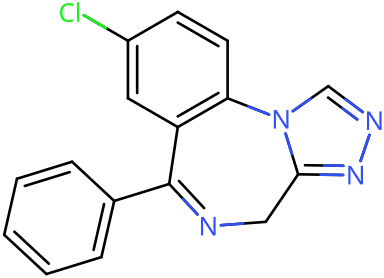
Estazolam Stats & Data
Clc1ccc2n3cnnc3CN=C(c3ccccc3)c2c1CDCHDCWJMGXXRH-UHFFFAOYSA-NPharmacology
DrugBankDescription
A benzodiazepine with anticonvulsant, hypnotic, and muscle relaxant properties. It has been shown in some cases to be more potent than diazepam or nitrazepam.
Mechanism of Action
Benzodiazepines bind nonspecifically to benzodiazepine receptors, which affects affects muscle relaxation, anticonvulsant activity, motor coordination, and memory. As benzodiazepine receptors are thought to be coupled to gamma-aminobutyric acid-A (GABAA) receptors, this enhances the effects GABA by increasing GABA affinity for the GABA receptor. Binding of the inhibitory neurotransmitter GABA to the site opens the chloride channel, resulting in a hyperpolarized cell membrane that prevents further excitation of the cell.
Pharmacodynamics
Estazolam, a triazolobenzodiazepine derivative, is an oral hypnotic agent with anticonvulsant, hypnotic, and muscle relaxant properties. It has been shown in some cases to be more potent than diazepam or nitrazepam.
Metabolism
Extensively metabolized in the liver. In vitro studies with human liver microsomes indicate that the biotransformation of estazolam to the major circulating metabolite 4-hydroxy-estazolam is mediated by cytochrome P450 3A (CYP3A).
Absorption
Tablets have been found to be equivalent in absorption to an orally administered solution of estazolam. In healthy subjects who received up to three times the recommended dose, peak estazolam plasma concentrations occurred within two hours after dosing (range 0.5 to 6.0 hours) and were proportional to the administered dose, suggesting linear pharmacokinetics over the dosage range tested.
Indication
For the short-term management of insomnia characterized by difficulty in falling asleep, frequent nocturnal awakenings, and/or early morning awakenings.
Half-life
The range of estimates for the mean elimination half-life of estazolam varies from 10 to 24 hours.
Elimination
Estazolam is extensively metabolized. The elimination of the parent drug takes place via hepatic metabolism of estazolam to hydroxylated and other metabolites that are eliminated largely in the urine both free and conjugated. Less than 5% of a 2 mg dose of estazolam was excreted unchanged in the urine, with only 4% of the dose appearing in the feces. Radiolabel mass balance studies indicate that the main route of excretion is via the kidneys. After 5 days, 87% of the administered radioactivity was excreted in human urine. Less than 4% of the dose was excreted unchanged.
Benzodiazepines bind nonspecifically to benzodiazepine receptors, which affects affects muscle relaxation, anticonvulsant activity, motor coordination, and memory. As benzodiazepine receptors are thought to be coupled to gamma-aminobutyric acid-A (GABA<sub>A</sub>) receptors, this enhances the effects GABA by increasing GABA affinity for the GABA receptor.
LD50
LD50: 740 mg/kg (oral, male mice) (L1867)LD50: 3200 mg/kg (oral, rat) (L1867)LD50 300 mg/kg (oral, rabbit) (L1867)
Carcinogenicity
Group 3: Not classifiable as to its carcinogenicity to humans
Liver injury risk
No documented concern
Health effects (PubChem excerpts)
May cause a potentially dangerous rash that may develop into Stevens Johnson syndrome, an extremely rare but potentially fatal skin disease.
Effect Profile
CuratedStrong anxiolysis and euphoria with mild cognitive impairment, low sedation
Tolerance & Pharmacokinetics
drugs.wikiNo tolerance chart. Our decay curves for these drugs were estimates, and a curve can make tolerance look longer-lasting than it is, which is the dangerous direction.
How fast tolerance to these drugs fades after a break has not been measured well enough to draw, so don't count on a dose you used to take still being safe: after time off, start with a much smaller amount and don't use alone. Mixing sedatives with each other, with alcohol or with opioids sharply raises the risk of a fatal overdose. If you've been using regularly, don't stop suddenly: withdrawal from benzodiazepines, alcohol or GHB/GBL can cause seizures or delirium, so get medical help to cut down gradually.
Sources: FRANK: benzodiazepines · Alcohol and Drug Foundation: GHB · FDA 2020: benzodiazepine boxed warning · FDA 2019: gabapentinoids and breathing · NHS: alcohol use disorder