Pharmacology
DrugBankDescription
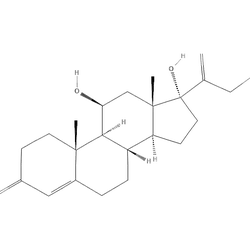
Hydrocortisone, or cortisol, is a glucocorticoid secreted by the adrenal cortex. Hydrocortisone is used to treat immune, inflammatory, and neoplastic conditions. It was discovered in the 1930s by Edward Kendall and named Compound F, or 17-hydroxycorticosterone. Hydrocortisone was granted FDA approval on 5 August 1952.
Mechanism of Action
The short term effects of corticosteroids are decreased vasodilation and permeability of capillaries, as well as decreased leukocyte migration to sites of inflammation. Corticosteroids binding to the glucocorticoid receptor mediates changes in gene expression that lead to multiple downstream effects over hours to days. Glucocorticoids inhibit neutrophil apoptosis and demargination; they inhibit phospholipase A2, which decreases the formation of arachidonic acid derivatives; they inhibit NF-Kappa B and other inflammatory transcription factors; they promote anti-inflammatory genes like interleukin-10. Lower doses of corticosteroids provide an anti-inflammatory effect, while higher doses are immunosuppressive. High doses of glucocorticoids for an extended period bind to the mineralocorticoid receptor, raising sodium levels and decreasing potassium levels.
Pharmacodynamics
Hydrocortisone binds to the glucocorticoid receptor leading to downstream effects such as inhibition of phospholipase A2, NF-kappa B, other inflammatory transcription factors, and the promotion of anti-inflammatory genes. Hydrocortisone has a wide therapeutic index and a moderate duration of action. Patients should stop taking the medication if irritation or sensitization occurs.
Metabolism
Hydrocortisone is metabolised to 6-beta hydrocortisol via CYP3A, 5-beta tetrahydrocortisol via 3-oxo-5-beta-steroid 4-dehydrogenase, 5-alpha tetrahydrocortisol via 3-oxo-5-alpha-steroid 4-dehydrogenase 2, cortisone via Corticosteroid 11-beta-dehydrogenase isozyme 1 and Corticosteroid 11-beta-dehydrogenase isozyme 2, and glucuronide products. Cortisone is further metabolized to tetrahydrocortisone and dihydrocortisol.
Absorption
Oral hydrocortisone at a dose of 0.2-0.3mg/kg/day reached a mean Cmax of 32.69nmol/L with a mean AUC of 90.63h\*nmol/L A 0.4-0.6mg/kg/day dose reached a mean Cmax of 70.81nmol/L with a mean AUC of 199.11h\*nmol/L. However, the pharmacokinetics of hydrocortisone can vary by 10 times from patient to patient. Topical hydrocortisone cream is 4-19% bioavailable8546995 with a Tmax of 24h. Hydrocortisone retention enemas are have a bioavailability of 0.810 for slow absorbers and 0.502 in rapid absorbers. Slow absorbers take up hydrocortisone at a rate of 0.361±0.255/h while fast absorbers take up hydrocortisone at a rate of 1.05±0.255/h. A 20mg IV dose of hydrocortisone has an AUC of 1163±277ng\*h/mL.
Toxicity
Data regarding acute overdoses of glucocorticoids are rare. Chronic high doses of glucocorticoids can lead to the development of cataract, glaucoma, hypertension, water retention, hyperlipidemia, peptic ulcer, pancreatitis, myopathy, osteoporosis, mood changes, psychosis, dermal atrophy, allergy, acne, hypertrichosis, immune suppression, decreased resistance to infection, moon face, hyperglycemia, hypocalcemia, hypophosphatemia, metabolic acidosis, growth suppression, and secondary adrenal insufficiency. Overdose may be treated by adjusting the dose or stopping the corticosteroid as well as initiating symptomatic and supportive treatment.
Indication
Otic solutions are indicated for infections of the external auditory canal caused by susceptible organisms and with inflammation. Hydrocortisone tablets are indicated for certain endocrine, rheumatic, collagen, allergic, ophthalmic, respiratory, hematologic, neoplastic, edematous, gastrointestinal, and other conditions. A hydrocortisone enema is indicated for ulcerative colitis, a topical ointment with antibiotics is indicated for corticosteroid responsive dermatoses with infections, and a topical cream with acyclovir is indicated to treat cold sores. Oral granules of hydrocortisone are used as a replacement therapy for Adrenocortical Insufficiency (AI) in children under 17 years of age.
Half-life
Total hydrocortisone via the oral route has a half life of 2.15h while the free fraction has a half life of 1.39h. A 20mg IV dose of hydrocortisone has a terminal half life of 1.9±0.4h.
Protein Binding
Corticosteroids are generally bound to corticosteroid binding globulin and serum albumin in plasma. Hydrocortisone is 90.1% bound to proteins in plasma, with 56.2% bound to albumin.
Elimination
Corticosteroids are eliminated predominantly in the urine. However, data regarding the exact proportion is not readily available.
Volume of Distribution
Total hydrocortisone has a volume of distribution of 39.82L, while the free fraction has a volume of distribution of 474.38L.
Clearance
Total hydrocortisone by the oral route has a mean clearance of 12.85L/h, while the free fraction has a mean clearance of 235.78L/h. A 20mg IV dose of hydrocortisone has a clearance of 18.2±4.2L/h.
Effect Profile
CuratedStrong euphoria with moderate itching/nausea, mild sedation