
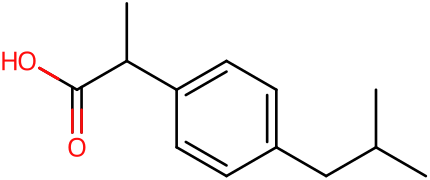
Ibuprofen Stats & Data
HEFNNWSXXWATRW-UHFFFAOYSA-NPharmacology
DrugBankDescription
Ibuprofen is a non-steroidal anti-inflammatory drug (NSAID) derived from propionic acid and it is considered the first of the propionics. The formula of ibuprofen is 2-(4-isobutylphenyl) propionic acid and its initial development was in 1960 while researching for a safer alternative for aspirin. Ibuprofen was finally patented in 1961 and this drug was first launched against rheumatoid arthritis in the UK in 1969 and USA in 1974. It was the first available over-the-counter NSAID. On the available products, ibuprofen is administered as a racemic mixture. Once administered, the R-enantiomer undergoes extensive interconversion to the S-enantiomer _in vivo_ by the activity of the alpha-methylacyl-CoA racemase. In particular, it is generally proposed that the S-enantiomer is capable of eliciting stronger pharmacological activity than the R-enantiomer.
Mechanism of Action
The exact mechanism of action of ibuprofen is unknown. However, ibuprofen is considered an NSAID and thus it is a non-selective inhibitor of cyclooxygenase, which is an enzyme involved in prostaglandin (mediators of pain and fever) and thromboxane (stimulators of blood clotting) synthesis via the arachidonic acid pathway. Ibuprofen is a non-selective COX inhibitor and hence, it inhibits the activity of both COX-1 and COX-2. The inhibition of COX-2 activity decreases the synthesis of prostaglandins involved in mediating inflammation, pain, fever, and swelling while the inhibition of COX-1 is thought to cause some of the side effects of ibuprofen including GI ulceration.
Pharmacodynamics
Ibuprofen has multiple actions in different inflammatory pathways involved in acute and chronic inflammation. The main effects reported in ibuprofen are related to the control of pain, fever and acute inflammation by the inhibition of the synthesis of prostanoids by COX-1 and COX-2. Pain relief is attributed to peripheral affected regions and central nervous system effects in the pain transmission mediated by the dorsal horn and higher spinothalamic tract. Some reports have tried to link the pain regulation with a possible enhancement on the synthesis of endogenous cannabinoids and action on the NMDA receptors. The effect on pain has been shown to be related to the cortically evoked potentials. The antipyretic effect is reported to be linked to the effect on the prostanoid synthesis due to the fact that the prostanoids are the main signaling mediator of pyresis in the hypothalamic-preoptic region. The use of ibuprofen in dental procedures is attributed to the local inhibition of prostanoid production as well as to anti-oedemic activity and an increase of plasma beta-endorphins. Some reports have suggested a rapid local reduction of the expression of COX-2 in dental pulp derived by the administration of ibuprofen. The administration of ibuprofen in patients with rheumatic diseases has shown to control joint symptoms.
Metabolism
Ibuprofen is rapidly metabolized and biotransformed in the liver to the formation of major metabolites which are the hydroxylated and carboxylated derivatives. As soon as it is absorbed, the R-enantiomer undergoes extensive enantiomeric conversion (53-65%) to the more active S-enantiomer _in vivo_ by the activity of alpha-methylacyl-CoA racemase. Ibuprofen metabolism can be divided in phase I which is represented by the hydroxylation of the isobutyl chains for the formation of 2 or 3-hydroxy derivatives followed by oxidation to 2-carboxy-ibuprofen and p-carboxy-2-propionate. These oxidative reactions are performed by the activity of the cytochrome P450 isoforms CYP 2C9, CYP 2C19 and CYP 2C8. Therefore, these enzymes participate in the oxidation of the alkyl side chain to hydroxyl and carboxyl derivatives. From this enzymes, the major catalyst in the formation of oxidative metabolites is the isoform CYP 2C9. The metabolic phase I is followed by a phase II in which the oxidative metabolites may be conjugated to glucuronide prior to excretion. This activity forms phenolic and acyl glucuronides.
Absorption
It is very well absorbed orally and the peak serum concentration can be attained in 1 to 2 hours after extravascular administration. When ibuprofen is administered immediately after a meal there is a slight reduction in the absorption rate but there is no change in the extent of the absorption. When orally administered, the absorption of ibuprofen in adults is very rapidly done in the upper GI tract. The average Cmax, Tmax and AUC ranges around 20 mcg/ml, 2 h and 70 mcg.h/ml. These parameters can vary depending on the enantiomer form, route, and dose of administration.
Indication
Ibuprofen is the most commonly used and prescribed NSAID. It is very common over the counter medication widely used as an analgesic, anti-inflammatory and antipyretic. The use of ibuprofen and its enantiomer DB09213 in a racemic mix is common for the management of mild to moderate pain related to dysmenorrhea, headache, migraine, postoperative dental pain, spondylitis, osteoarthritis, rheumatoid arthritis, and soft tissue disorder. Due to its activity against prostaglandin and thromboxane synthesis, ibuprofen has been attributed to alteration of platelet function and prolongation of gestation and labor. As ibuprofen is a widely used medication, the main therapeutic indications are: * Patent Ductus Arteriosus - it is a neonatal condition wherein the ductus arteriosus (blood vessel that connects the main pulmonary artery to the proximal descending aorta) fails to close after birth causing severe risk of heart failure. The prostaglandin inhibition of ibuprofen has been studied for the treatment of this condition as it is known that prostaglandin E2 is responsible for keeping the ductus arteriosus open. * Rheumatoid- and osteo-arthritis - ibuprofen is very commonly used in the symptomatic treatment of inflammatory, musculoskeletal and rheumatic disorders. * Cystic fibrosis - the use of high dosages of ibuprofen has been proven to decrease inflammation and decreasing polymorphonuclear cell influx in the lungs.
Half-life
The serum half-life of ibuprofen is 1.2-2 hours. In patients with a compromised liver function, the half-life can be prolonged to 3.1-3.4 hours.
Protein Binding
Ibuprofen dosage is more than 99% bound to plasma proteins and site II of purified albumin, binding appears to be saturable and becomes non-linear at concentrations exceeding 20 mcg/ml.
Elimination
Ibuprofen is rapidly metabolized and eliminated in the urine thus, this via accounts for more than 90% of the administered dose. It is completely eliminated in 24 hours after the last dose and almost all the administered dose goes through metabolism, representing about 99% of the eliminated dose. The biliary excretion of unchanged drug and active phase II metabolites represents 1% of the administered dose. In summary, ibuprofen is excreted as metabolites or their conjugates. The elimination of ibuprofen is not impaired by old age or the presence of renal impairment.
Volume of Distribution
The apparent volume of distribution of ibuprofen is of 0.1 L/kg.
Clearance
The clearance rate ranges between 3-13 L/h depending on the route of administration, enantiomer type and dosage.
Measured Affinities
Guide to PHARMACOLOGYMeasured binding and functional data for ibuprofen, curated by the IUPHAR/BPS Guide to PHARMACOLOGY. Each row cites the paper it came from. Lower concentrations mean tighter binding — a value in the sub-nanomolar range indicates a very potent interaction.
| Target | Action | Measure | Value | Concentration | Species | Source |
|---|---|---|---|---|---|---|
| COX-2 PTGS2 | Inhibition | pIC50 | 5.87 | 1,349 nM | Human | PMID 22091869 |
| COX-1 PTGS1 | Inhibition | pIC50 | 5.52 | 3,020 nM | Human | PMID 9544212 |
| SMCT1 SLC5A8 | Inhibition | pIC50 | 4.2 | 63,096 nM | Human | PMID 16729224 |
| ASIC1 ASIC1 | Channel blocker | pIC50 | 3.5 | 316,228 nM | Human | — |
| Proton-coupled Amino acid Transporter 1 SLC36A1 | Inhibition | pIC50 | 3.02 | 954,993 nM | Human | PMID 39861697 |
| Peroxisome proliferator-activated receptor-γ | Full agonist | - | — | — | Unknown | — |
Reading this. pKi, pEC50 and pIC50 are negative log molar values, so a higher number means a tighter interaction; the concentration column converts them for you. Values from non-human species are laboratory measurements and do not translate directly to human effect. Receptor affinity is not a dose — it describes what a molecule binds, not how much of it is safe to take.
Receptor data from the IUPHAR/BPS Guide to PHARMACOLOGY (v2026.2), licensed CC BY-SA 4.0. Matched to this substance by InChIKey.
Signs and Symptoms of Overdose Ibuprofen's toxic potential is derived from its inhibition of the cyclooxygenase pathway and the subsequent effects on various cellular processes and multiple organ systems. Prostaglandins and thromboxanes help maintain the gastric mucosal layer and renal blood flow; ibuprofen is associated with a mildly elevated risk of adverse gastrointestinal and renal events, even at therapeutic levels. Reye syndrome is an increasingly rare presentation, primarily due to international efforts to curb aspirin usage since the 1980s.
Liver injury risk
Low concern (rare serious cases reported)
Toxicity (DrugBank)
The symptoms of overdose are presented in individuals that consumed more than 99 mg/kg. Most common symptoms of overdose are abdominal pain, nausea, vomiting, lethargy, vertigo, drowsiness (somnolence), dizziness and insomnia. Other symptoms of overdose include headache, loss of consciousness, tinnitus, CNS depression, convulsions and seizures. May rarely cause metabolic acidosis, abnormal hepatic function, hyperkalemia, renal failure, dyspnea, respiratory depression, coma, acute renal failure, and apnea (primarily in very young pediatric patients). The reported LD50 of ibuprofen is of 636 mg/kg in rat, 740 mg/kg in mouse and 495 mg/kg in guinea pig.
Experience Report Analysis
ErowidDemographics
Gender Distribution
Too few reports for a chart: gender is known from 7 reports, and a split is drawn only from 20 reports or more. Counts are shown instead. Why 20?
- Male 5 of 7
- Female 2 of 7
Age Distribution
Reports Over Time
Real-World Dose Distribution
ErowidFrom 106 of 119 recorded dose entries: those that state a weight (mg, g or µg), in routes with at least five of them. Values above Q3 + 3×IQR, far above what people typically take, are left out; they can include real heavy doses and overdoses, not only mistakes.
Oral (n=103)
Form / Preparation
Most common forms and preparations, as a share of the 6 reports that give one
Too few reports for bars: these forms come from 6 reports, and a bar is drawn only from 20 reports or more. With fewer, a percentage cannot tell a common effect from a rare one. Counts are shown instead. Why 20?
- Pill / Tablet 6 of 6