
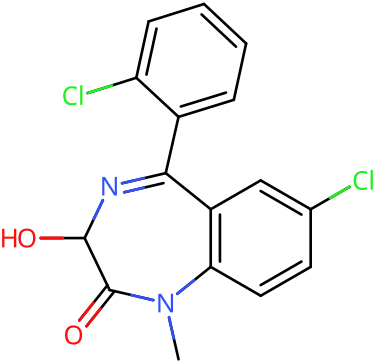
Lormetazepam Stats & Data
FJIKWRGCXUCUIG-UHFFFAOYSA-NPharmacology
DrugBankDescription
Lormatazepam is an orally available benzodiazepine used in the UK for the treatment of short-term insomnia . It is marketed by Auden Mckenzie (Pharma Division) in 0.5 and 1 mg tablet formulations.
Mechanism of Action
Lormetazepam, as a benzodiazepine, binds to the regulatory site between the α and γ subunits of γ-aminobutryic acid (GABA) A receptors with γ2 and α1, α2, α3, or α5 subunits . This facilitates the opening of the chloride channel allowing chloride ions to flow into the neuron resulting in hyperpolarization. Hyperpolarized neurons require greater simulation to reach their action potential threshold. The general inhibitory effect on neuronal depolarization produces the effects of lormetazepam.
Pharmacodynamics
Lormetazepam is a benzodiazepine which reduces central nervous system (CNS) activity . It produces anxiolytic, muscle relaxant, sedative and hypnotic effects. Because it is a short-acting benzodiapine, it does not produce significant sedation after waking.
Metabolism
Metabolised to an inactive metabolite via glucuronide conjugation
Indication
For the treatment of short-term insomnia
Benzodiazepines bind nonspecifically to benzodiazepine receptors BNZ1, which mediates sleep, and BNZ2, which affects affects muscle relaxation, anticonvulsant activity, motor coordination, and memory. As benzodiazepine receptors are thought to be coupled to gamma-aminobutyric acid-A (GABAA) receptors, this enhances the effects of GABA by increasing GABA affinity for the GABA receptor.
Carcinogenicity
No indication of carcinogenicity to humans (not listed by IARC).
Toxicity (DrugBank)
The primary manifestation of overdosage ranges from drowsiness to coma and symptoms may include ataxia, hypotension, hypotonia, respiratory depression which may lead to death . Experimental LD50 values are as follows : Mouse - 780 mg/kg (intraperitoneal), 1790 mg/kg (oral), 10000 mg/kg (subcutaneous). Rat - 6250 mg/kg (intraperitoneal), 10000 mg/kg (oral), 10000 mg/kg (intraperitoneal).
Tolerance & Pharmacokinetics
drugs.wikiNo tolerance chart. Our decay curves for these drugs were estimates, and a curve can make tolerance look longer-lasting than it is, which is the dangerous direction.
How fast tolerance to these drugs fades after a break has not been measured well enough to draw, so don't count on a dose you used to take still being safe: after time off, start with a much smaller amount and don't use alone. Mixing sedatives with each other, with alcohol or with opioids sharply raises the risk of a fatal overdose. If you've been using regularly, don't stop suddenly: withdrawal from benzodiazepines, alcohol or GHB/GBL can cause seizures or delirium, so get medical help to cut down gradually.
Sources: FRANK: benzodiazepines · Alcohol and Drug Foundation: GHB · FDA 2020: benzodiazepine boxed warning · FDA 2019: gabapentinoids and breathing · NHS: alcohol use disorder