
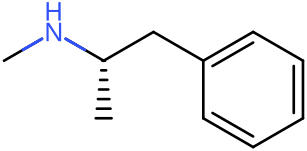
Methamphetamine Stats & Data
CNC(C)Cc1ccccc1MYWUZJCMWCOHBA-UHFFFAOYSA-NInteraction Warnings
Amphetamine may increase the effects of tricyclic antidepressants to dangerous levels.
The neurotoxic effects of MDMA may be increased when combined with amphetamines.
This combination may increase strain on the heart.
Pharmacology
DrugBankDescription
Metamfetamine (methamphetamine) is a psychostimulant and sympathomimetic drug. It is a member of the amphetamine group of sympathomimetic amines. Methamphetamine can induce effects such as euphoria, increased alertness and energy, and enhanced self-esteem. It is a scheduled drug in most countries due to its high potential for addiction and abuse.
Mechanism of Action
Methamphetamine enters the brain and triggers a cascading release of norepinephrine, dopamine and serotonin. To a lesser extent methamphetamine acts as a dopaminergic and adrenergic reuptake inhibitor and in high concentrations as a monamine oxidase inhibitor (MAOI). The mechanism of action involved in producing the beneficial behavioral changes seen in hyperkinetic children receiving methamphetamine is unknown.
Pharmacodynamics
Methamphetamine is a potent central nervous system stimulant which affects neurochemical mechanisms responsible for regulating heart rate, body temperature, blood pressure, appetite, attention, mood and responses associated with alertness or alarm conditions. The acute effects of the drug closely resemble the physiological and psychological effects of an epinephrine-provoked fight-or-flight response, including increased heart rate and blood pressure, vasoconstriction (constriction of the arterial walls), bronchodilation, and hyperglycemia (increased blood sugar). Users experience an increase in focus, increased mental alertness, and the elimination of fatigue, as well as a decrease in appetite.
Metabolism
Hepatic. The primary site of metabolism is in the liver by aromatic hydroxylation, N-dealkylation and deamination. At least seven metabolites have been identified in the urine, with the main metabolites being amphetamine (active) and 4-hydroxymethamphetamine. Other minor metabolites include 4-hydroxyamphetamine, norephedrine, and 4-hydroxynorephedrine.
Absorption
Methamphetamine is rapidly absorbed from the gastrointestinal tract with peak methamphetamine concentrations occurring in 3.13 to 6.3 hours post ingestion. Moreover, when administered intranasally or as an inhalation, methamphetamine also demonstrates a high degree of absorption. It is distributed to most parts of the body. Because methamphetamine has a high lipophilicity it is distributed across the blood brain barrier and crosses the placenta.
Indication
For the treatment of Attention Deficit Disorder with Hyperactivity (ADHD) and exogenous obesity.
Half-life
The biological half-life has been reported in the range of 4 to 5 hours.
Elimination
Excretion occurs primarily in the urine, the rate of which is dependent on urine pH. Between 30-54% of an oral dose is excreted in urine as unchanged methamphetamine and 10-23% as unchanged amphetamine. Following an intravenous dose, 45% is excreted as unchanged parent drug and 7% amphetamine.
Receptor Profile
Receptor Actions
History & Culture
1893–1919
The development of methamphetamine followed shortly after the creation of its parent compound. Romanian chemist Lazăr Edeleanu first synthesized amphetamine in Germany in 1887, naming it phenylisopropylamine. Six years later, Japanese chemist Nagai Nagayoshi achieved the first synthesis of methamphetamine from ephedrine in 1893. Despite these discoveries, neither substance found pharmacological application for several decades. A significant advancement came in 1919 when Japanese pharmacologist Akira Ogata developed a method to produce methamphetamine hydrochloride through the reduction of ephedrine using red phosphorus and iodine. This crystalline salt form would eventually become the basis for both pharmaceutical manufacturing and illicit production.
1938–1945
Beginning in 1938, methamphetamine became available as a nonprescription drug in Germany under the brand name Pervitin, manufactured by the Berlin-based Temmler pharmaceutical company. The German military subsequently incorporated the drug across all branches of the armed forces, valuing its stimulant properties and capacity to sustain wakefulness during extended operations. Soldiers gave the tablets colloquial nicknames including "Stuka-Tablets" and "Hermann-Göring-Pills," the latter a sardonic allusion to the Reichsmarschall's well-known drug dependencies. The severe consequences of use, particularly debilitating withdrawal symptoms, prompted military authorities to sharply reduce distribution by 1940. By 1941, access required a prescription, and supply was tightly controlled. Soldiers subsequently received only a few tablets at a time and were discouraged from combat use. As historian Łukasz Kamieński documented, soldiers who took Pervitin before battle typically found themselves unable to function effectively for one to two days afterward, experiencing severe drug hangovers that rendered them ineffective. In some cases, soldiers under the influence committed violent acts against civilians or turned on their own officers. Near the war's conclusion, methamphetamine became a component in an experimental combination drug designated D-IX. Beyond Germany, both Allied and Axis forces employed amphetamines and methamphetamine throughout the conflict for their performance-enhancing and fatigue-reducing properties.
1950s–1960s
Following World War II, pharmaceutical methamphetamine transitioned into civilian medical use. Obetrol Pharmaceuticals patented Obetrol in the 1950s, establishing one of the first branded pharmaceutical methamphetamine products indicated for obesity treatment. The drug's psychological and stimulant properties made it an extremely popular weight-loss medication in the United States throughout the 1950s and 1960s. As evidence of the drug's addictive properties accumulated, governments began implementing increasingly strict controls on its production and distribution. Pharmaceutical methamphetamine continues to be marketed under the trade name Desoxyn, with the trademark passing from Lundbeck to Italian pharmaceutical company Recordati in January 2013.
Illicit methamphetamine production has become concentrated in the Golden Triangle of Southeast Asia, with Shan State in Myanmar emerging as the world's leading manufacturing center. Operations in this region produce both ya ba (the tablet form popular in East Asia) and crystalline methamphetamine for distribution across East and Southeast Asia, the Pacific, and the United States. The Cantonese Chinese syndicate known as Sam Gor, or "The Company," is understood to be the primary international criminal organization driving this production expansion. Comprised of members from five different triads, the organization allegedly controls approximately 40 percent of the Asia-Pacific methamphetamine market while also trafficking heroin and ketamine. Sam Gor generates an estimated minimum of eight billion dollars annually and maintains operations spanning Myanmar, Thailand, New Zealand, Australia, Japan, China, and Taiwan. Previously operating manufacturing facilities in Southern China, the organization relocated production primarily to Shan State, contributing to a massive surge in regional crystal methamphetamine supply around 2019. Despite well-documented risks of dependence and substantial media attention devoted to its dangers, methamphetamine remains widely used as a recreational substance globally.
Subjective Effects
Physical
The physical effects of Methamphetamine can be broken down into several components which progressively intensify proportional to dosage.
- Stimulation: In terms of its effects on the physical energy levels of the user, amphetamine is usually considered to be extremely energetic and stimulating in a fashion that is identical to that of amphetamine, but stronger than that of modafinil, caffeine, and MDMA. It is similar yet distinct from the stimulation experienced on MDMA, encouraging physical activities such as dancing, socializing, running, or cleaning. The particular style of stimulation which amphetamine presents can be described as forced. This means that at higher dosages, it becomes difficult or impossible to keep still as jaw clenching, involuntarily bodily shakes and vibrations become present, resulting in extreme shaking of the entire body, unsteadiness of the hands, and a general lack of motor control.
- Increased heart rate
- Dehydration
- Appetite suppression
- Nausea
- Frequent urination
- Abnormal heartbeat
- Vasoconstriction
- Temporary erectile dysfunction
- Bronchodilation
- Increased perspiration
- Increased blood pressure
Cognitive
The cognitive effects of methamphetamine can be broken down into several components which progressively intensify proportional to dosage. The general head space of methamphetamine is described by many as one of extreme mental stimulation, increased focus, and powerful euphoria. It contains a large number of typical stimulant cognitive effects. Although negative side effects are usually mild at low to moderate dosages, they become increasingly likely to manifest themselves with higher amounts or extended usage. This particularly holds true during the offset of the experience.
- Focus enhancement: This component is most effective at low to moderate dosages as anything higher will usually impair concentration.
- Ego inflation
- Wakefulness
- Sexual arousal
- Thought acceleration
- Analysis enhancement
- Memory enhancement
- Motivation enhancement
- Euphoria
- Anxiety
- Depression
- Compulsive redosing
- Cognitive fatigue: This component can occur during the offset of this compound as a rebound effect which is usually equal in its intensity to the enhancements which occurred before it.
Forked from Subjective Effect Documentation by Josie Kins, September 2015. Via dose.wiki (CC0).
There is evidence that methamphetamine causes brain damage from long-term use in humans; this damage includes adverse changes in brain structure and function, such as reductions in gray matter volume in several brain regions and adverse changes in markers of metabolic integrity. Unlike amphetamine, methamphetamine is directly neurotoxic to dopamine neurons. Moreover, methamphetamine abuse is associated with an increased risk of Parkinson's disease due to excessive pre-synaptic dopamine autoxidation, a mechanism of neurotoxicity. Similar to the neurotoxic effects on the dopamine system, methamphetamine can also result in neurotoxicity to serotonin neurons. It has been demonstrated that a high core temperature is correlated with an increase in the neurotoxic effects of methamphetamine.
Carcinogenicity
No indication of carcinogenicity to humans (not listed by IARC).
Overdose
A methamphetamine overdose may result in a wide range of symptoms and is potentially fatal at heavy dosages. A moderate overdose of methamphetamine may induce symptoms such as abnormal heart rhythm, confusion, dysuria, high or low blood pressure, hyperthermia, hyperreflexia, myalgia, severe agitation, tachypnea, tremor, urinary hesitancy, and urinary retention.
Addiction & dependence
As with other stimulants, the chronic use of methamphetamine can be considered extremely addictive with a high potential for abuse and is capable of causing psychological dependence among certain users. When addiction has developed, cravings and withdrawal effects may occur if a person suddenly stops their usage. Tolerance to the effects of methamphetamine rapidly develops with prolonged and repeated use.
Organ-specific toxicity
There is evidence that methamphetamine causes brain damage from long-term use in humans; this damage includes adverse changes in brain structure and function, such as reductions in gray matter volume in several brain regions and adverse changes in markers of metabolic integrity. Unlike amphetamine, methamphetamine is directly neurotoxic to dopamine neurons. Moreover, methamphetamine abuse is associated with an increased risk of Parkinson's disease due to excessive pre-synaptic dopamine autoxidation, a mechanism of neurotoxicity.
Toxicity (DrugBank)
Manifestations of acute overdosage with methamphetamine include restlessness, tremor, hyperreflexia, rapid respiration, confusion, assaultiveness, hallucinations, panic states, hyperpyrexia, and rhabdomyolysis. Fatigue and depression usually follow the central stimulation. Cardiovascular effects include arrhythmias, hypertension or hypotension, and circulatory collapse. Gastrointestinal symptoms include nausea, vomiting, diarrhea, and abdominal cramps. Fatal poisoning usually terminates in convulsions and coma.
Effect Profile
Curated + 539 ReportsStrong stimulation, euphoria, and focus with moderate anxiety/jitters
User Experiences
Duration Timeline
BluelightCommunity Effects
TripSitTolerance & Pharmacokinetics
drugs.wikiTolerance Decay
Acute tolerance builds rapidly over one or more long sessions, with noticeable blunting on subsequent doses; partial reversal occurs over 1–4 weeks if abstinent. Data are largely observational/anecdotal from user communities rather than controlled studies.
Cross-Tolerances
Demographics
Gender Distribution
Age Distribution
Reports Over Time
Effect Analysis
Erowid + BluelightEffects aggregated from 438 experience reports (388 single-substance Erowid + 151 Bluelight)
Effect Sentiment Distribution
Confidence Distribution
Each bar is the share of reports mentioning the effect; its whisker, and the band on the rows below, is the 95% interval: where the share could plausibly be with other reports of the same kind.
Positive Effects 43
Adverse Effects 80
Show 57 more adverse effects
Show 17 neutral or unclassified mentions
Also reported in combinations. In the 172 Methamphetamine reports where another drug was taken too, 26 (15.1%) mention hospital, emergency services or an overdose, 2 (1.2%) a seizure and 17 (9.9%) psychosis. In the 388 single-substance reports: 12.9%, 0.8% and 7.2%. These are not in the figures above: they cannot be put down to Methamphetamine alone, and a mention is not always something that happened to the writer.
Dose-Response Correlation
How effect frequency changes across dose levels. Whiskers, and the numbers' hover text, give each figure's 95% interval.
Not drawn, too few reports (a dose tier needs 20): Smoked Heavy (n=17). Why 20?
Subjective Effect Ontology
Experience ReportsStructured effect tags extracted from 610 Erowid & Bluelight experience reports using a controlled vocabulary of 220+ canonical effects across 15 domains.
Cognitive
Emotional
Motor
Tactile
Dosage Distribution
Dose distribution from experience reports, one dose per report (the first listed). Doses above Q3 + 3×IQR, far above what people typically take, are left out of the median and range and listed under each route: most are real heavy doses or overdoses, not mistakes.
Insufflated
Smoked
1 report gave a dose above the typical range (25,000 mg), so it is not in the figures above. Listing a dose here does not mean it is safe.
Show the report
Real-World Dose Distribution
ErowidFrom 772 of 919 recorded dose entries: those that state a weight (mg, g or µg), in routes with at least five of them. Values above Q3 + 3×IQR, far above what people typically take, are left out; they can include real heavy doses and overdoses, not only mistakes.
Rectal (n=589)
Oral (n=93)
Smoked (n=27)
Insufflated (n=37)
Intravenous (n=15)
Common Combinations
Most co-occurring substances, as a share of all 560 reports filed under Methamphetamine; whiskers are 95% intervals
Form / Preparation
Most common forms and preparations, as a share of the 341 reports that give one; whiskers are 95% intervals
Body-Weight Dosing
Dose per kg of body weight, one dose per report (the first listed), from reports giving a weight of 30–250 kg. Doses above Q3 + 3×IQR, far above what people typically take, are left out of the median and range and listed under each route.
Insufflated
Smoked
1 report gave a dose above the typical range (367.647 mg/kg), so it is not in the figures above. Listing a dose here does not mean it is safe.
Show the report
Oral
1 report gave a dose above the typical range (7.874 mg/kg), so it is not in the figures above. Listing a dose here does not mean it is safe.
Show the report
Unknown
1 report gave a dose above the typical range (147.059 mg/kg), so it is not in the figures above. Listing a dose here does not mean it is safe.
Show the report
- 147.059 mg/kg · another drug taken too
Intravenous
Redose Patterns
Redosing behavior across 405 reports
Legal Status
| Country | Status | Notes |
|---|---|---|
| Australia | Schedule 8 | Available for medical use under Schedule 8, but possession, production, or supply without authority is illegal. Personal quantities under 1.5 grams were decriminalized in the Australian Capital Territory as of October 28, 2023. |
| Austria | Illegal (SMG) | Prohibited under the Suchtmittelgesetz (SMG - Austrian Narcotics Act). Illegal to possess, produce, or sell. |
| Brazil | Class F2 | Listed as a Class F2 prohibited psychoactive substance. Reports indicate it may sometimes be obtained with a prescription. |
| Canada | Schedule I (CDSA) | Listed under Schedule I of the Controlled Drugs and Substances Act since August 2005. Previously classified as Schedule III. A 2011 Supreme Court decision established a constitutional right to access supervised injection sites under Section 7 of the Charter. |
| Czech Republic | Schedule II | Controlled as a Schedule II substance under national drug legislation. |
| France | Stupéfiant | Scheduled as a stupéfiant, a recognized drug of abuse under French law. Illegal to possess, buy, sell, or manufacture. |
| Germany | Anlage II BtMG | First added to the Opiumgesetz (Opium Act) on July 1, 1941. Currently controlled under Anlage II of the Betäubungsmittelgesetz (Narcotics Act) since March 1, 2008. Previously listed in Anlage III, which permitted prescription on narcotic prescription forms. Manufacturing, possession, import, export, purchase, sale, procurement, or dispensing without a license is prohibited. |
| Israel | Prohibited | Banned in July 2010 as part of legislation targeting four families of substances (cathinones, methcathinones, amphetamines, and methamphetamines) along with their derivatives. The framework was designed to preemptively prohibit novel analogues. |
| Japan | Prohibited | Controlled under the Amphetamines Control Law of 1954. Production, distribution, and possession are illegal. |
| Netherlands | List I (Opiumwet) | Controlled as a List I substance under the Opium Act. Possession, distribution, and production without license is illegal. |
| New Zealand | Class A | Controlled as a Class A substance, representing the most restrictive category under New Zealand's drug scheduling system. |
| Norway | Schedule II | Classified as Schedule II under Norwegian drug legislation. Illegal to buy or possess without a prescription. |
| Poland | Group II-P | Controlled as a Group II-P substance under Polish drug legislation. |
| South Korea | Prohibited | Banned in compliance with the United Nations Convention on Psychotropic Substances. |
| Sweden | List II / List P II | Classified under both the 1971 UN Psychotropic Convention (List P II) and domestically under Sweden's List II. Possession, distribution, and production are prohibited. |
| Switzerland | Verzeichnis A | Specifically named as a controlled substance under Verzeichnis A (Schedule A) of Swiss narcotics legislation. |
| United Kingdom | Class A | Classified as Class A, the most restrictive category, since January 18, 2007. Illegal to buy, sell, or possess. |
| United States | Schedule II | Controlled under the Controlled Substances Act since 1970. Available by prescription under the trade name Desoxyn for treatment of ADHD and severe obesity, though rarely prescribed due to abuse potential. Illegal to buy, sell, or possess without a DEA license or prescription. Notably, levomethamphetamine remains available over-the-counter. |
Harm Reduction
drugs.wiki- Purity/formulation matter: street meth is almost always the hydrochloride (HCl) salt, which is water-soluble and directly smokable; meth freebase is an oily liquid and uncommon. Do not attempt to base or re-base street crystals; this creates caustic products and adds risks. Salt-to-base potency differs by ~20% (HCl MW ~185.7 vs base 149.2).
- Half-life and duration vary with urine pH: alkalinization markedly slows renal clearance and can extend both duration and adverse effects; acidification speeds clearance. Intentionally altering body pH to tweak duration is risky and discouraged.
- Cardiovascular strain (tachycardia, hypertension, arrhythmia, chest pain) and hyperthermia are leading acute harms; risk escalates with dose, redosing, dehydration, heat, and polydrug stimulant use. Seek urgent care for chest pain, severe headache, or high fever.
- Neurotoxicity risk increases with high doses, hyperthermia, and prolonged wakefulness; spacing sessions, sleeping, eating, and keeping cool are protective behaviors.
- Redosing drives binges and insomnia. Plan a cutoff time; dose early in the day; avoid stacking routes (e.g., smoking then IV).
- Hydration: sip ~250–500 mL/h of water or oral rehydration solution when active/hot; avoid overhydration. Replace electrolytes on long sessions.
- Oral care: dry mouth (xerostomia) and bruxism increase caries risk. Prefer water over sugary sodas; use sugar-free gum/lozenges for saliva; brush gently before bed; consider fluoride rinse.
- Insufflation: rotate nostrils; use fine powder; rinse with sterile saline after to reduce irritation and septal damage.
- Smoking: use heat-control (no direct flame on crystal), avoid sharing pipes/mouthpieces to reduce infection transmission from burns/sores; allow glass to cool to prevent cracks and cuts.
- Injection: use new sterile equipment every time; filter with a 0.22 μm wheel filter if possible; avoid ‘acidifying’ crystal HCl; rotate sites; never share equipment; watch for signs of infection or endocarditis (fever, chills, new heart murmur).
- Drug checking: if available, use reagent testing or mail-in lab services. Fentanyl test strips can detect contamination but require high dilution to avoid false positives from concentrated stimulants; test every new batch and carry naloxone where contamination is prevalent.
- Medicines/supplements: CYP2D6 inhibition (e.g., some antidepressants) can increase active levels; combining with serotonergic or seizure-threshold–lowering drugs (e.g., tramadol) increases risks.
- Legal status: Schedule II (US) for limited medical uses; illicit supply varies in purity and may include adulterants; never assume any batch is pure.
References
Data Sources
Cited References
- Barr et al. 2006 - The need for speed: an update on methamphetamine addiction
- DrugBank: Methamphetamine
- EUDA: Methamphetamine Drug Profile
- Krasnova & Cadet 2009 - Methamphetamine toxicity and messengers of death
- Nestler et al. 2009 - Molecular Neuropharmacology
- Nutt et al. 2010 - Drug harms in the UK: a multicriteria decision analysis
- Shoptaw et al. 2009 - Treatment for amphetamine withdrawal
- DrugWise: Methamphetamine
Additional references
- DrugWise: Methamphetamine (general overview)
- DrugBank DB01577 (metabolism, renal elimination dependent on urine pH; adverse effects)
- EUDA/EMCDDA Methamphetamine drug profile (forms, analysis, S-enantiomer scheduling, medical use)
- TripSit: Methamphetamine (dosage, durations, HR tips)
- TripSit: Drug combinations (MAOI/stimulants; tramadol seizure risk; general combo guidance)
- Bluelight: Micron Filtering Mega Thread (IV sterile filtration and wheel filter guidance)
- Erowid/DrugsData crew blog: N-isopropylbenzylamine not found in meth submissions (adulterant myth context)
- Bluelight: Fentanyl in Meth — dilution to avoid FTS false positives with concentrated stimulants
- TripSit: Combination chart announcement/reference