
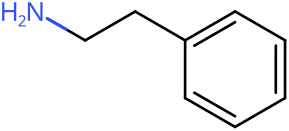
Phenethylamine Stats & Data
NCCc1ccccc1BHHGXPLMPWCGHP-UHFFFAOYSA-NPharmacology
DrugBankDescription
Pea allergenic extract is used in allergenic testing.
Receptor Profile
Receptor Actions
Measured Affinities
Guide to PHARMACOLOGYMeasured binding and functional data for β-phenylethylamine, curated by the IUPHAR/BPS Guide to PHARMACOLOGY. Each row cites the paper it came from. Lower concentrations mean tighter binding — a value in the sub-nanomolar range indicates a very potent interaction.
| Target | Action | Measure | Value | Concentration | Species | Source |
|---|---|---|---|---|---|---|
| TAAR4P Taar4 | Agonist | pEC50 | 6 | 1,000 nM | Mouse | PMID 16878137 |
| TA1 receptor TAAR1 | Full agonist | pEC50 | — | — | Human | — |
| TA1 receptor Taar1 | Full agonist | pEC50 | — | — | Mouse | — |
| TA1 receptor Taar1 | Full agonist | pEC50 | — | — | Rat | — |
| TAAR4P Taar4 | Partial agonist | - | — | — | Rat | PMID 20559446 |
Reading this. pKi, pEC50 and pIC50 are negative log molar values, so a higher number means a tighter interaction; the concentration column converts them for you. Values from non-human species are laboratory measurements and do not translate directly to human effect. Receptor affinity is not a dose — it describes what a molecule binds, not how much of it is safe to take.
Receptor data from the IUPHAR/BPS Guide to PHARMACOLOGY (v2026.2), licensed CC BY-SA 4.0. Matched to this substance by InChIKey.
History & Culture
Phenethylamine has long held a special place in psychopharmacological research due to its status as the simplest member of the phenethylamine chemical class. Its clean molecular structure, natural presence in human tissues and bodily fluids, and close chemical relationship to both amphetamine and endogenous neurotransmitters have made it a subject of sustained scientific interest. The compound occurs widely throughout nature in both plants and animals, produced as a metabolic byproduct during the bacterial decomposition of phenylalanine in tissue. Multiple synthetic routes for phenethylamine were established in the mid-twentieth century. In 1948, R. F. Nystrom and W. G. Brown first reported a convenient synthesis involving the reduction of ω-nitrostyrene using lithium aluminium hydride in ether. An alternative method was later published in 1955 by J. C. Robinson and H. R. Snyder in Organic Syntheses, which employed the reduction of benzyl cyanide with hydrogen in liquid ammonia using a Raney-Nickel catalyst under high temperature and pressure conditions. Phenethylamine gained popular attention through its association with chocolate, where it occurs as a significant component, particularly following microbial fermentation. This led to its characterization in mainstream media as "the love-sickness chemical," spawning a popular myth that individuals experiencing heartbreak compulsively consume chocolate to replenish depleted phenethylamine levels. While some researchers have speculated that phenethylamine may play a role in romantic affection, these claims have not been substantiated by direct experimental evidence. The compound has also been implicated in the euphoric effects of vigorous physical activity; research has demonstrated that thirty minutes of moderate- to high-intensity exercise significantly elevates urinary levels of phenylacetic acid, the primary metabolite of phenethylamine. Similar increases have been observed following skydiving, suggesting phenethylamine may contribute to the subjective pleasure associated with intense physical exertion.
Toxicity
PubChemPEA poisonings may be severe in young and healthy individuals. The most frequently reported symptoms included anxiety and hallucinations (49%), mydriasis and headache (41%), tachycardia (40%) and hypertension (15%).
Effect Profile
Curated + 5 ReportsModerate euphoria and focus with strong anxiety/jitters, mild stimulation
Tolerance & Pharmacokinetics
drugs.wikiTolerance Decay
Data are anecdotal; users frequently report rapid loss of effect with repeated dosing in a session and partial return to baseline sensitivity after several days to a week.
Cross-Tolerances
Experience Report Analysis
ErowidDemographics
Gender Distribution
Too few reports for a chart: gender is known from 13 reports, and a split is drawn only from 20 reports or more. Counts are shown instead. Why 20?
- Male 12 of 13
- Female 1 of 13
Age Distribution
Reports Over Time
Effect Analysis
ErowidEffects aggregated from 5 experience reports (5 single-substance Erowid)
Effect Sentiment Distribution
Confidence Distribution
Each bar is the share of reports mentioning the effect; its whisker, and the band on the rows below, is the 95% interval: where the share could plausibly be with other reports of the same kind.
Too few reports for bars: these effects come from 5 single-substance Erowid reports, and a bar is drawn only from 20 reports or more. With fewer, a percentage cannot tell a common effect from a rare one. Counts are shown instead. Why 20?
Positive Effects 3
Adverse Effects 1
Also reported in combinations. In the 8 Phenethylamine reports where another drug was taken too, 1 mentions hospital, emergency services or an overdose, 0 a seizure and 0 psychosis (too few reports for percentages). In the 5 single-substance reports: 0, 0 and 0. These are not in the figures above: they cannot be put down to Phenethylamine alone, and a mention is not always something that happened to the writer.
Real-World Dose Distribution
ErowidFrom 11 of 19 recorded dose entries: those that state a weight (mg, g or µg), in routes with at least five of them. Values above Q3 + 3×IQR, far above what people typically take, are left out; they can include real heavy doses and overdoses, not only mistakes.
Oral (n=10)
Common Combinations
Most co-occurring substances, as a share of all 13 reports filed under Phenethylamine
Too few reports for bars: these combinations come from 13 reports, and a bar is drawn only from 20 reports or more. With fewer, a percentage cannot tell a common effect from a rare one. Counts are shown instead. Why 20?
- Selegiline 3 of 13
Form / Preparation
Most common forms and preparations, as a share of the 5 reports that give one
Too few reports for bars: these forms come from 5 reports, and a bar is drawn only from 20 reports or more. With fewer, a percentage cannot tell a common effect from a rare one. Counts are shown instead. Why 20?
- Capsule 3 of 5
- Powder / Crystals 2 of 5
Harm Reduction
drugs.wiki- PEA is preferentially metabolized by monoamine oxidase-B (MAO-B), leading to a very short duration and low oral bioavailability; any MAO-B inhibition can dramatically increase exposure and physiological impact. This is the central harm-reduction issue: avoid all MAOIs (including Parkinson’s drugs and the antibiotic linezolid).
- Selective MAO-B inhibitors (selegiline, rasagiline, safinamide) and nonselective/irreversible MAOIs (phenelzine, tranylcypromine, isocarboxazid) can potentiate PEA to a degree that risks severe hypertension, hyperthermia, or cerebrovascular events; this risk exists even at small PEA doses when MAO is inhibited.
- Linezolid is a reversible, nonselective MAOI used as an antibiotic; combining PEA with linezolid can precipitate dangerous pressor responses and should be strictly avoided.
- Because the psychoactive window is brief, some users escalate to gram-level oral doses or engage in frequent redosing cycles; harm-reduction priorities include not stacking stimulants, monitoring blood pressure/heart rate, maintaining hydration, and stopping at the first signs of severe headache, chest pain, or marked flushing. These redosing patterns are consistently reported in harm-reduction forums and align with the known indirect sympathomimetic profile of PEA.
- PEA primarily acts as an endogenous trace amine/TAAR1 agonist and an indirect sympathomimetic (catecholamine-releasing); expect tachycardia, blood pressure elevation, and anxiety at higher doses, especially with co-stimulants. Individuals with cardiovascular disease should avoid use.
- Food-derived/background PEA (e.g., chocolate) is trivial compared to supplemental doses; however, in the presence of MAOI therapy even trace amines can become clinically significant, reinforcing the strict MAOI-avoidance guidance.
- Urine drug testing: cross-reactivity data indicate β-phenethylamine can interfere with some assays; although not usually targeted, unexpected results should be confirmed with specific methods (e.g., GC/MS).
- There is no established therapeutic dosing for psychoactive purposes. If an individual nevertheless chooses to experiment, conservative spacing (weeks) and strict avoidance of MAOIs and stimulant stacks are critical to reduce cumulative cardiovascular strain and compulsive redosing risk.
References
Data Sources
Cited References
- DrugBank: Phenethylamine
- Erowid: PiHKAL Entry #142 PEA
- PsychonautWiki: Phenethylamine (compound)
- TripSit Factsheet: Phenethylamine
- Wikipedia: TAAR1
- DrugBank: Phenethylamine BioEntity
- Comparative effects of amphetamine, phenylethylamine and related drugs on dopamine efflux, dopamine uptake and mazindol binding.
Additional references
- DrugBank: Phenethylamine (synonyms and overview)
- NCBI Gene: TAAR1 (responds to β-phenethylamine)
- StatPearls: Monoamine Oxidase Inhibitors (substrate selectivity, MAO-B→PEA)
- NCBI Gene: MAOB (preferentially degrades phenylethylamine)
- StatPearls: Selegiline (MAO-B inhibitor; potentiation risks)
- StatPearls: Linezolid (reversible nonselective MAOI)
- TripSit Drug Combinations (MAO-B inhibitors potentiate phenethylamines)
- Bluelight discussion: PEA + selegiline risks and binge potential (anecdotal)
- Drugs-Forum thread: Phenylethylamine experiences (short duration, redosing; anecdotal)
- Roche OnLine DAT cross-reactivity (β-Phenethylamine listed)