
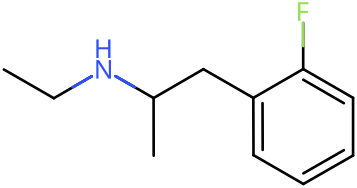
2-FEA Stats & Data
CCNC(C)Cc1ccccc1FNIWYLNFSJJLYHU-UHFFFAOYSA-NReceptor Profile
Receptor Actions
History & Culture
2-FEA emerged as a novel psychoactive substance distributed through online research chemical vendors. Limited formal documentation exists regarding its precise origins, initial synthesis, or the circumstances of its introduction to the recreational drug market. As a fluorinated amphetamine derivative, 2-FEA follows a broader pattern of substituted amphetamine analogues appearing on the research chemical market, though specific details about when it first became commercially available remain poorly documented in the available literature.
Toxicity
PsychonautWikiThe toxicity and long-term health effects of recreational 2-FEA use do not seem to have been studied in any scientific context and the exact toxic dosage is unknown. This is because 2-FEA has a very limited history of human usage. Anecdotal reports from those who have tried 2-FEA suggest that there do not seem to be any negative health effects attributed to simply trying this substance at low to moderate doses by itself or using it sparingly (but nothing can be completely guaranteed). It is strongly recommended that one use harm reduction practices when using this substance.
Effect Profile
CuratedLow visuals and headspace with strong body load
Moderate stimulation and euphoria with mild sensory enhancement
Strong focus with strong anxiety/jitters, moderate stimulation and euphoria
Tolerance & Pharmacokinetics
drugs.wikiTolerance Decay
Anecdotal patterns similar to other amphetamines: short‑term tolerance can develop across consecutive days; spacing use by at least 1–2 weeks is commonly reported to reduce residual insomnia/low mood. Data quality: anecdotal.
Legal Status
| Country | Status | Notes |
|---|---|---|
| Canada | Schedule I (analogue) | Considered a Schedule I controlled substance as an analogue of amphetamine under Canadian drug scheduling laws. |
| France | Not scheduled | As of December 2024, 2-FEA is not explicitly scheduled under French drug control legislation. Possession is technically legal, though the substance exists in a regulatory gray area. |
| Germany | NpSG controlled | Controlled under the Neue-psychoaktive-Stoffe-Gesetz (New Psychoactive Substances Act) since November 26, 2016. Production and import with intent to market, administration to others, and trading are punishable offenses. Possession is prohibited but not subject to criminal penalties. |
| Netherlands | Legal (pending review) | Currently unscheduled and legal to possess. However, 2-FEA falls within a substance group that may be prohibited under recently passed legislation targeting new psychoactive substances. |
| New Zealand | Schedule 3 | Classified as a Schedule 3 controlled substance due to its structural relationship to amphetamine under New Zealand's analogue provisions. |
| Switzerland | Controlled (Verzeichnis E) | Regulated as a controlled substance under Verzeichnis E point 130 as a defined derivative of α-methylphenethylamine. Exemptions exist for legitimate scientific or industrial applications. |
| United Kingdom | Class A | Controlled as a Class A substance under the amphetamine analogue clause of the Misuse of Drugs Act 1971. Class A classification carries the most severe penalties under UK drug law. |
| United States | Unscheduled | Not a federally controlled substance as of 2011. However, prosecution may be possible under the Federal Analogue Act when sold or possessed with intent for human consumption, as it is structurally related to scheduled amphetamines. |
Harm Reduction
drugs.wiki• Identity and purity: Mislabeling and substitutions are common in the NPS market. Where possible, use an official drug checking service (GC‑MS/FT‑IR). If no lab testing is available, test a very small dose first and wait; for oral use, wait at least 2 hours before considering more. Use your own snorting equipment to reduce infection risk.
• Dosing discipline: Start low and go slow. Pre‑measure doses with a milligram scale. For faster routes (insufflated/rectal), pre‑plan a maximum total session amount to reduce chasing effects. TripSit provides a volumetric dosing tool and combination guidance.
• Heat and hydration: Stimulants increase body temperature and fluid loss. Take regular cool‑down breaks if active/hot, sip fluids slowly, and avoid overhydration. A practical rule-of-thumb from clubbing harm‑reduction: about one pint (~500 mL) per hour when exerting, with breaks; do not force excessive water (risk of hyponatremia).
• Cardiovascular risk: Like other synthetic stimulants, 2-FEA may elevate heart rate and blood pressure. Avoid combining with other stimulants, and people with cardiovascular disease should be especially cautious or avoid use.
• Redosing/compulsion: Stimulants can promote compulsive redosing. To reduce risk, plan session limits, store the remainder out of reach/sight, and consider having a trusted person hold the supply.
• Nasal health: If insufflating, use your own straw/tube, avoid frequent large lines, and gently rinse with saline after sessions to reduce irritation.
• Sleep and comedown: Expect insomnia and a low mood the following day. Prioritize rest, nutrition, and rehydration. Avoid using alcohol, benzodiazepines, or opioids to force sleep due to interaction risks.
• Evidence limits: There are no controlled human pharmacokinetic studies for 2-FEA. All typical dose/duration ranges here are from user reports; individual responses vary widely. Prefer lab confirmation and conservative titration. (General NPS preparedness guidance.)
References
Cited References
- Bluelight: 2-FEA Experiences and Discussion Thread
- EMCDDA: 2-Fluoroamphetamines Technical Report (2021)
- Erowid: 2-FEA Experience Vault
- Nellis JR et al. In vitro monoamine transporter and receptor profile of fluorinated ethylamphetamines
- Power JD et al. Detection of 2-FEA in post-mortem blood
- Tessel RE, Woods JH. Substituted N-ethylamphetamine self injection responding in the rhesus monkey
- Bluelight: ‘2-FEA Experiences’ Megathread (user dose/duration reports).
- Reddit: r/researchchemicals ‘2-FEA experience report’ thread (2019).
- Erowid: 2 Fea.shtml
Additional references
- Isomer Design entry for 2-FEA (naming/IDs)
- TripSit main site (HR resources, combo chart; volumetric dosing tool linked)
- TripSit – Drug Combination Chart announcement (HR rationale)
- DrugWise – Amphetamine (HR: start low/go slow; avoid stimulant mixes; jaw clenching)
- DrugWise – Ecstasy (HR hydration guidance; avoid overhydration)
- DrugWise – Why do people die after taking ecstasy? (hyponatremia explanation)
- EUDA – Synthetic stimulants: current situation in Europe (general harms context)
- Saferparty Zürich – Drug checking service/info and general HR (test substances; personal snorting equipment; ‘antesten’/‘abwarten’)
- Effect Index – Compulsive redosing (HR guardrails to reduce binges)
- Erowid 2-FEA page (experience reports; user‑reported ranges)
- Bluelight – community HR forum (general NPS discussion; examples of 2-FEA references)