
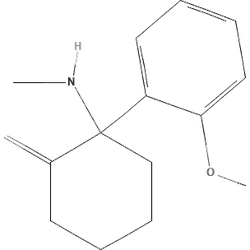
2-MeO-Ketamine Stats & Data
OYAUVHORXFUVAJ-UHFFFAOYSA-NReceptor Profile
Receptor Actions
Effect Profile
CuratedStrong dissociative depth with strong motor impairment, moderate mania
Duration Timeline
BluelightTolerance & Pharmacokinetics
drugs.wikiTolerance Decay
Dissociatives develop tolerance rapidly with repeated use; spacing multi‑week breaks helps. Cross‑tolerance is expected across NMDA‑antagonists. Data for 2‑MeO‑K specifically are anecdotal; figures above extrapolate from ketamine user data.
Cross-Tolerances
Harm Reduction
drugs.wikiReasoning for key harm‑reduction changes and clarifications is detailed above. In brief: (1) Identity and testing: Field reagents can rule out/raise suspicion but cannot confirm identity or purity. For ketamine-class compounds, Morris reagent is ketamine‑specific; Mandelin is unreliable alone and age/amount strongly affect colours. Ketamine typically gives orange→brown with Mandelin; green/blue can indicate other substances or degraded reagent. Use multiple reagents and, when possible, submit to a GC/MS lab (e.g., DrugsData). Never assume an analogue is ketamine. (2) IM safety: Avoid injecting powders. If IM is chosen, prepare a sterile solution and 0.22 μm filter it into a sterile vial; use sterile water/saline, clean technique, and avoid IV because of rapid anaesthesia and aspiration risk. (3) Bladder/urinary risk: Repeated/frequent use of ketamine‑like dissociatives is linked to LUTS (urgency, frequency, dysuria, haematuria) and, in severe cases, permanent damage; risk increases with dose/frequency and may improve after cessation. Hydrate, avoid daily use, and stop if urinary symptoms appear. (4) Polydrug interactions: Alcohol, GHB/GBL and opioids markedly raise sedation and aspiration risk; benzodiazepines add sedation; stimulants (amphetamines/cocaine) raise BP/HR and injury risk; MAOIs may increase potency/produce adverse reactions—avoid or use great caution. (5) Set/setting and falls: High doses can cause complete dissociation/anaesthesia. Use seated/lying down with a sober sitter; place sedated persons in recovery position to reduce aspiration risk. (6) Tolerance/compulsion: Tolerance rises quickly and cross‑tolerance occurs across NMDA‑antagonist dissociatives; spacing use (weeks) reduces risk of compulsive redosing and urinary harm. (7) Oral activity: Compared with ketamine, users report notably higher oral activity; start low and allow a full 90–120 min before any redose. (8) Reagent colour correction: Earlier note that Mandelin gives olive‑green/black like ketamine has been corrected; orange→brown is expected for ketamine—aberrant colours warrant suspicion or reflect reagent/sample issues.
References
Cited References
- Wikipedia: 2-MeO-Ketamine
- Bluelight: The Big & Dandy Methoxyketamine Thread
- Drugs-Forum: Methoxyketamine
- Erowid: Ketamine Pharmacology and Dosage
- Roth et al. 2013 - The Ketamine Analogue Methoxetamine and 3- and 4-Methoxy Analogues of Phencyclidine Are High Affinity and Selective Ligands for the Glutamate NMDA Receptor
- TripSit Factsheet: Methoxyketamine
Additional references
- PubChem – Methoxyketamine (synonyms/structure)
- Drugs‑Forum – Methoxyketamine wiki (background, naming)
- Bluelight – The Big & Dandy Methoxyketamine Thread (community reports; variability)
- TripSit – Ketamine (sterile prep pointers; sitter advice; durations)
- TripSit – Drug combinations (ketamine rows: alcohol/opioids/GHB dangerous; benzos/MAOIs caution; stimulants caution)
- Erowid – Ketamine and Health (breathing/aspiration risks; combinations; urinary harm mention)
- Erowid – KLUTS: Ketamine & Lower Urinary Tract Symptoms (LUTS)
- Erowid – Ketamine FAQ (IM/IV cautions; urinary issues)
- Erowid – MDMA Testing Kit FAQ (limits of reagents; general principles)
- Erowid/DrugsData – Project overview (lab GC/MS confirmation option)
- Reddit r/ReagentTesting – Expected Mandelin for ketamine is orange→brown; variability common