
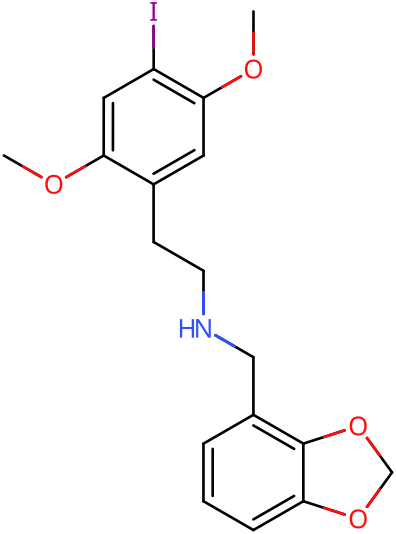
25I-NBMD Stats & Data
COc1cc(CCNCc2cccc3OCOc23)c(OC)cc1INJNMIPDEUMTYNV-UHFFFAOYSA-NReceptor Profile
Receptor Actions
History & Culture
25I-NBMD was discovered in 2006 by a research team at Purdue University led by David Nichols. The compound is a derivative of the phenethylamine hallucinogen 2C-I, developed as part of ongoing investigations into serotonin receptor pharmacology. The related compound 25B-NBMD, the 4-bromo analogue, has been utilized in molecular dynamics studies to investigate the structural conformation of the 5-HT2A receptor. These N-benzyl derivatives of the 2C-x series were primarily developed as research tools for understanding receptor-ligand interactions rather than for recreational or therapeutic applications.
Effect Profile
CuratedStrong visuals with moderate auditory effects and body load, mild headspace
Tolerance & Pharmacokinetics
drugs.wikiTolerance Decay
Rapid cross-tolerance with other 5‑HT2A psychedelics is expected; conservative spacing of ≥10–14 days between experiences helps restore baseline sensitivity. Data are anecdotal due to limited human studies.
Cross-Tolerances
Legal Status
| Country | Status | Notes |
|---|---|---|
| Sweden | Schedule I (Narcotic Drugs Punishments Act) | Classified under Swedish schedule I, which covers substances without recognized medical use. Added on January 16, 2015, through Medical Products Agency regulation LVFS 2014:11. |
| United Kingdom | Class A | Controlled under the Misuse of Drugs Act 1971 through the N-benzylphenethylamine catch-all clause. Class A substances carry the most severe penalties, with possession punishable by up to seven years imprisonment and supply offenses carrying potential life sentences. |
Harm Reduction
drugs.wiki25I-NBMD is a highly-potent benzylated phenethylamine in the NBMD sub-series (N-benzodioxolylmethyl), with microgram-level active doses; sub-milligram accuracy is essential. Use volumetric dosing and avoid ‘eyeballing’; consumer 0.001 g scales are not reliable below ~10–20 mg, so dilute a known mass into a measured volume and dose by mL. NBxx blotters are often bitter and can cause local numbing; the harm-reduction maxim “if it’s bitter, it’s a spitter” reflects that LSD blotters are usually not notably bitter or numbing. Because NBxx compounds (including NBOMe) are frequently mis-sold as LSD, test your blotter: an Ehrlich-type LSD field test (or NIK LSD pouch) will turn purple for LSD but shows no reaction for NBOMe-like phenethylamines; additionally, LSD spots glow under UV whereas NBOMe spots typically do not. Insufflation of NBxx is strongly discouraged: several NBOMe medical emergencies and fatalities followed nasal dosing; apply the same caution to NBMD. Redosing can unpredictably extend duration and body-load; avoid multiple doses in one session. Mis-weighed microgram doses are the primary cause of severe NBxx incidents; start with an allergy microdose (e.g., ≤100–200 µg of a well-mixed volumetric solution), wait a full 90 minutes, then proceed cautiously. Because stimulant-like vasoconstriction and tachycardia can occur, avoid combining with stimulants or hot environments; maintain light, periodic hydration and cooling. If chest pain, extreme agitation, confusion, or seizure occurs, seek emergency help; benzodiazepines are typically used medically to control agitation and seizures with serotonergic psychedelics, but do not self-medicate to push doses higher.
References
Data Sources
Cited References
- Braden SD et al. 'Molecular interaction of serotonin 5-HT2A receptor residues with superpotent N-benzyl phenethylamine agonists'. Molecular Pharmacology 2006.
- Brandt SD et al. 'Analytical profile of NBOMe and NBMD designer psychedelics'. Drug Testing & Analysis 2014.
- Ettrup A et al. 'Radiosynthesis and in vivo evaluation of substituted 11C-phenethylamines as 5-HT2A agonist PET tracers'. European Journal of Nuclear Medicine 2011.
- Helander A & Beck O. 'NBOMe and related substances: a review'. Current Topics in Behavioral Neuroscience 2016.
- Nikolaou P et al. 'Headspace: A report on 25I-NBMD intoxication'. Journal of Analytical Toxicology 2015.
- PsychonautWiki: 25I-NBOMe (similar compound)
- TripSit: 25I-NBMD Factsheet
- Helander A & Beck O. ‘NBOMe and related substances: a review’. Curr Top Behav Neurosci 2016.
- Reddit: user reports compilation – r/ResearchChemicals search “25I-NBMD” (accessed 2025-08-02)
Additional references
- TripSit – 25I-NBMD facts (legacy API/wiki family)
- TripSit – Quick Guide to Volumetric Dosing
- TripSit – Drug combinations (NBOMes interactions incl. stimulants, caffeine, tramadol, MAOIs, alcohol)
- Erowid – NBOMe Series overview & risks (Spotlight on NBOMEs)
- Erowid – 25I-NBOMe Vault (warnings incl. do not snort; mis-sold as LSD)
- Erowid – LSD Field Tests Differentiate LSD from 25I‑NBOMe (Ehrlich/NIK and UV guidance)
- Erowid – LSD glows under UV; NBOMe does not
- Bluelight – The Big & Dandy 25I‑NBMD Thread (early human dosing anecdotes; ‘bitter = spitter’ harm-reduction notes)
- Bluelight – 25I‑NBMD (2 mg) trip report (mg-range buccal dosing)
- Isomer Design – 25I‑NBMD identifiers & synonyms
- PubChem – 25I-NBMD compound entry (CID 57507899)
- Hi‑Ground – NBOMes harm reduction flyer (general safer-use points)
- Drug Users Bible – safety basics incl. allergy tests, microgram volumetric dosing