
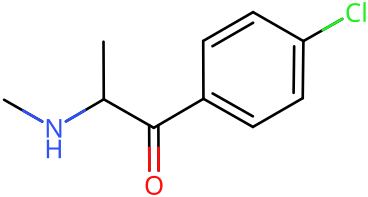
4-CMC Stats & Data
CNC(C)C(=O)c1ccc(Cl)cc1UEJBEYOXRNGPEI-UHFFFAOYSA-NReceptor Profile
Receptor Actions
History & Culture
4-Chloromethcathinone (4-CMC), also known as clephedrone, is a synthetic cathinone that emerged on the designer drug market as an online research chemical. The compound gained prominence primarily as an alternative to mephedrone following that substance's scheduling in various countries. As mephedrone became increasingly controlled internationally, 4-CMC was marketed and sold to fill the resulting gap in the stimulant research chemical market, offering users effects reported to be similar to its more well-known predecessor. The substance has been distributed predominantly through online vendors catering to the research chemical community. Like many synthetic cathinones that appeared during this period, 4-CMC exemplifies the pattern of novel psychoactive substances emerging in response to legislative controls on related compounds.
Effect Profile
CuratedMild empathy, euphoria, stimulation, and sensory enhancement
Moderate euphoria with strong anxiety/jitters, mild focus, low stimulation
Tolerance & Pharmacokinetics
drugs.wikiTolerance Decay
Anecdotal stimulant/entactogen pattern: tolerance rises rapidly with repeated dosing across days and decays over 1–2 weeks. Data quality is low; spacing at least 7–14 days is prudent to reduce tolerance and adverse effects.
Cross-Tolerances
Legal Status
| Country | Status | Notes |
|---|---|---|
| China | Controlled substance | Classified as a controlled substance as of October 2015 under national drug control regulations. |
| Germany | Anlage I BtMG | Controlled under Anlage I of the Betäubungsmittelgesetz (Narcotics Act). This classification prohibits manufacture, possession, and distribution without authorization. |
| Sweden | Narcotic substance | Sweden's public health agency proposed classification as an illegal narcotic on June 1, 2015. Such recommendations from the agency typically result in formal scheduling. |
| United States | Schedule I (Virginia) | Controlled at the state level as a Schedule I substance in Virginia. Federal scheduling status under the Controlled Substances Act is not specified in available sources; the Federal Analogue Act may apply when sold for human consumption. |
Harm Reduction
drugs.wiki4-CMC is frequently mis-sold or found as an adulterant in MDMA or 3‑MMC samples; unexpected exposure and dose stacking are credible risks—drug checking is strongly advised and, if not possible, test a very small amount first and wait at least 2 hours before considering more. Multiple European drug checking alerts (2023–2025) document 4‑CMC sold as MDMA or 3‑MMC and pills containing both MDMA and 4‑CMC, with unknown interaction potential. Reports from Swiss services repeatedly note user complaints of severe headaches and kidney/liver pain post‑use, and a strong urge to redose. Formal human pharmacokinetics are not established; assuming MDMA‑like timing is unsafe—avoid rapid redosing to limit cumulative cardiovascular and serotonergic burden. Compared to oral use, insufflation produces a faster, shorter, and harsher profile with a caustic drip and increased nasal irritation; prefer oral if choosing to use, and avoid shared snorting equipment to reduce infection risk. As a serotonergic/stimulant cathinone, 4‑CMC should not be combined with MAOIs, DXM, tramadol, or other strong stimulants; SSRIs/SNRIs can both blunt effects and contribute to serotonin toxicity at higher doses. Overheating and dehydration are realistic risks during prolonged activity; take breaks in cool areas and sip ~300 mL non‑alcoholic fluids per hour (do not overhydrate). Neurotoxicity is suspected (particularly for para‑halogenated analogues); because evidence in humans is scarce, spacing use widely (≥1–2 weeks), minimizing total dose, and avoiding binges are prudent. Strong compulsive redosing has been reported; pre‑measuring a single dose and setting a stop-time can help reduce escalation. Post‑acute effects may include low mood, anxiety, and sleep disruption up to 24 hours; seek medical care urgently for persistent chest pain, hyperthermia, confusion, severe headache, or signs of serotonin toxicity (agitation, tremor, clonus).
References
Data Sources
Cited References
- Bluelight: 4-CMC Discussion Thread
- Blood Concentrations of 4-CMC in 15 Forensic Cases (PMC)
- Grifell et al. 2017 - Patterns of Use and Toxicity of Para-halogenated Substituted Cathinones
- IsomerDesign: PIHKAL Entry for 4-CMC
- Substance Search: 4-CMC
- TripSit Factsheet: 4-CMC
- UNODC Critical Review Report: 4-CMC
- UNODC Substance Details: 4-CMC
- WHO Expert Committee on Drug Dependence: 4-Chloromethcathinone
- Wojcieszak et al. 2020 - Neurotoxicity Research on Synthetic Cathinones
- TripSit Factsheet: 4-CMC
Additional references
- Isomerdesign: 4-CMC entry (names/IDs)
- EUDA European Drug Report 2025 – Synthetic stimulants (4‑CMC effects/harms broadly similar to MDMA/amphetamine)
- EUDA EU Drug Markets (NPS) – cathinones detected; MDMA mis-selling/adulteration including 4‑CMC
- EUDA MDMA retail markets – 4‑CMC among common adulterants in 2019–2023 drug‑checking samples
- Saferparty warning – 4‑CMC sold as MDMA (2025) with user-reported harms and strong redosing drive
- Saferparty warning – ‘The Punisher’ (MDMA with 4‑CMC) – avoid due to unknown interaction and neurotoxicity concern
- Saferparty warning – 4‑CMC sold as 3‑MMC (2024) with neurotoxicity suspicion
- TripSit Drug Combinations Chart (general serotonergic/stimulant interaction guidance)
- Hi‑Ground: Antidepressants interaction overview (SSRI/SNRI/MAOI with MDMA/DXM)
- SubstanceSearch: 4‑CMC summary (onset/duration)
- Bluelight 4‑CMC thread (community cautions re: halo‑cathinone neurotoxicity)
- Drugs‑Forum 4‑CMC info thread (user reports on redosing drive and adverse effects)