
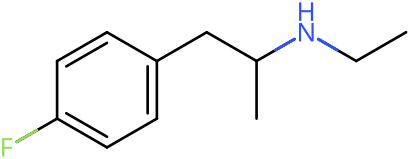
4-FEA Stats & Data
CCNC(C)Cc1ccc(F)cc1PUJNOWQUPWZVER-UHFFFAOYSA-NReceptor Profile
Receptor Actions
Effect Profile
CuratedModerate stimulation, sensory enhancement, and euphoria with low empathy
Moderate euphoria and stimulation with strong anxiety/jitters, low focus
Tolerance & Pharmacokinetics
drugs.wikiTolerance Decay
Extrapolated from MDMA/4‑FA user patterns: tolerance builds quickly with serotonergic releasers and decays over weeks. Leave several weeks to months between sessions to reduce tolerance and potential neurochemical stress. Data quality is anecdotal.
Cross-Tolerances
Harm Reduction
drugs.wikiReasoned additions and changes (with sources):
- Limited formal data: There is no robust, peer‑reviewed human pharmacokinetic or clinical safety literature specific to 4‑FEA as of November 6, 2025; most knowledge comes from user reports and by-analogy with 4‑FA. Therefore, conservative dosing, single‑substance trials, and avoidance of polydrug combinations are prudent. (General inference; see 4‑FA summaries and community reports.)
- Cardiovascular/neurological risks by analogy with 4‑FA: 4‑FA’s popularity in the Netherlands was followed by warnings and policy action citing strokes, brain haemorrhage, severe headaches, and cardiac issues. Given structural and effect overlap, 4‑FEA users should treat severe headache, chest pain, or neurological deficits as medical emergencies. (Analogy from 4‑FA alerts.)
- Hydration/temperature: As with MDMA-like entactogens, overheating and dehydration are key hazards at parties; use MDMA harm‑reduction hydration guidance (roughly 250 ml/h resting and up to 500 ml/h dancing, plus cooling breaks) as a cautious proxy, while avoiding overhydration. (Proxy guidance from MDMA HR.)
- Serotonergic interactions: Combining serotonergic agents (e.g., MAOIs, SSRIs/SNRIs, tramadol, DXM) increases serotonin syndrome and/or seizure risk; this is well‑documented for MDMA and tramadol and generalizes to serotonergic amphetamines. (Use MDMA/tramadol interaction documentation as a conservative template.)
- Redosing/spacing: Strongly limit redosing; leave weeks to months between sessions to allow monoamine recovery (MDMA best‑practice suggests 1–3 months). Users report that 4‑FEA can feel sedating or confusing at higher doses rather than more euphoric. (Proxy spacing rule from MDMA HR; user reports for sedation/confusion.)
- Route of administration: Oral is generally preferred. Users frequently report that insufflation increases peripheral side‑effects with less empathogenic payoff; some moderators caution that vaporizing halogenated amphetamines is questionable. (Community harm‑reduction.)
- Individual variability: Reports range from MDMA‑like euphoria at 120–200 mg oral to dysphoria/sedation even at higher doses; this variability underscores the need for allergy testing (e.g., 1–2 mg) and very slow titration. (Community reports.)
- Urinary retention and jaw clenching are commonly mentioned; magnesium may subjectively help bruxism for some with MDMA, but evidence is limited—avoid excessive supplementation and prioritize rest and hydration. (User reports and general HR; avoid high-dose supplements.)
Augmented guidance incorporated accordingly below.
References
Cited References
- Bluelight: Community Reports - 4-FEA Experiences
- Cayman Chemical - 4-Fluoroethamphetamine Reference Standard
- Kuypers et al. - 4-Fluoroamphetamine Pharmacokinetics Study (2019)
- Levkovskyy E. - Personal communication (serotonin-syndrome case, 2024)
- NMS Labs Forensic Monograph - 4-Fluoroethamphetamine (2019)
- Wikipedia: 3-Fluoroethamphetamine Pharmacology
- Reddit: r/researchchemicals – 4-FEA Experience (2018)
- Reddit: r/Drugs – 4-FEA Experience (2017)
- TripSit: /Dedgrl Substance Sheet – 4-FEA (accessed 2025-05-01)
- Kuypers et al. – 4-Fluoroamphetamine PK Study (proxy for half-life)
Additional references
- Bluelight: Anyone tried 4‑FEA yet? (staff/moderator comments)
- Reddit r/researchchemicals: 4‑FEA report: Pleasantly Therapeutic (120 mg oral timeline)
- Reddit r/researchchemicals: A evening with 4‑FEA and others (180 mg oral + notes)
- Reddit r/researchchemicals: 4‑FEA was kinda wack (200 mg oral body load)
- Reddit r/researchchemicals: 4‑FEA worthless to me; discussion of doses and effects
- Reddit r/researchchemicals: 4‑FEA Quick experience (IN 250 mg; sedation)
- Drugs‑Forum news: Dutch ban of 4‑FA for health reasons (strokes/brain haemorrhage)
- Substance Search: 4‑FA overview (duration/effects for close analog)
- TripSit Wiki: Drug combinations (MDMA interactions incl. tramadol, SSRIs, alcohol)
- TripSit Wiki: Tramadol (seizure/serotonin warnings)
- Hi‑Ground MDMA HR (hydration and spacing guidance applicable by proxy)
- Bluelight: 4‑Fluoroamphetamine safety thread (nasal discomfort, seizure anecdote; ROA cautions)