
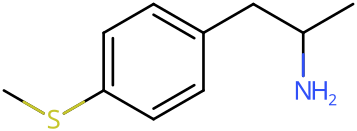
4-MTA Stats & Data
[Cl-].CSc1ccc(cc1)CC(C)N.[H+]DGCZWGSFSFNXNS-UHFFFAOYSA-NPharmacology
DrugBankEffect Profile
Curated + 2 ReportsMild visuals with moderate body load, low headspace
Moderate stimulation and sensory enhancement with mild empathy, low euphoria
Mild stimulation and focus with strong anxiety/jitters, low euphoria
Tolerance & Pharmacokinetics
drugs.wikiTolerance Decay
Human tolerance kinetics are poorly documented due to rarity and high lethality; assume some acute tolerance with slow recovery over days, and significant pharmacodynamic carryover for at least 24–48 h post-use.
Cross-Tolerances
Experience Report Analysis
ErowidDemographics
Gender Distribution
Too few reports for a chart: gender is known from 2 reports, and a split is drawn only from 20 reports or more. Counts are shown instead. Why 20?
- Male 2 of 2
Age Distribution
Reports Over Time
Harm Reduction
drugs.wiki4-MTA is a potent serotonin-releasing agent with additional MAO-A–inhibiting activity; this dual action is strongly linked to severe hyperthermia and serotonin toxicity seen in clusters of 1997–1999 European cases. The EU risk assessment emphasized a slow onset and long-lasting effects that promoted redosing and overdoses, especially when mis-sold as MDMA. Because 4-MTA can functionally inhibit MAO-A, combining it with serotonergic medications (SSRIs/SNRIs/TCAs), other recreational serotonergics (MDMA, PMA/PMMA, DXM, tramadol), or tyramine-rich foods can precipitate dangerous hypertensive or serotonin syndromes. Historical harm data include multiple deaths; some were associated with pills sold as 'ecstasy' where users re-dosed due to delayed onset. Avoid all combinations and redosing; the safest choice is to not use at all. If someone has taken it, active cooling (shade, fans, loosening clothing), fluids with electrolytes, and rapid medical evaluation are critical at the first signs of serotonin toxicity (agitation, confusion, tremor/hyperreflexia, clonus, sweating, temperature rising). Do not rely on antipyretics alone and do not self-treat severe agitation with alcohol or polypharmacy. Expect effects to persist all day or longer; avoid any serotonergic agent for at least 24–48 hours after exposure due to lingering pharmacologic effects. Because 4-MTA has been misrepresented in tablets, reagent tests may not reliably identify it; if using any pressed pill or powder, drug-checking with laboratory-grade services is far safer than color reagents. Warm, crowded environments and prolonged dancing markedly increase hyperthermia risk; rest often, pre-plan cooling, and have a sober sitter who can call emergency services if symptoms escalate. Early hospital care saves lives; tell clinicians exactly what was taken to guide management (e.g., benzodiazepine sedation, aggressive cooling).
References
Cited references
- EUDA (EMCDDA) Risk Assessment: 4-MTA (Oct 1, 1999)
- DrugWise – 4-MTA overview (updated Oct 2021)
- Erowid 4-MTA (historical vault index)
- Bluelight HR sticky calling out 4-MTA as potent SRA and MAOI (context for MAOI caution)
- NCBI MedGen – Serotonin syndrome (signs clinicians look for)
- StatPearls – MAO Inhibitors (food and drug interaction rationale)
- Toronto Drug Checking Service (why to prefer lab-grade checking over color reagents)