
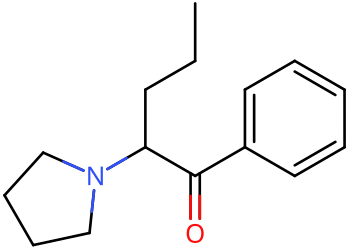
a-PVP Stats & Data
[Cl-].CCCC(N1CCCC1)C(=O)c1ccccc1.[H+]ROMXVSMENBAYRM-UHFFFAOYSA-NInteraction Warnings
α-PVP can be potentially dangerous in combination with other stimulants as it can increase one's heart rate and blood pressure to dangerous levels.
The neurotoxic effects of MDMA may be increased when combined with other stimulants.
This combination may increase strain on the heart.
Subjective Effects
Physical
- Spontaneous tactile sensations: The body high of α-PVP can be described as a moderate to extreme euphoric tingling sensation that encompasses the entire body. It is capable of becoming overwhelming at higher dosages. This sensation maintains a consistent presence that steadily rises with the onset and hits its limit once the peak has been reached.
- Stimulation: In terms of its effects on the user's physical energy levels, α-PVP can be considered to be extremely stimulating and energetic. This encourages activities such as running, climbing and dancing. The particular style of stimulation which α-PVP presents can be described as forced. This means that at higher dosages it becomes difficult or impossible to keep still as jaw clenching, involuntarily bodily shakes and vibrations become present, resulting in an extreme unsteadiness of the hands and a general lack of motor control.
- Vibrating vision: A person's eyeballs may begin to spontaneously wiggle back and forth in a rapid motion, causing vision to become blurry and temporarily out of focus - a condition known as nystagmus.
- Dehydration: Dry mouth and dehydration are a universal experience with α-PVP and are a product of an increased heart rate and extreme motivation to engage in strenuous physical activities.
- Difficulty urinating: Higher doses of α-PVP result in an overall difficulty when it comes to urination, an effect that is completely temporary and harmless.
- Vasoconstriction: α-PVP can be considered very vasoconstricting at higher doses, and is on par with that of amphetamine and methamphetamine.
- Tactile enhancement
- Increased heart rate
- Increased perspiration
- Appetite suppression
- Visual acuity suppression
- Focus enhancement
Cognitive
The cognitive effects of α-PVP can be broken down into several components which progressively intensify proportional to dosage. The general head space of α-PVP is described by many as one of extreme mental stimulation and powerful euphoria. It contains a large number of typical stimulant cognitive effects.
- Euphoria: A euphoria very similar to amphetamine is present as well as feelings of joy and happiness and are likely a direct result of serotonin and dopamine release.
- Thought acceleration
- Analysis enhancement
- Immersion enhancement
- Time distortion: Strong feelings of time compression are common within α-PVP and increase in the perception of perceived experience is greatly increased.
- Ego inflation
- Disinhibition
- Motivation enhancement
- Anxiety
- Compulsive redosing
- Cognitive fatigue: This component can occur during the offset of this compound as a rebound effect which is usually equal in its intensity to the enhancements which occurred before it.
Forked from Subjective Effect Documentation by Josie Kins, September 2015. Via dose.wiki (CC0).
Toxicity
PsychonautWikiThe toxicity and long-term health effects of recreational α-PVP use do not appear to have been studied in any scientific context and the exact toxic dosage is unknown. This is because α-PVP has very little history of human usage. Anecdotal reports suggest that there do not seem to be any negative health effects attributed to simply trying this substance at low to moderate doses by itself and using it sparingly (but nothing can be guaranteed). α-PVP has been reported to be the cause, or a significant contributory cause, of death in suicides and overdoses caused by combinations of drugs. α-PVP has also been linked to at least one death where it was combined with pentedrone and caused heart failure.
Addiction & dependence
As with other stimulants, the chronic use of α-PVP can be considered highly addictive with a high potential for abuse and is capable of causing psychological dependence among certain users. When addiction has developed, cravings and withdrawal effects may occur if a person suddenly stops their usage. Tolerance to many of the effects of α-PVP develops with prolonged and repeated use.
Effect Profile
Curated + 7 ReportsStrong euphoria and focus with strong anxiety/jitters, mild stimulation
Tolerance & Pharmacokinetics
drugs.wikiTolerance Decay
Rapid tolerance buildup within/between sessions is widely reported for pyrrolidinophenones; decay back toward baseline likely occurs over 1–2 weeks of abstinence. Values are heuristic, based on stimulant tolerance patterns and user reports; high uncertainty.
Cross-Tolerances
Experience Report Analysis
ErowidDemographics
Gender Distribution
Too few reports for a chart: gender is known from 11 reports, and a split is drawn only from 20 reports or more. Counts are shown instead. Why 20?
- Male 11 of 11
Age Distribution
Reports Over Time
Effect Analysis
ErowidEffects aggregated from 7 experience reports (7 single-substance Erowid)
Effect Sentiment Distribution
Confidence Distribution
Each bar is the share of reports mentioning the effect; its whisker, and the band on the rows below, is the 95% interval: where the share could plausibly be with other reports of the same kind.
Too few reports for bars: these effects come from 7 single-substance Erowid reports, and a bar is drawn only from 20 reports or more. With fewer, a percentage cannot tell a common effect from a rare one. Counts are shown instead. Why 20?
Positive Effects 3
Adverse Effects 2
Also reported in combinations. In the 4 a-PVP reports where another drug was taken too, 1 mentions hospital, emergency services or an overdose, 0 a seizure and 1 psychosis (too few reports for percentages). In the 7 single-substance reports: 0, 0 and 2. These are not in the figures above: they cannot be put down to a-PVP alone, and a mention is not always something that happened to the writer.
Form / Preparation
Most common forms and preparations, as a share of the 9 reports that give one
Too few reports for bars: these forms come from 9 reports, and a bar is drawn only from 20 reports or more. With fewer, a percentage cannot tell a common effect from a rare one. Counts are shown instead. Why 20?
- Powder / Crystals 8 of 9
Redose Patterns
Redosing behavior across 10 reports
Too few reports for a chart: redosing is known from 10 reports, and a split is drawn only from 20 reports or more. Counts are shown instead. Why 20?
- Single dose 4 of 10
- Redosed 6 of 10
Harm Reduction
drugs.wikiα‑PVP is a high‑potency NDRI‑like stimulant closely related to MDPV; clinical presentations consistently match a sympathomimetic toxidrome (tachycardia, hypertension, agitation, hyperthermia), and fatalities and excited delirium have been documented. Smoking/vaporizing and IV routes are associated with very rapid onset, intense reinforcement, and binges; avoid these routes or use extreme caution as compulsive redosing can escalate toxicity quickly. Mis‑sold cathinone products are common: recent Swiss drug checking found alpha‑PVP sold as 3‑MMC; a typical 3‑MMC oral dose (100–200 mg) would be a massive overdose if the material were α‑PVP (active at single‑digit milligrams). Test samples via a trusted drug checking service; note that home reagents often cannot distinguish between specific cathinones. If severe agitation, chest pain, confusion, or overheating occur, seek emergency care; medical management of sympathomimetic toxicity typically prioritizes benzodiazepines for sedation, cooling, IV fluids, and monitoring—do not rely on self‑administered sedatives. Avoid combining with MAOIs or additional stimulants; these combinations substantially increase risks of hypertensive crisis, hyperthermia, seizures, and arrhythmias. Hydrate with electrolytes and take cooling breaks during physical activity, but avoid overconsumption of plain water to reduce hyponatremia risk. Injecting carries high risks (infection, blood‑borne viruses, rapid toxicity); if injecting, always use sterile equipment and never share; safer‑use facilities may offer supervised spaces and supplies in some regions. Do not drive or operate machinery during effects or comedown; stimulants impair judgment during the rise and can leave rebound fatigue and anxiety as they wear off. Dependence risk is significant; plan sessions with hard stopping rules (no access to stash; alarms to stop; prearranged sleep and nutrition) and long breaks between uses.
References
Cited references
- EUDA/EMCDDA–Europol Joint Report on α‑PVP (2015) – routes, harms, acute toxicity cases
- EUDA Risk Assessment on α‑PVP (2016) – routes, user‑reported dose thresholds, clinical features, deaths, dependence potential
- Council Decision subjecting α‑PVP to control measures across EU (2016) – potency and harms summary
- Erowid α‑PVP Vault – descriptive overview, ROAs, related literature
- Erowid α‑PVP legal status (US Schedule I, dates)
- Saferparty Zurich warning (2025): α‑PVP sold as 3‑MMC; potency comparison and overdose risk
- Saferparty blog (2025): frequent mis‑selling of 3‑MMC/4‑MMC as NEP/α‑PVP; dosing disparities and risks
- TripSit drug combinations – general interaction risk framework (MAOIs, stimulants, depressants)
- StatPearls: Sympathomimetic Toxicity – ED management (benzodiazepines, cooling, fluids)