
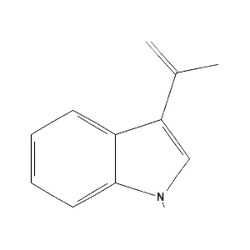
ADBICA Stats & Data
CCCCCn1cc(C(=O)NC(C(N)=O)C(C)(C)C)c2ccccc12IXUYMXAKKYWKRG-KRWDZBQOSA-NEffect Profile
CuratedMild headspace and auditory effects with mild body load, low visuals
Tolerance & Pharmacokinetics
drugs.wikiTolerance Decay
Daily/frequent SCRA use rapidly builds tolerance and blunts cannabis effects for weeks after cessation per clinical observations and community reports; recovery typically requires several weeks’ abstinence. Data quality is limited and inter‑individual variability is high.
Cross-Tolerances
Harm Reduction
drugs.wikiReasoning for harm‑reduction additions and their sources: 1) Potency/overdose risk: Multiple indole/indazole carboxamide SCRAs act as high‑potency full CB1 agonists; Erowid’s ‘Spice’ review documents sub‑mg active doses for some SCRAs, underscoring that ‘eyeballing’ is unsafe. Citation: Erowid Spice article. 2) Volumetric dosing & scale accuracy: Community harm‑reduction threads describe dissolving a weighed amount into a known volume to measure sub‑mg doses, and warn that budget mg scales are unreliable below ~20 mg—supporting the advice to prepare dilute solutions and avoid direct weighing of microgram‑range doses. Citations: Bluelight volumetric dosing; Reddit mg‑scale caution. 3) Unevenly‑sprayed plant material: Packaged ‘spice’ products are inconsistent; hotspots from uneven spraying increase overdose risk—avoid home spraying. Citation: Erowid note on variability of packaged products. 4) Severe toxicity profile: Compared with cannabis, SCRAs more often produce seizures, SVT/arrhythmias, psychosis, and AKI; case reports and reviews document these outcomes. Citations: PubMed case report of seizures/SVT with SCRA; reviews on SCRA toxicities and AKI. 5) Polydrug risk: ED data show higher odds of seizures and CNS depression in SCRA‑only adolescent exposures vs cannabis; polydrug SCRA exposures further increase agitation/seizures. Citations: Pediatrics multicenter cohort; general review. 6) Metabolism & CYP3A4: Several SCRAs (AKB‑48, UR‑144/XLR‑11) are predominantly metabolized by CYP3A4 in vitro, implying plausible DDIs with strong inhibitors/inducers; note inter‑compound variability. Citations: CYP3A4 metabolism studies. 7) Detection limits & drug checking: Standard cannabis screens generally do not detect most SCRAs; targeted immunoassays/LC–MS methods are needed and must keep up with rapid compound turnover. Encourage use of professional drug‑checking services; onsite FTIR may miss low‑level components, while offsite GC/LC–MS is more sensitive. Citations: PubMed reviews and validation studies; Drugchecking.community technology notes. 8) Contamination alerts: Outbreaks of superwarfarin (brodifacoum)‑contaminated SCRA products have occurred (2018), justifying advice to avoid unknown commercial blends and to use services that can detect adulterants. Citation: Review summarizing brodifacoum outbreak. 9) When to seek help: Red‑flags include chest pain, severe confusion, repetitive vomiting, syncope, or seizures. Place the person on their side if vomiting/unconscious and seek emergency care. Citations above support the specific risks listed.
References
Cited references
- PubChem – ADBICA record (synonyms/identifier)
- Banister et al., ACS Chem Neurosci 2015 – High potency CB1/CB2 agonism across related SCRAs including ADBICA (reviewed on PubMed/ACS)
- Case report: seizures and SVT after confirmed SCRA (JWH‑018) ingestion
- Systematic/Review: SCRA toxicities incl. arrhythmia, MI, sudden death, psychosis, seizures, AKI; brodifacoum‑tainted outbreak
- AKI clusters with SCRA use (includes XLR‑11)
- Systematic review of SCRA‑related AKI (renal pathology)
- Pediatrics cohort: Neuropsychiatric morbidity higher with SCRA vs cannabis; polydrug SCRA worse
- In vitro metabolism – CYP3A4 major for AKB‑48 (implicating possible CYP3A4 DDIs)
- In vitro metabolism – CYP3A4 major for UR‑144/XLR‑11 (CYP3A4 DDI plausibility)
- Detection limits – Standard cannabis screens miss most SCRAs; targeted immunoassays/LC–MS needed
- Drug‑checking tech overview & limitations (FTIR vs GC/LC–MS)
- Erowid ‘Spice & Spin‑offs’ – microgram‑level potency reports; variability warnings
- Bluelight – Volumetric dosing harm‑reduction overview
- Reddit r/researchchemicals – mg‑scale accuracy cautions for very potent RCs