
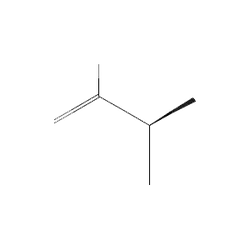
Receptor Profile
Receptor Actions
History & Culture
1500 BCE–900 CE
Ayahuasca has been used by the indigenous peoples of South America since before recorded history. The word itself derives from Quechuan languages spoken in the Andes, with its name translating to "spirit rope" or "liana of the soul," referring both to the Banisteriopsis caapi vine and the psychoactive brew prepared from it. Archaeological evidence suggests the use of psychoactive plants in the northeastern Amazon dates back to 1500–2000 BCE. Artifacts from this period include anthropomorphic figurines, snuffing trays, and pottery vessels adorned with mythological figures and sacred animals, offering glimpses into pre-Columbian ritual culture. More direct evidence of B. caapi use emerged from a pouch discovered in a cave in southwestern Bolivia in 2008, while chemical traces of harmine were identified in the hair of two mummies found in northern Chile. Both findings have been linked to the Tiwanaku civilization, dating to approximately 900 CE. By the 19th century, the specific ritual use of ayahuasca was widespread among Indigenous groups throughout the Amazon and Orinoco basins, though its precise origins remain uncertain.
17th century–present
The first Western references to the ayahuasca beverage appeared during the 17th century, coinciding with the European colonization of the Americas. The earliest known report is a letter from Vicente de Valverde to the Holy Office of the Inquisition. Jose Chantre y Herrera, also writing in the 17th century, provided the first detailed description of what he termed a "devilish potion" prepared from bitter herbs and lianas (referred to as ayaguasca), along with accounts of its associated rituals. Christian missionaries from Spain and Portugal who encountered ayahuasca during this period predictably characterized it as the work of the devil, establishing a pattern of colonial suspicion toward indigenous plant medicines that would persist for centuries.
Throughout its history, ayahuasca has been employed across diverse South American cultures for spiritual, social, and medicinal purposes. Traditional preparation involves a ritualistic, multi-day process of macerating and boiling B. caapi with other plants such as Psychotria viridis. These ceremonies are typically guided by shamans and involve specific dietary restrictions and ritual practices that have evolved over generations to support the psychological and spiritual dimensions of the experience. The Shipibo-Konibo people of the Peruvian Amazon have played a particularly significant historical and cultural role in the development and preservation of ayahuasca traditions. Among those who undergo the ayahuasca experience, reports of profound spiritual revelations regarding one's purpose, the nature of existence, and personal insight are common, with many describing lasting positive changes following their encounters with the brew.
mid-20th century–present
Ayahuasca spread beyond its traditional Amazonian context by the mid-20th century, primarily through syncretic religious movements originating in Brazil. These organizations blended indigenous ayahuasca practices with Christian and other spiritual traditions, establishing formal churches that would eventually carry the brew to Europe, North America, and beyond. The contemporary ayahuasca landscape includes both traditional indigenous ceremonial use and participation in organized religious contexts, as well as a growing phenomenon of ayahuasca tourism, with retreat centers operating throughout South America offering ceremonial experiences to international visitors.
Subjective Effects
Physical
The physical effects of Ayahuasca can be broken down into three main components all of which progressively intensify proportional to dosage.
- Spontaneous tactile sensations: The body high of ayahuasca can be described as a pleasurable, warm, soft and all-encompassing glow. For some it is manifested spontaneously at different unpredictable points throughout the trip but for others it maintains a consistent presence that steadily rises with the onset and hits its limit once the peak has been reached.
- Stimulation and Sedation: In terms of its effects on the physical energy levels of the tripper, ayahuasca is entirely setting dependent. For example, when taken in social settings with fast paced music or during physically strenuous situations such as running, walking, climbing or dancing it becomes stimulating and energetic. In contrast, however, when taken in calm environments such as darkened rooms with comfortable seating it can become relaxing, peaceful and even moderately sedating.
- Nausea (La Purga): In its traditional form, ayahuasca is famous for its purgative properties which can include nausea, vomiting, diarrhea and cold flashes. This effect is known as 'la purga' or 'the purge' and its presence is dependent on the specific form or recipe of ayahuasca being used. The intense vomiting and occasional diarrhea it induces is often considered by many shamans and experienced users of ayahuasca to be an essential part of the experience as it represents a healing process and the release of negative emotions built up over the course of one's life.
Cognitive
The head space of ayahuasca is described by many as extremely sober and clear headed in its style when compared to other commonly used psychedelics such as LSD or Psilocin. This is despite the fact that it contains a large number of psychedelic typical and unique cognitive effects.
- Enhancement of current mind state
- Acceleration of thought
- Connectivity of thought
- Feelings of fascination, importance and awe
- Time distortion
- Introspection
- Outrospection
- Rejuvenation
- Déjà vu
- Mindfulness: This is an effect which is unique within ayahuasca due to how consistently it is manifested and the way in which it can sustain itself for days, weeks or even months after a single high dose experience. This is an extremely beneficial and therapeutic effect for personal psychological health.
- Removal of cultural filter
- Conceptual thinking
- Direct communication with the subconscious
- Ego suppression, loss and death
- Feelings of interdependent opposites
- Delusions
- States of unity and interconnectedness: This is an effect which is unique within ayahuasca due to how consistently it is manifested as an accompanying effect alongside of ego suppression and death.
- Suppression of language: This effect can be described as a perceived inability or general unwillingness to talk aloud despite feeling perfectly capable of formulating coherent thoughts within the internal narrative. It is much more common among inexperienced users.
Sensory
- Enhancements
- Distortions
- Hallucinations
- Visual drifting: (melting, breathing, warping and flowing) - In comparison to other psychedelics this effect can be described as highly detailed, slow and smooth in motion and static in its appearance.
- Tracers
- After images
- Texture repetition
- Colour shifting
- Scenery slicing
- Increased visual acuity
- Enhancement of colours
- Enhanced pattern recognition
Ayahuasca and other forms of DMT produce a full range of high level hallucinatory states in a fashion that is more consistent and reproducible than that of any other commonly used psychedelic.
- External hallucinations
- Internal hallucinations: This particular effect commonly contains hallucinations with scenarios, landscapes, settings, concepts and autonomous entity contact. They are more common within dark environments and can be described as internal in their manifestation, lucid in believability, interactive in style and almost exclusively of religious, spiritual, mystical or a transcendental nature in their overall theme.
Forked from Subjective Effect Documentation by Josie Kins, September 2013. Via dose.wiki (CC0).
Toxicity
PsychonautWikiAyahuasca is non-addictive, is not known to cause brain damage, and has extremely low toxicity relative to dose. Similar to other psychedelic drugs, there are relatively few physical side effects associated with ayahuasca. Various studies have shown that it presents no negative cognitive, psychiatric or toxic physical consequences of any sort when taken in reasonable doses and a careful context.
Effect Profile
Curated + 137 ReportsStrong visuals, headspace, and auditory effects with strong body load
Strong sensory enhancement, empathy, euphoria, and stimulation
Strong stimulation with strong anxiety/jitters, moderate euphoria and focus
Duration Timeline
BluelightTolerance & Pharmacokinetics
drugs.wikiTolerance Decay
Cross-Tolerances
Demographics
Gender Distribution
Age Distribution
Reports Over Time
Effect Analysis
Erowid + BluelightEffects aggregated from 137 experience reports (112 single-substance Erowid + 25 Bluelight)
Effect Sentiment Distribution
Confidence Distribution
Each bar is the share of reports mentioning the effect; its whisker, and the band on the rows below, is the 95% interval: where the share could plausibly be with other reports of the same kind.
Positive Effects 50
Adverse Effects 34
Show 12 more adverse effects
Show 27 neutral or unclassified mentions
Also reported in combinations. In the 29 Ayahuasca reports where another drug was taken too, 1 (3.4%) mentions hospital, emergency services or an overdose, 0 (0.0%) a seizure and 2 (6.9%) psychosis. In the 112 single-substance reports: 4.5%, 2.7% and 3.6%. These are not in the figures above: they cannot be put down to Ayahuasca alone, and a mention is not always something that happened to the writer.
Subjective Effect Ontology
Experience ReportsStructured effect tags extracted from 166 Erowid & Bluelight experience reports using a controlled vocabulary of 220+ canonical effects across 15 domains.
Gastrointestinal
Dosage Distribution
Dose distribution from experience reports, one dose per report (the first listed). Doses above Q3 + 3×IQR, far above what people typically take, are left out of the median and range and listed under each route: most are real heavy doses or overdoses, not mistakes.
1 report gave a dose above the typical range (1,000 ml), so it is not in the figures above. Listing a dose here does not mean it is safe.
Show the report
Common Combinations
Most co-occurring substances, as a share of all 141 reports filed under Ayahuasca; whiskers are 95% intervals
Form / Preparation
Most common forms and preparations, as a share of the 110 reports that give one; whiskers are 95% intervals
Redose Patterns
Redosing behavior across 112 reports
Legal Status
| Country | Status | Notes |
|---|---|---|
| Brazil | Legal for religious use | Religious use was legalized following two official government inquiries in the mid-1980s, which concluded that ayahuasca is not a recreational drug and has valid spiritual applications. Brazil is the origin of the Santo Daime and União do Vegetal syncretic religious movements. |
| Canada | DMT is Schedule III CDSA; harmaline is Schedule III; religious exemptions available | DMT and harmaline are both controlled under the Controlled Drugs and Substances Act. However, in 2017, the Santo Daime Church Céu do Montréal received a religious exemption permitting the use of ayahuasca as a sacrament in their rituals. |
| France | Schedule I (Stupéfiants) | In early 2005, Santo Daime initially won a court case permitting use of the tea, as they did not perform chemical extractions and the plants were not scheduled. However, four months later, the common botanical ingredients of ayahuasca along with harmala alkaloids were declared stupéfiants (narcotic Schedule I substances), making the tea and its ingredients illegal to possess or use. As of 2005, nearly all DMT-containing plants that could be used in ayahuasca preparations became controlled. |
| Netherlands | Legal for religious use (case law precedent) | The first ayahuasca churches affiliated with Brazilian Santo Daime were established here. In 2001, the Amsterdam district court ruled in favor of Santo Daime leaders Hans Bogers and Geraldine Fijneman, finding that the prosecution could not demonstrate sufficient threat to public health and order to justify denying religious freedom under ECHR Article 9. This verdict established an important legal precedent, and various ayahuasca groups have since operated in the country. |
| Peru | Legal; protected cultural heritage | Ayahuasca is legal and formally protected as part of the nation's cultural heritage. When ratifying the 1971 Convention on Psychotropic Substances, Peru entered a reservation excluding Ayahuasca and San Pedro from international control, citing traditional ritual use by Amazonian peoples. On 24 June 2008, the Instituto Nacional de Cultura declared the traditional knowledge and ceremonial use of ayahuasca by Indigenous communities as Patrimonio Cultural de la Nación (Cultural Heritage of the Nation). |
| United States | Schedule I (DMT component); religious exemptions available | DMT is a Schedule I controlled substance under federal law, making ayahuasca brews technically illegal. However, the plants themselves contain no scheduled chemicals and remain legal. Religious organizations have obtained legal exemptions under the Religious Freedom Restoration Act, including the União do Vegetal (Supreme Court ruling in Gonzales v. O Centro Espírita Beneficente União do Vegetal, 2006) and Santo Daime (District Court ruling, 2009). Several municipalities have decriminalized natural entheogens including Oakland, California (June 2019), Santa Cruz, California (January 2020), and Ann Arbor, Michigan (September 2020). |
References
Cited References
- Alcohol and Drug Foundation: Ayahuasca
- Callaway et al. 1999 - Pharmacokinetics of Hoasca alkaloids in healthy humans
- Erowid: Ayahuasca Vault
- Erowid: Ayahuasca Analogues and Pharmahuasca
- Erowid: DMT Freebase Content in Ayahuasca/Pharmahuasca Preparations
- McKenna et al. 1998 - Scientific Investigation of Ayahuasca
- Nichols 2016 - Psychedelics
- Osório et al. 2015 - Antidepressant effects of a single dose of ayahuasca
- Palhano-Fontes et al. 2019 - Rapid antidepressant effects of ayahuasca
- PsychonautWiki: Ayahuasca
- PsychonautWiki: Harmala alkaloid
- PsychonautWiki: Peganum harmala
- Santos et al. 2013 - Safety and side effects of ayahuasca in humans
- TripSit: Drug Combination Chart
- TripSit Factsheet: DMT
- TripSit Wiki: Ayahuasca