
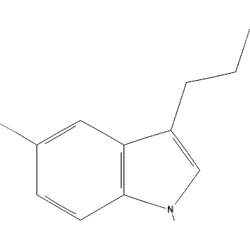
Bufotenin Stats & Data
VTTONGPRPXSUTJ-UHFFFAOYSA-NPharmacology
DrugBankDescription
A hallucinogenic serotonin analog found in frog or toad skins, mushrooms, higher plants, and mammals, especially in the brains, plasma, and urine of schizophrenics. Bufotenin has been used as a tool in CNS studies and misused as a psychedelic.
Pharmacodynamics
Bufotenin is a tryptamine related to the neurotransmitter serotonin.
Metabolism
Upon oral administration, bufotenine is extensively metabolized by monoamine oxidase enzymes.
Absorption
Rapidly absorbed following intravenous administration.
Measured Affinities
Guide to PHARMACOLOGYMeasured binding and functional data for bufotenine, curated by the IUPHAR/BPS Guide to PHARMACOLOGY. Each row cites the paper it came from. Lower concentrations mean tighter binding — a value in the sub-nanomolar range indicates a very potent interaction.
| Target | Action | Measure | Value | Concentration | Species | Source |
|---|---|---|---|---|---|---|
| 5-HT7 receptor Htr7 | Full agonist | pKi | 7 | 100 nM | Mouse | PMID 8394987 |
| 5-HT2A receptor HTR2A | Antagonist | pKi | 6.8 | 158.49 nM | Human | PMID 8663249 |
| 5-HT1D receptor HTR1D | Antagonist | pKi | — | — | Human | PMID 8967979 |
| 5-HT5A receptor Htr5a | Antagonist | pKi | — | — | Mouse | — |
| 5-HT6 receptor Htr6 | Antagonist | pKi | — | — | Rat | PMID 9225298 |
Reading this. pKi, pEC50 and pIC50 are negative log molar values, so a higher number means a tighter interaction; the concentration column converts them for you. Values from non-human species are laboratory measurements and do not translate directly to human effect. Receptor affinity is not a dose — it describes what a molecule binds, not how much of it is safe to take.
Receptor data from the IUPHAR/BPS Guide to PHARMACOLOGY (v2026.2), licensed CC BY-SA 4.0. Matched to this substance by InChIKey.
The toxicity and long-term health effects of recreational bufotenin do not seem to have been studied in any scientific context and the exact toxic dose is unknown. This is because bufotenin is a research chemical with very little history of human usage. Anecdotal evidence from people within the psychonaut community who have tried bufotenin suggests that there are no negative health effects attributed to simply trying the drug by itself at low to moderate doses and using it very sparingly (but nothing can be completely guaranteed). Independent research should always be done to ensure that a combination of two or more substances is safe before consumption. It is strongly recommended that one use harm reduction practices when using this drug.
Carcinogenicity
No indication of carcinogenicity to humans (not listed by IARC).
Toxicity (DrugBank)
Ingestion of Bufo toad venom and eggs by humans has resulted in several reported cases of poisoning, some of which resulted in death. The acute toxicity of bufotenin in rodents has been calculated to have an LD50 of between 200 and 300 mg/kg, which by comparison, is comparable to the LD50 for intravenous morphine (200-300 mg/kg) in mice. Respiratory arrest may occur, possibly leading to death.
Effect Profile
Curated + 4 ReportsStrong visuals, headspace, and auditory effects with strong body load
Tolerance & Pharmacokinetics
drugs.wikiTolerance Decay
Rapid acute tolerance is typical of short-acting tryptamines; sensitivity partially returns within hours but cross-tolerance to other psychedelics can persist into the next day. Data quality primarily anecdotal.
Cross-Tolerances
Experience Report Analysis
ErowidDemographics
Gender Distribution
Too few reports for a chart: gender is known from 4 reports, and a split is drawn only from 20 reports or more. Counts are shown instead. Why 20?
- Male 4 of 4
Reports Over Time
Effect Analysis
ErowidEffects aggregated from 4 experience reports (4 single-substance Erowid)
Effect Sentiment Distribution
Confidence Distribution
Each bar is the share of reports mentioning the effect; its whisker, and the band on the rows below, is the 95% interval: where the share could plausibly be with other reports of the same kind.
Too few reports for bars: these effects come from 4 single-substance Erowid reports, and a bar is drawn only from 20 reports or more. With fewer, a percentage cannot tell a common effect from a rare one. Counts are shown instead. Why 20?
Positive Effects 4
Adverse Effects 0
Show 1 neutral or unclassified mention
Real-World Dose Distribution
ErowidFrom 5 of 8 recorded dose entries: those that state a weight (mg, g or µg), in routes with at least five of them. Values above Q3 + 3×IQR, far above what people typically take, are left out; they can include real heavy doses and overdoses, not only mistakes.
Smoked (n=5)
Harm Reduction
drugs.wiki• Plant/toad sources: Bufotenin occurs in Anadenanthera (Yopo/Cebil) seeds and various toad (Incilius/Bufo) secretions. Toad venom also contains cardiotoxic bufadienolides; human poisonings and deaths from toad products are documented — do not use toad secretions. Use plant sources or verified pure material instead.
• Airway/cardiovascular effects: Rapid-onset chest/throat tightness, flushing/cyanosis, tachycardia and blood pressure changes were observed in historical IV human studies; risk increases with dose. Individuals with asthma, cardiovascular disease, or uncontrolled hypertension should avoid.
• MAO-A metabolism: Bufotenin is rapidly deaminated by MAO-A, which explains low oral activity without MAOI and powerful potentiation with MAO-A inhibition; this also implies higher interaction risk under MAOI or serotonergic polypharmacy.
• Vaporization/technique: Freebase bufotenin has a melting point around 146 °C (varies by polymorph); boiling/vaporization temperature is higher. Use controlled low-temperature vaporization (e.g., e-mesh/glass) and avoid direct flame to reduce harsh smoke and pyrolysis products.
• Snuffs and caustic bases: Traditional Anadenanthera snuffs often include alkaline lime/ash, which can be extremely irritating and cause mucosal injury; some reports note severe pain/allergic reactions. Never insufflate sodium hydroxide; if preparing traditional snuff, ensure bases are non-caustic, fully reacted/aged, and finely mixed — or avoid snuffs altogether in favor of carefully vaporized purified freebase.
• Set, setting, and sitter: The onset can be explosive (seconds, smoked) with brief confusion/panic; have a trusted sober sitter, clear floor/obstacles, and rehearse calm breathing. Benzodiazepines may help abort severe anxiety if medically appropriate.
• Legal status: Generally Schedule I/Class A in many jurisdictions (e.g., U.S., U.K., Australia); possession or supply can attract severe penalties. Verify local law.
• Testing/identity: Because natural materials vary and misidentification/adulteration occur, reagent or lab testing and gradual allergy testing are prudent before full doses.
References
Cited references
- Erowid Bufotenin Vault (overview)
- Erowid archive: Jonathan Ott on intranasal/pulmonary bufotenin (doses/timing)
- Erowid archive: Melting points of tryptamine freebases (bufotenin)
- Erowid Psychoactive Toads Vault – toxicity of bufagins (cardioactive steroids)
- Erowid Anadenanthera (Yopo) – Bits & Pieces (causticity, MAOI complications)
- DrugBank: Bufotenine (DB01445) – MAO metabolism, toxicology summary
- DrugBank article summary – rat metabolism indicates MAO-A metabolism and poor BBB penetration
- PubChem: Bufotenine compound page (identity/chemistry)
- Fabing HD & Hawkins JR. Intravenous bufotenine in humans (legacy IV effects)
- TripSit community guidance (sitter advice; general acute management)