
Caffeine Stats & Data
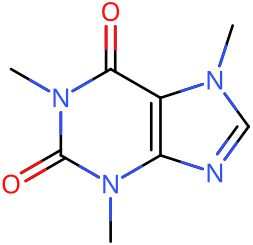
Cn1cnc2n(C)c(=O)n(C)c(=O)c12RYYVLZVUVIJVGH-UHFFFAOYSA-NPharmacology
DrugBankDescription
Caffeine is a drug of the methylxanthine class used for a variety of purposes, including certain respiratory conditions of the premature newborn, pain relief, and to combat drowsiness. Caffeine is similar in chemical structure to Theophylline and Theobromine. It can be sourced from coffee beans, but also occurs naturally in various teas and cacao beans, which are different than coffee beans. Caffeine is also used in a variety of cosmetic products and can be administered topically, orally, by inhalation, or by injection. The caffeine citrate injection, used for apnea of the premature newborn, was initially approved by the FDA in 1999. According to an article from 2017, more than 15 million babies are born prematurely worldwide. This correlates to about 1 in 10 births. Premature birth can lead to apnea and bronchopulmonary dysplasia, a condition that interferes with lung development and may eventually cause asthma or early onset emphysema in those born prematurely. Caffeine is beneficial in preventing and treating apnea and bronchopulmonary dysplasia in newborns, improving the quality of life of premature infants.
Mechanism of Action
The mechanism of action of caffeine is complex, as it impacts several body systems, which are listed below. The effects as they relate to various body systems are described as follows: **General and cellular actions** Caffeine exerts several actions on cells, but the clinical relevance is poorly understood. One probable mechanism is the inhibition of nucleotide phosphodiesterase enzymes, adenosine receptors, regulation of calcium handling in cells, and participates in adenosine receptor antagonism. Phosphodiesterase enzymes regulate cell function via actions on second messengers cAMP and cGMP. This causes lipolysis through activation of hormone-sensitive lipases, releasing fatty acids and glycerol. **Respiratory** The exact mechanism of action of caffeine in treating apnea related to prematurity is unknown, however, there are several proposed mechanisms, including respiratory center stimulation in the central nervous system, a reduced threshold to hypercapnia with increased response, and increased consumption of oxygen, among others. The blocking of the adenosine receptors enhances respiratory drive via an increase in brain medullary response to carbon dioxide, stimulating ventilation and respiratory drive, while increasing contractility of the diaphragm. **Central nervous system** Caffeine demonstrates antagonism of all 4 adenosine receptor subtypes (A1, A2a, A2b, A3) in the central nervous system.
Pharmacodynamics
Caffeine stimulates the central nervous system (CNS), heightening alertness, and sometimes causing restlessness and agitation. It relaxes smooth muscle, stimulates the contraction of cardiac muscle, and enhances athletic performance. Caffeine promotes gastric acid secretion and increases gastrointestinal motility. It is often combined in products with analgesics and ergot alkaloids, relieving the symptoms of migraine and other types of headaches. Finally, caffeine acts as a mild diuretic.
Metabolism
Caffeine metabolism occurs mainly in the liver via the cytochrome CYP1A2 enzyme. The products of caffeine metabolism include paraxanthine, theobromine, and theophylline. The first step of caffeine metabolism is demethylation, yielding paraxanthine (a major metabolite), followed by theobromine, and theophylline, which are both minor metabolites. They are then excreted in urine as urates after additional metabolism. The enzymes xanthine oxidase and N-acetyltransferase 2 (NAT2) also participate in the metabolism of caffeine.
Absorption
Caffeine is rapidly absorbed after oral or parenteral administration, reaching peak plasma concentration within 30 minutes to 2 hours after administration. After oral administration, onset of action takes place within 45 to 1 hour. Food may delay caffeine absorption. The peak plasma level for caffeine ranges from 6-10mg/L. The absolute bioavailability is unavailable in neonates, but reaches about 100% in adults.
Indication
Caffeine is indicated for the short term treatment of apnea of prematurity in infants and off label for the prevention and treatment of bronchopulmonary dysplasia caused by premature birth. In addition, it is indicated in combination with sodium benzoate to treat respiratory depression resulting from an overdose with CNS depressant drugs. Caffeine has a broad range of over the counter uses, and is found in energy supplements, athletic enhancement products, pain relief products, as well as cosmetic products.
Half-life
In an average-sized adult or child above the age of 9, the half-life of caffeine is approximately 5 hours. Various characteristics and conditions can alter caffeine half-life. It can be reduced by up to 50% in smokers. Pregnant women show an increased half-life of 15 hours or higher, especially in the third trimester. The half-life in newborns is prolonged to about 8 hours at full-term and 100 hours in premature infants, likely due to reduced ability to metabolize it. Liver disease or drugs that inhibit CYP1A2 can increase caffeine half-life.
Protein Binding
Plasma protein binding of caffeine has not been determined for neonates or infants. In vitro studies indicate a protein binding of about 10%-36%. Caffeine is reversibly bound to plasma proteins.
Elimination
The major metabolites of caffeine can be found excreted in the urine. About 0.5% to 2% of a caffeine dose is found excreted in urine, as it because it is heavily absorbed in the renal tubules.
Volume of Distribution
Caffeine has the ability to rapidly cross the blood-brain barrier. It is water and fat soluble and distributes throughout the body. Caffeine concentrations in the cerebrospinal fluid of preterm newborns are similar to the concentrations found in the plasma. The mean volume of distribution of caffeine in infants is 0.8-0.9 L/kg and 0.6 L/kg in the adult population.
Clearance
The clearance of caffeine varies, but on average, is about 0.078 L/kg/h (1.3 mL/min/kg).
Receptor Profile
Receptor Actions
Receptor Binding
Measured Affinities
Guide to PHARMACOLOGYMeasured binding and functional data for caffeine, curated by the IUPHAR/BPS Guide to PHARMACOLOGY. Each row cites the paper it came from. Lower concentrations mean tighter binding — a value in the sub-nanomolar range indicates a very potent interaction.
| Target | Action | Measure | Value | Concentration | Species | Source |
|---|---|---|---|---|---|---|
| A2B receptor Adora2b | Antagonist | pKi | 4.89 | 12,882 nM | Mouse | PMID 8135856 |
| A3 receptor ADORA3 | Antagonist | pKi | 4.88 | 13,183 nM | Human | — |
| A2B receptor Adora2b | Antagonist | pKi | 4.52 | 30,200 nM | Rat | PMID 8135856 |
| A3 receptor Adora3 | Antagonist | pKi | 4 | 100,000 nM | Rat | PMID 19569717 |
| A1 receptor Adora1 | Antagonist | pKi | — | — | Rat | — |
| A1 receptor ADORA1 | Antagonist | pKi | — | — | Human | — |
| A2A receptor Adora2a | Antagonist | pKi | — | — | Rat | — |
| A2A receptor ADORA2A | Antagonist | pKi | — | — | Human | — |
| A2B receptor ADORA2B | Antagonist | pKi | — | — | Human | — |
Reading this. pKi, pEC50 and pIC50 are negative log molar values, so a higher number means a tighter interaction; the concentration column converts them for you. Values from non-human species are laboratory measurements and do not translate directly to human effect. Receptor affinity is not a dose — it describes what a molecule binds, not how much of it is safe to take.
Receptor data from the IUPHAR/BPS Guide to PHARMACOLOGY (v2026.2), licensed CC BY-SA 4.0. Matched to this substance by InChIKey.
History & Culture
Caffeine-containing plants have been utilized by human cultures across multiple continents for millennia, with various civilizations independently discovering the stimulating properties of different botanical sources. According to Chinese legend, the emperor Shennong inadvertently discovered tea around 3000 BCE when leaves fell into boiling water, producing a fragrant and restorative drink. This account is referenced in Lu Yu's Cha Jing, an influential early treatise on tea. Meanwhile, in the Americas, residue analysis from an ancient Mayan vessel dated to 600 BCE provides the earliest evidence of cocoa bean consumption. Pre-Columbian Mesoamerican cultures prepared a bitter, spiced beverage called xocolatl, flavored with vanilla, chile pepper, and achiote, which was believed to combat fatigue—an effect likely attributable to its theobromine and caffeine content. Cocoa beans held such value that they were frequently used as currency. In West Africa, kola nut chewing appears to have ancient origins, practiced in both private and social contexts to restore vitality and suppress hunger. Native Americans of eastern North America brewed a tea called asi or "black drink" from the leaves and stems of yaupon holly, with archaeological evidence suggesting this tradition may date to Late Archaic times. The earliest credible evidence of coffee drinking emerges from fifteenth-century Sufi monasteries in Yemen. From the port of Mokha, coffee culture spread northward to Egypt and across North Africa, reaching the broader Middle East, Persia, and Turkey by the sixteenth century. European exposure followed, with Dutch traders eventually transporting coffee cultivation to the East Indies and the Americas. Chocolate reached Europe through Spanish colonizers and had become a popular beverage across the continent by 1700.
1819–1902
The isolation of caffeine as a distinct chemical compound occurred through parallel efforts by several European chemists in the early nineteenth century. In 1819, the German chemist Friedlieb Ferdinand Runge successfully isolated relatively pure caffeine, which he termed "Kaffebase" in reference to its presence in coffee. Two years later, French chemist Pierre Jean Robiquet independently achieved isolation, as did the French team of Pierre-Joseph Pelletier and Joseph Bienaimé Caventou. The Swedish chemist Jöns Jacob Berzelius documented that these researchers had made their discoveries without knowledge of each other's work. Robiquet distinguished himself as among the first to describe pure caffeine's properties, while Pelletier conducted the initial elemental analysis. In 1827, M. Oudry isolated what he called "théine" from tea, though subsequent work by Mulder and Carl Jobst in 1838 demonstrated that théine was chemically identical to caffeine. The complete chemical characterization of caffeine culminated in the work of German chemist Hermann Emil Fischer, who achieved the first total synthesis of caffeine from its constituent elements in 1895. Two years later, Fischer determined the compound's structural formula. This research contributed to his Nobel Prize in Chemistry in 1902.
1500s–1912
The recognition that coffee contained stimulating compounds prompted various regulatory efforts across different jurisdictions and eras. During the sixteenth century, Islamic authorities in Mecca and the Ottoman Empire enacted prohibitions against coffee for certain populations. In Europe, Charles II of England attempted to ban coffee in 1676, Frederick II of Prussia instituted a prohibition in 1777, and Sweden implemented coffee bans intermittently between 1756 and 1823. Caffeine became the subject of one of the earliest documented American health scares in 1911, when the United States government seized forty barrels and twenty kegs of Coca-Cola syrup in Chattanooga, Tennessee, alleging that the caffeine content was injurious to health. Although the Supreme Court ultimately ruled in favor of Coca-Cola, the incident prompted legislative action: two bills were introduced to the House of Representatives in 1912 seeking to amend the Pure Food and Drug Act by adding caffeine to the list of habit-forming and deleterious substances requiring mandatory label disclosure.
Various religious traditions have developed distinct positions regarding caffeine consumption. The Seventh-day Adventist Church historically requested that members abstain from caffeinated beverages, though this requirement has been removed from baptismal vows while abstention remains a recommended practice. Gaudiya Vaishnavas generally avoid caffeine based on beliefs that it clouds the mind and overstimulates the senses; initiation under a guru traditionally requires abstinence from caffeine, alcohol, nicotine, and other drugs for at least one year. The Church of Jesus Christ of Latter-day Saints maintains that its foundational health revelation does not specifically mention caffeine, though it prohibits "hot drinks," which church leaders have interpreted as referring to tea and coffee specifically. Among Muslims, caffeinated beverages are widely consumed, despite some sixteenth-century attempts by religious authorities to classify them as forbidden intoxicants under Islamic dietary law—efforts that ultimately proved unsuccessful.
Caffeine occupies a unique position as the world's most widely consumed psychoactive substance, distinguished from nearly all other such compounds by its near-universal legal status and social acceptability. Unlike most psychoactive drugs, caffeine remains largely unregulated globally and is not merely tolerated but actively encouraged in many cultural contexts. The integration of caffeine into daily life has been profound, particularly following the Industrial Revolution. The relatively benign stimulation provided by caffeinated beverages has given rise to elaborate rituals, social bonding practices, and communication traditions, with sophisticated connoisseur cultures developing around coffee, tea, and other preparations. This state of sustained alertness has proven conducive to productive labor, aligning caffeine consumption with the demands of industrial and post-industrial capitalism. For substantial portions of the global population, caffeine use has become habitual to a degree that some characterize as addiction, though this framing often provokes resistance similar to that encountered when applying such terminology to alcohol. The familiarity of caffeine has contributed to limited public awareness regarding its long-term effects on health and quality of life, compounded by the stigmatization of other stimulants that precludes meaningful comparison.
Subjective Effects
Physical
The physical effects of caffeine can be broken down into several components which progressively intensify proportional to dosage.
- Stimulation: In terms of its effects on the physical energy levels of the user, caffeine is usually considered to be mildly to moderately energetic and stimulating in a fashion that is considerably weaker in comparison to that of traditional recreational stimulants such as amphetamine, MDMA or cocaine. This encourages physical activities such as performing chores and repetitive tasks which would otherwise be boring and strenuous physical activities. The particular style of stimulation which caffeine presents can be described as forced. This means that at higher dosages, it becomes difficult or impossible to keep still as jaw clenching, involuntarily bodily shakes and vibrations become present, resulting in extreme shaking of the entire body, unsteadiness of the hands, and a general lack of motor control.
- Frequent urination: When doses of caffeine equivalent to 2–3 cups of coffee are administered to people who have not consumed caffeine during prior days, they produce a mild increase in urinary output. Most people who consume caffeine, however, ingest it daily. Regular users of caffeine have been shown to develop a strong tolerance to the diuretic effect.
- Vasoconstriction and Vasodilation: Whilst caffeine acts as a mild vasoconstrictor, it's metabolite theombrine is a vasodilator and these effects are thought to cancel each other out.
- Bronchodilation: Caffeine is an effective bronchodilator. In clinical tests on adults with athsma, at fairly low doses (5mg/kg of body weight), caffeine has been shown to provide a small improvement in lung function, such that it needs to be controlled for in diagnostic tests.
- Appetite suppression
- Tactile enhancement
- Increased heart rate
- Increased blood pressure
Cognitive
The cognitive effects of caffeine can be broken down into several components which progressively intensify proportional to dosage. It contains a large number of typical stimulant cognitive effects. Although negative side effects are usually mild at low to moderate dosages, they become increasingly likely to manifest themselves with higher amounts or extended usage. This particularly holds true during the offset of the experience.
- Wakefulness
- Thought acceleration
- Analysis enhancement
- Focus enhancement: This component is most effective at low to moderate dosages as anything higher will usually impair concentration.
- Memory enhancement
- Motivation enhancement
- Euphoria
- Anxiety
- Cognitive fatigue: This component can occur during the offset of this compound as a rebound effect which is usually equal in its intensity to the enhancements which occurred before it.
Forked from Subjective Effect Documentation by Josie Kins, September 2015. Via dose.wiki (CC0).
Caffeine is not known to cause brain damage, and has an extremely low toxicity relative to dose. There are relatively few physical side effects associated with caffeine exposure. Various studies have shown that in reasonable doses in a careful context, it presents no negative cognitive, psychiatric or toxic physical consequences of any sort.
LD50
LD50: 127 mg/kg (Oral, Mouse) (A308)
Carcinogenicity
Group 3: Not classifiable as to its carcinogenicity to humans
Addiction & dependence
Caffeine dependence can develop with regular consumption, leading to cravings and withdrawal effects upon sudden cessation, but has low abuse potential. While it has a low potential for abuse compared to other substances, habitual users may experience difficulty quitting due to these dependence-related effects. Tolerance to many of the effects of caffeine develops with prolonged and repeated use.
Effect Profile
Curated + 193 ReportsStrong stimulation, focus, and euphoria with strong anxiety/jitters
Tolerance & Pharmacokinetics
drugs.wikiTolerance Decay
Tolerance to many subjective and cardiovascular effects develops with daily use over days to weeks and decays over about 1–2 weeks of abstinence; withdrawal (headache, sleepiness, irritability) usually peaks within 24–48 hours and resolves within several days. Data are mixed and interindividual variability is high; figures above synthesize experimental and observational reports.
Cross-Tolerances
Experience Report Analysis
ErowidDemographics
Gender Distribution
Age Distribution
Reports Over Time
Effect Analysis
ErowidEffects aggregated from 193 experience reports (193 single-substance Erowid)
Effect Sentiment Distribution
Confidence Distribution
Each bar is the share of reports mentioning the effect; its whisker, and the band on the rows below, is the 95% interval: where the share could plausibly be with other reports of the same kind.
Positive Effects 9
Adverse Effects 11
Show 7 neutral or unclassified mentions
Also reported in combinations. In the 209 Caffeine reports where another drug was taken too, 31 (14.8%) mention hospital, emergency services or an overdose, 3 (1.4%) a seizure and 12 (5.7%) psychosis. In the 193 single-substance reports: 11.9%, 2.1% and 1.0%. These are not in the figures above: they cannot be put down to Caffeine alone, and a mention is not always something that happened to the writer.
Dose-Response Correlation
How effect frequency changes across dose levels. Whiskers, and the numbers' hover text, give each figure's 95% interval.
Not drawn, too few reports (a dose tier needs 20): Oral Strong (n=15). Why 20?
View data table
| Effect | Heavy (n=52) |
|---|---|
| Stimulation | 61.5% (95% interval 48 to 74 percent) |
| Anxiety | 42.3% (95% interval 30 to 56 percent) |
| Nausea | 40.4% (95% interval 28 to 54 percent) |
| Sedation | 25.0% (95% interval 15 to 38 percent) |
| Hospital | 19.2% (95% interval 11 to 32 percent) |
| Euphoria | 19.2% (95% interval 11 to 32 percent) |
| Confusion | 17.3% (95% interval 9 to 30 percent) |
| Increased Heart Rate | 17.3% (95% interval 9 to 30 percent) |
| Music Enhancement | 17.3% (95% interval 9 to 30 percent) |
| Headache | 15.4% (95% interval 8 to 28 percent) |
| Sweating | 15.4% (95% interval 8 to 28 percent) |
| Color Enhancement | 13.5% (95% interval 7 to 25 percent) |
| Auditory Effects | 11.5% (95% interval 5 to 23 percent) |
| Memory Suppression | 11.5% (95% interval 5 to 23 percent) |
| Visual Distortions | 9.6% (95% interval 4 to 21 percent) |
Subjective Effect Ontology
Experience ReportsStructured effect tags extracted from 402 experience reports using a controlled vocabulary of 220+ canonical effects across 15 domains.
Emotional
Gastrointestinal
Motor
Dose–Effect Mapping
Experience ReportsHow reported effects shift across dose tiers, based on 193 single-substance experience reports. The shaded band on each bar is its 95% interval. An arrow (↑ ↓) marks a change between the lowest and highest tier that count an effect only when the gap is bigger than chance would explain; ~ means no clear change. How changes are called
Not drawn, too few reports (a dose tier needs 20): Oral Strong (n=15). Why 20?
Limited tier coverage — most reports fall within the Heavy range. Effects at other dose levels may not be represented.
| Effect | Heavy (n=52) | Change with dose |
|---|---|---|
| stimulation | ||
| anxiety | ||
| nausea | ||
| sedation | ||
| hospital | ||
| euphoria | ||
| confusion | ||
| increased heart rate | ||
| music enhancement | ||
| headache | ||
| sweating | ||
| color enhancement | ||
| auditory effects | ||
| memory suppression | ||
| visual distortions | ||
| focus enhancement | ||
| empathy | ||
| motor impairment | ||
| body high | ||
| dissociation |
Showing top 20 of 22 effects
Dosage Distribution
Dose distribution from experience reports, one dose per report (the first listed). Doses above Q3 + 3×IQR, far above what people typically take, are left out of the median and range and listed under each route: most are real heavy doses or overdoses, not mistakes.
7 reports gave a dose above the typical range (4,800–10,090 mg), so they are not in the figures above. 1 of them mentions hospital, emergency services or an overdose. Listing a dose here does not mean it is safe.
1 dose more than 50 times the median may be a typing or unit error and is not in the figures either: check the report.
Real-World Dose Distribution
ErowidFrom 1087 of 1428 recorded dose entries: those that state a weight (mg, g or µg), in routes with at least five of them. Values above Q3 + 3×IQR, far above what people typically take, are left out; they can include real heavy doses and overdoses, not only mistakes.
Oral (n=1021)
Smoked (n=7)
Insufflated (n=16)
Common Combinations
Most co-occurring substances, as a share of all 402 reports filed under Caffeine; whiskers are 95% intervals
Form / Preparation
Most common forms and preparations, as a share of the 276 reports that give one; whiskers are 95% intervals
Body-Weight Dosing
Dose per kg of body weight, one dose per report (the first listed), from reports giving a weight of 30–250 kg. Doses above Q3 + 3×IQR, far above what people typically take, are left out of the median and range and listed under each route.
Oral
3 reports gave a dose above the typical range (73.529–158.898 mg/kg), so they are not in the figures above. Listing a dose here does not mean it is safe.
1 dose more than 50 times the median may be a typing or unit error and is not in the figures either: check the report.
Show the reports
- 158.898 mg/kg · another drug taken too
- 92.308 mg/kg
- 73.529 mg/kg
Possibly a typing or unit error:
Insufflated
Smoked
Redose Patterns
Redosing behavior across 330 reports
Legal Status
| Country | Status | Notes |
|---|---|---|
| United States | Legal (GRAS) | Classified by the FDA as 'generally recognized as safe' (GRAS). Beverages containing less than 0.02% caffeine are considered safe under FDA guidelines. Caffeine powder sold as a dietary supplement remains unregulated. Food labeling requires caffeine to appear in ingredient lists when added, but there is no mandatory quantitative labeling requirement for caffeine content. Natural caffeine sources such as guarana or yerba maté are not required to identify caffeine presence or quantity. FDA guidance was updated in 2018. |
Harm Reduction
drugs.wikiHarm-reduction reasoning and key points that informed this profile: 1) Dose and duration are highly variable; typical oral onset is within 5–45 minutes and peak CNS stimulation occurs around 30–75 minutes. Effects can persist for several hours, with residual stimulation and sleep disruption lasting into the next day at higher doses. 2) Serious toxicity is uncommon but possible; human fatalities are reported mostly from intentional or accidental ingestion of concentrated powders/shots, with estimated lethal ranges around 150–200 mg/kg and severe toxicity at gram-level intakes. 3) Half-life averages about 3–7 hours but is highly context-dependent: shorter in smokers and noticeably longer in late pregnancy and in users on oral contraceptives; neonates clear caffeine extremely slowly. 4) CYP1A2 inhibitors (notably fluvoxamine, and several quinolone antibiotics such as ciprofloxacin) can substantially increase caffeine exposure, raising the risk of side effects (jitters, tachycardia, insomnia) at usual doses. 5) Alcohol plus caffeine is risky because caffeine can mask sedation and intoxication cues without reducing impairment; people may unintentionally over-consume alcohol. 6) Combining high-dose caffeine with other stimulants increases cardiovascular load (tachycardia, hypertension); drug-checking alerts frequently find caffeine mixed into stimulant powders/tablets, which can lead to redosing and unintended high stimulant loads. 7) During pregnancy and lactation, prudent upper limits are lower than for nonpregnant adults; caffeine crosses the placenta and appears in breast milk, and infants—especially preterm—metabolize it slowly. 8) For sleep health, avoid substantial caffeine within at least 6 hours of bedtime; even earlier cutoffs may be needed for slow metabolizers or those on CYP1A2 inhibitors. 9) Long-term daily use leads to tolerance and a withdrawal syndrome that is typically mild-to-moderate and resolves over several days; tapering intake can reduce severity. 10) People with anxiety disorders, symptomatic arrhythmias, uncontrolled hypertension, GERD/ulcer disease, seizure disorders, or significant hepatic impairment should use caution or lower doses. 11) Changes in smoking status can alter caffeine metabolism within days; former smokers often need to reduce caffeine to avoid side effects. 12) Hydration: caffeine is a mild diuretic; habitual users develop tolerance to diuretic effects—drink to thirst rather than overhydrate. 13) Prefer measured-dose products over bulk powders; if using tablets/capsules, space redoses to avoid stacking from delayed absorption.
References
Cited References
Additional references
- Erowid Caffeine: Dosage
- Erowid Caffeine: Effects/Basics
- DrugBank DB00201: Caffeine
- DrugBank article: Fluvoxamine inhibits caffeine metabolism
- DrugBank article: CYP1A2 interactions incl. quinolones
- NCBI Bookshelf: StatPearls – Caffeine
- NCBI Bookshelf: MotherToBaby – Caffeine in Pregnancy
- NCBI Bookshelf: LactMed – Caffeine
- TripSit Wiki – Caffeine + combos (general guidance)
- Saferparty.ch – Caffeine mixed into stimulant/MDMA products
- EUDA (DIMS) Annual report 2024 – caffeine as common adulterant