
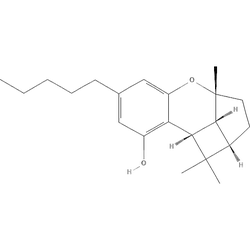
CBL Stats & Data
CCCCCC1=CC(=C2C3C4C(C3(C)C)CCC4(OC2=C1)C)OIGHTZQUIFGUJTG-QSMXQIJUSA-NTolerance & Pharmacokinetics
drugs.wikiNo data describing tolerance to CBL; assume none or minimal until characterized. Do not extrapolate tolerance patterns from THC or CBD.
Harm Reduction
drugs.wikiCBL is a minor phytocannabinoid identified among the many compounds in cannabis; it is not a common retail active and remains largely unstudied in humans. No authoritative human pharmacology, dose, or impairment data were found in standard HR sources; therefore any self-experimentation should follow microdosing principles, single-variable changes, and long observation intervals. ‘Alt-cannabinoid’ markets have a track record of mislabeling and adulteration (including semi-synthetic cannabinoids and acetate derivatives), which increases risk when buying products labeled as CBL; seek recent full-panel certificates of analysis (COAs) covering potency, residual solvents, pesticides, heavy metals, microbials, and list of diluents. Inhalation risks are elevated for oils and cartridges that may contain non-cannabinoid thickeners; vitamin E acetate adulteration was linked to EVALI cases in 2019, underscoring the need to avoid unknown cutting agents. For those subject to drug testing, note that routine immunoassays target THC metabolites (THC-COOH); full-spectrum hemp/cannabis products marketed as ‘CBL’ can still trigger positives if they contain THC. Because subjective and objective effects are undefined, avoid driving or safety-sensitive tasks until you know your individual response and the product’s true contents.
References
Cited references
- PubChem Compound: Cannabicyclol (identity, synonyms)
- Erowid: Compounds found in Cannabis sativa (lists CBL as minor constituent; notes naming/aliases)
- Erowid: Cannabis Drug Testing (assays target THC-COOH; detection windows)
- TripSit: Drug combinations overview (general caution for cannabis + depressants and with psychedelics)
- TripSit: Harm Reduction resources landing (volumetric dosing tool link)
- Drugs-Forum: CDC update summary on EVALI implicating vitamin E acetate (lung injury context for vape adulterants)
- Saferparty (Zurich Drug Checking): Warnings about semi-synthetic cannabinoids in cannabis products (e.g., D8-THC on hash; THC-O ketene risk); misdeclaration in oils
- Saferparty (Zurich Drug Checking): Warning on THC-O acetate—ketene formation risk when heated
- Saferparty (Zurich Drug Checking): Cannabis oil with delta-8-THC/isomers mislabeled as THC/CBD (illustrative of mislabeling in oils)