
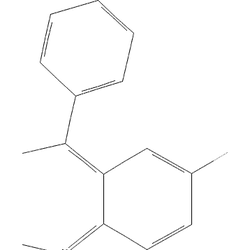
Chlordiazepoxide Stats & Data
BUCORZSTKDOEKQ-UHFFFAOYSA-NPharmacology
DrugBankDescription
An anxiolytic benzodiazepine derivative with anticonvulsant, sedative, and amnesic properties. It has also been used in the symptomatic treatment of alcohol withdrawal.
Mechanism of Action
Chlordiazepoxide binds to stereospecific benzodiazepine (BZD) binding sites on GABA (A) receptor complexes at several sites within the central nervous system, including the limbic system and reticular formation. This results in an increased binding of the inhibitory neurotransmitter GABA to the GABA(A) receptor. BZDs, therefore, enhance GABA-mediated chloride influx through GABA receptor channels, causing membrane hyperpolarization. The net neuro-inhibitory effects result in the observed sedative, hypnotic, anxiolytic, and muscle relaxant properties.
Pharmacodynamics
Chlordiazepoxide has antianxiety, sedative, appetite-stimulating and weak analgesic actions. The drug seems to block EEG arousal from stimulation in the brain stem reticular formation. The drug has been studied extensively in many species of animals and these studies are suggestive of action on the limbic system of the brain, which recent evidence indicates is involved in emotional responses. Hostile monkeys were made tame by oral drug doses which did not cause sedation. Chlordiazepoxide revealed a "taming" action with the elimination of fear and aggression. The taming effect of chlordiazepoxide was further demonstrated in rats made vicious by lesions in the septal area of the brain. The drug dosage which effectively blocked the vicious reaction was well below the dose which caused sedation in these animals.
Indication
For the management of anxiety disorders or for the short-term relief of symptoms of anxiety, withdrawal symptoms of acute alcoholism, and preoperative apprehension and anxiety.
Elimination
Chlordiazepoxide is excreted in the urine, with 1% to 2% unchanged and 3% to 6% as conjugate.
Measured Affinities
Guide to PHARMACOLOGYMeasured binding and functional data for chlordiazepoxide, curated by the IUPHAR/BPS Guide to PHARMACOLOGY. Each row cites the paper it came from. Lower concentrations mean tighter binding — a value in the sub-nanomolar range indicates a very potent interaction.
| Target | Action | Measure | Value | Concentration | Species | Source |
|---|---|---|---|---|---|---|
| TRH1 receptor Trhr | Antagonist | pKi | 4.82 | 15,136 nM | Rat | PMID 2566295 |
| TRH1 receptor Trhr | Antagonist | pKi | 4.7 | 19,953 nM | Mouse | PMID 2175902 |
Reading this. pKi, pEC50 and pIC50 are negative log molar values, so a higher number means a tighter interaction; the concentration column converts them for you. Values from non-human species are laboratory measurements and do not translate directly to human effect. Receptor affinity is not a dose — it describes what a molecule binds, not how much of it is safe to take.
Receptor data from the IUPHAR/BPS Guide to PHARMACOLOGY (v2026.2), licensed CC BY-SA 4.0. Matched to this substance by PubChem CID.
Chlordiazepoxide binds to stereospecific benzodiazepine (BZD) binding sites on GABA (A) receptor complexes at several sites within the central nervous system, including the limbic system and reticular formation. This results in an increased binding of the inhibitory neurotransmitter GABA to the GABA(A) receptor.BZDs, therefore, enhance GABA-mediated chloride influx through GABA receptor channels, causing membrane hyperpolarization.
LD50
LD50: 537 mg/kg (Oral, Rat) (A308)
Carcinogenicity
No indication of carcinogenicity to humans (not listed by IARC).
Health effects (PubChem excerpts)
They cause slurred speech, disorientation and "drunken" behavior. They are physically and psychologically addictive.
Effect Profile
Curated + 9 ReportsStrong anxiolysis and euphoria with moderate cognitive impairment, mild sedation
Tolerance & Pharmacokinetics
drugs.wikiNo tolerance chart. Our decay curves for these drugs were estimates, and a curve can make tolerance look longer-lasting than it is, which is the dangerous direction.
How fast tolerance to these drugs fades after a break has not been measured well enough to draw, so don't count on a dose you used to take still being safe: after time off, start with a much smaller amount and don't use alone. Mixing sedatives with each other, with alcohol or with opioids sharply raises the risk of a fatal overdose. If you've been using regularly, don't stop suddenly: withdrawal from benzodiazepines, alcohol or GHB/GBL can cause seizures or delirium, so get medical help to cut down gradually.
Sources: FRANK: benzodiazepines · Alcohol and Drug Foundation: GHB · FDA 2020: benzodiazepine boxed warning · FDA 2019: gabapentinoids and breathing · NHS: alcohol use disorder
Cross-Tolerances
Experience Report Analysis
ErowidDemographics
Gender Distribution
Too few reports for a chart: gender is known from 12 reports, and a split is drawn only from 20 reports or more. Counts are shown instead. Why 20?
- Male 10 of 12
- Female 2 of 12
Age Distribution
Reports Over Time
Effect Analysis
ErowidEffects aggregated from 9 experience reports (9 single-substance Erowid)
Effect Sentiment Distribution
Confidence Distribution
Each bar is the share of reports mentioning the effect; its whisker, and the band on the rows below, is the 95% interval: where the share could plausibly be with other reports of the same kind.
Too few reports for bars: these effects come from 9 single-substance Erowid reports, and a bar is drawn only from 20 reports or more. With fewer, a percentage cannot tell a common effect from a rare one. Counts are shown instead. Why 20?
Positive Effects 3
Adverse Effects 0
Also reported in combinations. In the 3 Chlordiazepoxide reports where another drug was taken too, 1 mentions hospital, emergency services or an overdose, 0 a seizure and 0 psychosis (too few reports for percentages). In the 9 single-substance reports: 0, 1 and 1. These are not in the figures above: they cannot be put down to Chlordiazepoxide alone, and a mention is not always something that happened to the writer.
Real-World Dose Distribution
ErowidFrom 14 of 15 recorded dose entries: those that state a weight (mg, g or µg), in routes with at least five of them. Values above Q3 + 3×IQR, far above what people typically take, are left out; they can include real heavy doses and overdoses, not only mistakes.
Oral (n=14)
Form / Preparation
Most common forms and preparations, as a share of the 8 reports that give one
Too few reports for bars: these forms come from 8 reports, and a bar is drawn only from 20 reports or more. With fewer, a percentage cannot tell a common effect from a rare one. Counts are shown instead. Why 20?
- Pill / Tablet 5 of 8
- Capsule 3 of 8
Redose Patterns
Redosing behavior across 10 reports
Too few reports for a chart: redosing is known from 10 reports, and a split is drawn only from 20 reports or more. Counts are shown instead. Why 20?
- Single dose 8 of 10
- Redosed 2 of 10
Benzodiazepine Equivalence
25mg ~=10mg Diazepam
Harm Reduction
drugs.wikiChlordiazepoxide has a long elimination time and produces active metabolites (including desmethyldiazepam and oxazepam), so effects and impairment can persist into the next day—avoid redosing and plan for extended sedation. Its CNS depressant effects are synergistic with alcohol, opioids, GHB/GBL, barbiturates, gabapentinoids, first-generation antihistamines, and other sedatives, markedly increasing the risk of respiratory depression and overdose. Because of slow onset (30–60 min) and prolonged peaks (1–4 h), impatience-driven redosing is a common error—wait several hours before judging effect. Driving and safety-sensitive tasks can be impaired for 12–24+ hours; next‑day effects are common at higher doses or with repeated dosing. Tolerance to sedative/anxiolytic effects emerges quickly with regular use; dependence can develop within weeks, so courses should be short and dose minimal. Abrupt cessation after regular use can precipitate severe withdrawal (including seizures); any taper should be gradual and medically supervised. In older adults and in hepatic impairment, accumulation is more likely and sedation/fall risk is higher—use extra caution and lower doses. Do not crush tablets to inject or plug—binders/fillers and poor water solubility create serious vascular risks and unpredictable absorption. Rough oral equivalence is ~25 mg chlordiazepoxide ≈ 10 mg diazepam; interindividual variability means equivalence is only a guide and not a dosing instruction. For people using other depressants (e.g., opioids, alcohol, GHB/GBL, gabapentinoids), avoid concomitant use; if exposure has occurred, reduce doses drastically, do not use alone, and ensure monitoring.
References
Cited references
- DrugBank: Chlordiazepoxide (DB00475) – mechanism, metabolism, half-life
- TripSit Wiki – Benzodiazepines table (half-lives; diazepam equivalence; Librium naming)
- Bluelight – ⫸Benzo Guide v.1⫷ (collated HR: onset; equivalence; half-lives)
- DrugWise – Benzodiazepines (harm reduction: driving risk, alcohol caution, duration limits, no abrupt stop, injection warning)
- Hi‑Ground – Benzos (unsafe/cautionary combinations; tolerance/dependence warning)