
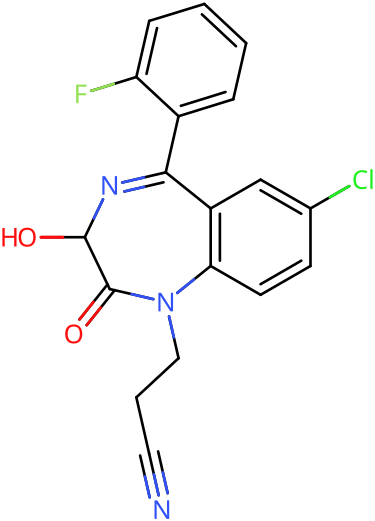
Cinolazepam Stats & Data
N#CCCN1C(=O)C(O)N=C(c2ccccc2F)c2cc(Cl)ccc12XAXMYHMKTCNRRZ-UHFFFAOYSA-NPharmacology
DrugBankDescription
Cinolazepam is a benzodiazepine derivative with anxiolytic, anticonvulsant, sedative and skeletal muscle relaxant activity. It is not approved in Canada or America.
Mechanism of Action
Cinolazepam binds to central benzodiazepine receptors which interact allosterically with GABA receptors. This potentiates the effects of the inhibitory neurotransmitter GABA, increasing the inhibition of the ascending reticular activating system and blocking the cortical and limbic arousal that occurs following stimulation of the reticular pathways.
Pharmacodynamics
Cinolazepam is a benzodiazepine derivative with anxiolytic, anticonvulsant, sedative and skeletal muscle relaxant activity. It is not approved in Canada or America.
Absorption
Bioavailability following oral administration is 90-100%.
Indication
For the management of anxiety disorders or for the short-term relief of the symptoms of anxiety or anxiety associated with depressive symptoms.
Cinolazepam binds to central benzodiazepine receptors which interact allosterically with GABA receptors. This potentiates the effects of the inhibitory neurotransmitter GABA, increasing the inhibition of the ascending reticular activating system and blocking the cortical and limbic arousal that occurs following stimulation of the reticular pathways.
Carcinogenicity
No indication of carcinogenicity to humans (not listed by IARC).
Toxicity (DrugBank)
The onset of impairment of consciousness is relatively rapid in benzodiazepine poisoning. Onset is more rapid following larger doses and with agents of shorter duration of action. The most common and initial symptom is somnolence. This may progress to coma Grade I or Grade II following very large ingestions.
Health effects (PubChem excerpts)
They cause slurred speech, disorientation and "drunken" behavior. They are physically and psychologically addictive. May cause a potentially dangerous rash that may develop into Stevens Johnson syndrome, an extremely rare but potentially fatal skin disease.
Effect Profile
CuratedStrong euphoria and anxiolysis with mild sedation and cognitive impairment
Tolerance & Pharmacokinetics
drugs.wikiNo tolerance chart. Our decay curves for these drugs were estimates, and a curve can make tolerance look longer-lasting than it is, which is the dangerous direction.
How fast tolerance to these drugs fades after a break has not been measured well enough to draw, so don't count on a dose you used to take still being safe: after time off, start with a much smaller amount and don't use alone. Mixing sedatives with each other, with alcohol or with opioids sharply raises the risk of a fatal overdose. If you've been using regularly, don't stop suddenly: withdrawal from benzodiazepines, alcohol or GHB/GBL can cause seizures or delirium, so get medical help to cut down gradually.
Sources: FRANK: benzodiazepines · Alcohol and Drug Foundation: GHB · FDA 2020: benzodiazepine boxed warning · FDA 2019: gabapentinoids and breathing · NHS: alcohol use disorder