
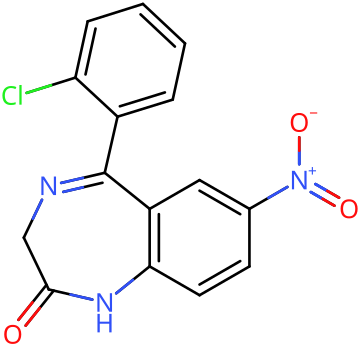
Clonazepam Stats & Data
DGBIGWXXNGSACT-UHFFFAOYSA-NInteraction Warnings
This combination can result in an increased risk of vomiting during unconsciousness and death from the resulting suffocation. If this occurs, users should attempt to fall asleep in the recovery position or have a friend move them into it.
It is dangerous to combine benzodiazepines with stimulants due to the risk of excessive intoxication. Stimulants decrease the sedative effect of benzodiazepines, which is the main factor most people consider when determining their level of intoxication. Once the stimulant wears off, the effects of benzodiazepines will be significantly increased, leading to intensified disinhibition as well as other effects.
Pharmacology
DrugBankDescription
A benzodiazepine used to treat various seizures, including myotonic or atonic seizures, photosensitive epilepsy, and absence seizures, although tolerance may develop . The agent has also been indicated for treating panic disorder . The mechanism of action appears to involve the enhancement of gamma-aminobutyric acid receptor responses . Since being first patented in 1960 and then released for sale from Roche in the US in 1975 , clonazepam has experienced a storied history in the treatment of the aforementioned medical conditions. Now available as a generic medication, the agent continues to see exceptionally high use as millions of prescriptions are written for the medication internationally every year. Unfortunately, however, like most benzodiazepines, clonazepam use has also been associated with recreational use and drug abuse .
Mechanism of Action
Gamma-Aminobutyric acid (GABA) is considered the principal inhibitory neurotransmitter in the human body . When GABA binds to GABA(a) receptors found in neuron synapses, chloride ions are conducted across neuron cell membranes via an ion channel in the receptors . With enough chloride ions conducted, the local, associated neuron membrane potentials are hyperpolarized - making it more difficult or less likely for action potentials to fire, ultimately resulting in less excitation of the neurons . Subsequently, benzodiazepines like clonazepam can bind to benzodiazepine receptors that are components of various varieties of GABA(a) receptors . This binding acts to enhance the effects of GABA by increasing GABA affinity for the GABA(a) receptor, which ultimately enhances GABA ligand binding at the receptors . This enhanced ligand binding of the inhibitory neurotransmitter GABA to the receptors increases the aforementioned chloride ion conduction (perhaps reportedly via an increase in the frequency of the chloride channel opening), resulting in a hyperpolarized cell membrane that prevents further excitation of the associated neuron cells .
Pharmacodynamics
The pharmacodynamic properties of clonazepam are common among benzodiazepines and include anticonvulsive, sedative, muscle relaxing and anxiolytic effects . Animal data and electroencephalographic investigations in man have shown that clonazepam rapidly suppresses many types of paroxysmal activity including the spike and wave discharge in absence seizures (petit mal), slow spike wave, generalized spike wave, spikes with temporal or other locations, as well as irregular spikes and waves . Moreover, the agent can also decrease the frequency, amplitude, duration, and spread of discharge in minor motor seizures . Generalized EEG abnormalities are more readily suppressed by clonazepam than are focal EEG abnormalities such as focal spikes . Clonazepam has beneficial effects in generalized and focal epilepsies .
Metabolism
Clonazepam is metabolized principally in the liver . The metabolic pathways include hydroxylation, reduction of the nitro groups to amine groups, and the addition of acetate to the amino grouping . In particular, clonazepam is extensively metabolized by reduction to 7-amino-clonazepam and by N-acetylation to 7-acetamido-clonazepam . Hydroxylation at the C-3 position also occurs . Hepatic cytochrome P450 3A4 is implicated in the nitroreduction of clonazepam to pharmacologically inactive metabolites .
Absorption
Clonazepam is rapidly and almost entirely absorbed after oral administration as tablets . Peak plasma concentrations of clonazepam administered by the oral route are reached within 1-4 hours and the associated absorption half-life is about 25 minutes . The absolute bioavailability is approximately 90% - but with substantially large differences between individuals .
Indication
Clonazepam is indicated as monotherapy or as an adjunct in the treatment of Lennox-Gastaut syndrome (petit mal variant), akinetic, and myoclonic seizures . Furthermore, clonazepam may also be of some value in patients with absence spells (petit mal) who have failed to respond to succinimides . Additionally, clonazepam is also indicated for the treatment of panic disorder, with or without agoraphobia, as defined in the DSM-V . Alternatively, some regional prescribing information note that clonazepam is indicated for all clinical forms of epileptic disease and seizures in adults, especially absence seizures (petit mal) including atypical absence; primary or secondarily generalised tonic-clonic (grand mal), tonic or clonic seizures; partial (focal) seizures with elementary or complex symptomatology; various forms of myoclonic seizures, myoclonus and associated abnormal movements . Such regional label data also has clonazepam indicated for most types of epilepsy in infants and children, especially absences (petit mal), myoclonic seizures and tonic-clonic fits, whether due to primary generalized epilepsy or to secondary generalization of partial epilepsy .
Half-life
The mean elimination half-life determined for clonazepam is independent of the dose given and has been documented as being about 30-40 hours .
Protein Binding
The recorded plasma protein binding of clonazepam ranges between 82–86% .
Elimination
Approximately 50-70% of a clonazepam dose is excreted in the urine and 10-30% is excreted in the feces as metabolites . The excretion of unchanged clonazepam in the urine is typically less than 2% of the administered dose . Metabolites of clonazepam are present in urine as both free and conjugated (glucuronide and sulfate) compounds .
Volume of Distribution
Clonazepam distributes very rapidly to various organs and body tissues with preferential uptake by brain structures . The apparent volume of distribution has been documented as approximately 3 L/kg .
Clearance
The documented clearance for clonazepam is approximately 55 ml/min regardless of gender . Nevertheless, clearance values normalized by weight decline with increasing body weight .
Receptor Profile
Receptor Actions
Measured Affinities
Guide to PHARMACOLOGYMeasured binding and functional data for clonazepam, curated by the IUPHAR/BPS Guide to PHARMACOLOGY. Each row cites the paper it came from. Lower concentrations mean tighter binding — a value in the sub-nanomolar range indicates a very potent interaction.
| Target | Action | Measure | Value | Concentration | Species | Source |
|---|---|---|---|---|---|---|
| GABAA receptor α1 subunit GABRA1 | Positive | pKi | 8.9 | 1.26 nM | Human | PMID 2551039 |
| GABAA receptor α2 subunit GABRA2 | Positive | pKi | 8.77 | 1.7 nM | Human | PMID 2551039 |
| GABAA receptor α3 subunit GABRA3 | Positive | pKi | 8.7 | 2 nM | Human | PMID 2551039 |
Reading this. pKi, pEC50 and pIC50 are negative log molar values, so a higher number means a tighter interaction; the concentration column converts them for you. Values from non-human species are laboratory measurements and do not translate directly to human effect. Receptor affinity is not a dose — it describes what a molecule binds, not how much of it is safe to take.
Receptor data from the IUPHAR/BPS Guide to PHARMACOLOGY (v2026.2), licensed CC BY-SA 4.0. Matched to this substance by InChIKey.
History & Culture
Clonazepam was patented in 1960 and first marketed in 1964 before being released for sale in the United States by Roche in 1975. The medication was subsequently approved as a generic drug in the United States in 1997 and is now manufactured and marketed by multiple pharmaceutical companies. Since its introduction, clonazepam has become one of the most widely prescribed benzodiazepines internationally. By 2023, it had become the 62nd most commonly prescribed medication in the United States, with over 10 million prescriptions issued annually. Beyond its legitimate medical applications, clonazepam is commonly used recreationally in many regions of the world. A 2006 U.S. government study of hospital emergency department visits found that sedative-hypnotics were the most frequently implicated pharmaceutical drug category, with benzodiazepines accounting for the majority of these incidents; clonazepam ranked as the second most frequently implicated benzodiazepine in these visits. In some countries, the substance has been used by criminals to incapacitate victims. In September 2020, the U.S. Food and Drug Administration required the boxed warning for all benzodiazepine medications to be updated to consistently describe the risks of abuse, misuse, addiction, physical dependence, and withdrawal reactions across the entire drug class.
Subjective Effects
Physical
The physical effects of clonazepam can be broken down into several components which progressively intensify proportional to dosage.
- Sedation: In terms of energy level alterations, this drug is extremely sedating and often results in an overwhelmingly lethargic state. At higher levels, this causes users to suddenly feel as if they are extremely sleep deprived and have not slept for days, forcing them to sit down and generally feel as if they are constantly on the verge of passing out instead of engaging in physical activities. This sense of sleep deprivation increases proportional to dosage and eventually becomes powerful enough to force a person into complete unconsciousness.
- Dizziness
- Muscle relaxation
- Physical euphoria
- Motor control loss
- Respiratory depression
- Seizure suppression
Cognitive
The cognitive effects of clonazepam can be broken down into several components which progressively intensify proportional to dosage. The general head space of clonazepam is described by many as one of intense relaxation, anxiety suppression and decreased inhibition. It contains a large number of typical depressant cognitive effects. Paradoxical reactions to benzodiazepines such as increased seizures (in epileptics), aggression, increased anxiety, violent behavior, loss of impulse control, irritability and suicidal behavior sometimes occur (although they are rare in the general population, with an incidence rate below 1%). These paradoxical effects occur with greater frequency in recreational abusers, individuals with mental disorders, children, and patients on high-dosage regimes.
- Amnesia
- Anxiety suppression
- Thought deceleration
- Disinhibition
- Information processing suppression
- Euphoria
- Compulsive redosing
- Delusions of sobriety: This is the false belief that one is perfectly sober despite obvious evidence to the contrary such as severe cognitive impairment and an inability to fully communicate with others.
Forked from Subjective Effect Documentation by Josie Kins, September 2015. Via dose.wiki (CC0).
Clonazepam has a low toxicity relative to dose. However, it is potentially lethal when mixed with depressants like alcohol or opioids. It is strongly recommended that one use harm reduction practices when using this drug.
LD50
LD50, oral, rats = >15000 mg/kg.
Carcinogenicity
No indication of carcinogenicity to humans (not listed by IARC).
Liver injury risk
Low concern (rare serious cases reported)
Overdose
Benzodiazepine overdose may occur when a benzodiazepine is taken in extremely heavy quantities or concurrently with other depressants. This is particularly dangerous with other GABAergic depressants such as barbiturates and alcohol since they work in a similar fashion, but bind to distinct allosteric sites on the GABAA receptor, thus their effects potentiate one another.
Effect Profile
Curated + 135 ReportsStrong anxiolysis, euphoria, and sedation with strong cognitive impairment
Tolerance & Pharmacokinetics
drugs.wikiNo tolerance chart. Our decay curves for these drugs were estimates, and a curve can make tolerance look longer-lasting than it is, which is the dangerous direction.
How fast tolerance to these drugs fades after a break has not been measured well enough to draw, so don't count on a dose you used to take still being safe: after time off, start with a much smaller amount and don't use alone. Mixing sedatives with each other, with alcohol or with opioids sharply raises the risk of a fatal overdose. If you've been using regularly, don't stop suddenly: withdrawal from benzodiazepines, alcohol or GHB/GBL can cause seizures or delirium, so get medical help to cut down gradually.
Sources: FRANK: benzodiazepines · Alcohol and Drug Foundation: GHB · FDA 2020: benzodiazepine boxed warning · FDA 2019: gabapentinoids and breathing · NHS: alcohol use disorder
Cross-Tolerances
Demographics
Gender Distribution
Age Distribution
Reports Over Time
Effect Analysis
Erowid + BluelightEffects aggregated from 135 experience reports (114 single-substance Erowid + 21 Bluelight)
Effect Sentiment Distribution
Confidence Distribution
Each bar is the share of reports mentioning the effect; its whisker, and the band on the rows below, is the 95% interval: where the share could plausibly be with other reports of the same kind.
Positive Effects 30
Adverse Effects 29
Show 7 more adverse effects
Show 15 neutral or unclassified mentions
Also reported in combinations. In the 154 Clonazepam reports where another drug was taken too, 18 (11.7%) mention hospital, emergency services or an overdose, 7 (4.5%) a seizure and 8 (5.2%) psychosis. In the 114 single-substance reports: 13.2%, 3.5% and 2.6%. These are not in the figures above: they cannot be put down to Clonazepam alone, and a mention is not always something that happened to the writer.
Dose-Response Correlation
How effect frequency changes across dose levels. Whiskers, and the numbers' hover text, give each figure's 95% interval.
Not drawn, too few reports (a dose tier needs 20): Oral Common (n=11). Why 20?
View data table
| Effect | Strong (n=22) | Heavy (n=40) |
|---|---|---|
| Sedation | 27.3% (95% interval 13 to 48 percent) | 42.5% (95% interval 28 to 58 percent) |
| Euphoria | 27.3% (95% interval 13 to 48 percent) | 35.0% (95% interval 22 to 50 percent) |
| Hospital | 22.7% (95% interval 10 to 43 percent) | 20.0% (95% interval 10 to 35 percent) |
| Stimulation | 13.6% (95% interval 5 to 33 percent) | 22.5% (95% interval 12 to 38 percent) |
| Motor Impairment | 9.1% (95% interval 2 to 28 percent) | 20.0% (95% interval 10 to 35 percent) |
| Music Enhancement | 13.6% (95% interval 5 to 33 percent) | 17.5% (95% interval 9 to 32 percent) |
| Memory Suppression | 13.6% (95% interval 5 to 33 percent) | 15.0% (95% interval 7 to 29 percent) |
| Confusion | 13.6% (95% interval 5 to 33 percent) | 15.0% (95% interval 7 to 29 percent) |
| Empathy | 13.6% (95% interval 5 to 33 percent) | 10.0% (95% interval 4 to 23 percent) |
| Dissociation | — | 12.5% (95% interval 6 to 26 percent) |
| Auditory Effects | — | 10.0% (95% interval 4 to 23 percent) |
| Visual Distortions | 9.1% (95% interval 2 to 28 percent) | 7.5% (95% interval 3 to 20 percent) |
| Color Enhancement | — | 7.5% (95% interval 3 to 20 percent) |
| Ego Dissolution | — | 7.5% (95% interval 3 to 20 percent) |
| Headache | — | 5.0% (95% interval 1 to 16 percent) |
Dose–Effect Mapping
Experience ReportsHow reported effects shift across dose tiers, based on 114 single-substance experience reports. The shaded band on each bar is its 95% interval. An arrow (↑ ↓) marks a change between the lowest and highest tier that count an effect only when the gap is bigger than chance would explain; ~ means no clear change. How changes are called
Not drawn, too few reports (a dose tier needs 20): Oral Common (n=11). Why 20?
Limited tier coverage — most reports fall within the Strong / Heavy range. Effects at other dose levels may not be represented.
| Effect | Strong (n=22) | Heavy (n=40) | Change with dose |
|---|---|---|---|
| sedation | (no clear change: +15 points from Strong to Heavy, 95% interval −10 to +36) | ||
| euphoria | (no clear change: +8 points from Strong to Heavy, 95% interval −17 to +29) | ||
| hospital | (no clear change: −3 points from Strong to Heavy, 95% interval −26 to +17) | ||
| stimulation | (no clear change: +9 points from Strong to Heavy, 95% interval −13 to +26) | ||
| motor impairment | (no clear change: +11 points from Strong to Heavy, 95% interval −10 to +27) | ||
| music enhancement | (no clear change: +4 points from Strong to Heavy, 95% interval −18 to +21) | ||
| memory suppression | (no clear change: +1 points from Strong to Heavy, 95% interval −20 to +18) | ||
| confusion | (no clear change: +1 points from Strong to Heavy, 95% interval −20 to +18) | ||
| empathy | (no clear change: −4 points from Strong to Heavy, 95% interval −24 to +12) | ||
| dissociation | — | counted in the Heavy tier only | |
| auditory effects | — | counted in the Heavy tier only | |
| visual distortions | (no clear change: −2 points from Strong to Heavy, 95% interval −21 to +12) | ||
| color enhancement | — | counted in the Heavy tier only | |
| ego dissolution | — | counted in the Heavy tier only | |
| headache | — | counted in the Heavy tier only | |
| sweating | — | counted in the Heavy tier only | |
| body high | — | counted in the Heavy tier only | |
| focus enhancement | — | counted in the Heavy tier only |
Risk Escalation
Sentiment AnalysisAverage frequency of positive vs adverse effects across dose tiers. A tier's average is the mean share of the effects counted in that tier, not a share of reports, and its range is a deliberately wide 95% interval. A tier with more reports also counts rarer effects, which pulls its average down, so compare single effects in the breakdown rather than these averages. There, the shaded band on each bar is its 95% interval, and Change is marked up or down only when the gap between two tiers is bigger than chance would explain. How changes are called
Not drawn, too few reports (a dose tier needs 20): Common (n=11). Why 20?
View effect breakdown
Adverse Effects
| Effect | Strong (n=22) | Heavy (n=40) | Change |
|---|---|---|---|
| Motor Impairment | no clear change (no clear change: +11 points from Strong to Heavy, 95% interval −10 to +27) | ||
| Memory Suppression | no clear change (no clear change: +1 points from Strong to Heavy, 95% interval −20 to +18) | ||
| Confusion | no clear change (no clear change: +1 points from Strong to Heavy, 95% interval −20 to +18) | ||
| Headache | — | — | |
| Sweating | — | — |
Positive Effects
| Effect | Strong (n=22) | Heavy (n=40) | Change |
|---|---|---|---|
| Euphoria | no clear change (no clear change: +8 points from Strong to Heavy, 95% interval −17 to +29) | ||
| Stimulation | no clear change (no clear change: +9 points from Strong to Heavy, 95% interval −13 to +26) | ||
| Music Enhancement | no clear change (no clear change: +4 points from Strong to Heavy, 95% interval −18 to +21) | ||
| Empathy | no clear change (no clear change: −4 points from Strong to Heavy, 95% interval −24 to +12) | ||
| Color Enhancement | — | — | |
| Body High | — | — | |
| Focus Enhancement | — | — |
Dosage Distribution
Dose distribution from experience reports, one dose per report (the first listed). Doses above Q3 + 3×IQR, far above what people typically take, are left out of the median and range and listed under each route: most are real heavy doses or overdoses, not mistakes.
Oral
8 reports gave a dose above the typical range (10–100 mg), so they are not in the figures above. 2 of them mention hospital, emergency services or an overdose. Listing a dose here does not mean it is safe.
Insufflated
Real-World Dose Distribution
ErowidFrom 488 of 534 recorded dose entries: those that state a weight (mg, g or µg), in routes with at least five of them. Values above Q3 + 3×IQR, far above what people typically take, are left out; they can include real heavy doses and overdoses, not only mistakes.
Oral (n=413)
Sublingual (n=19)
Insufflated (n=37)
Common Combinations
Most co-occurring substances, as a share of all 268 reports filed under Clonazepam; whiskers are 95% intervals
Form / Preparation
Most common forms and preparations, as a share of the 184 reports that give one; whiskers are 95% intervals
Body-Weight Dosing
Dose per kg of body weight, one dose per report (the first listed), from reports giving a weight of 30–250 kg. Doses above Q3 + 3×IQR, far above what people typically take, are left out of the median and range and listed under each route.
Oral
7 reports gave a dose above the typical range (0.138–0.221 mg/kg), so they are not in the figures above. 2 of them mention hospital, emergency services or an overdose. Listing a dose here does not mean it is safe.
1 dose more than 50 times the median may be a typing or unit error and is not in the figures either: check the report.
Show the reports
- 0.221 mg/kg · another drug taken too
- 0.188 mg/kg · another drug taken too · mentions hospital, emergency services or an overdose
- 0.179 mg/kg
- 0.176 mg/kg
- 0.147 mg/kg
- 0.139 mg/kg · mentions hospital, emergency services or an overdose
- 0.138 mg/kg
Possibly a typing or unit error:
- 1.764 mg/kg · mentions hospital, emergency services or an overdose
Insufflated
Sublingual
Redose Patterns
Redosing behavior across 244 reports
Benzodiazepine Equivalence
Clonazepam - 0.5mg ~=10mg Diazepam.
Legal Status
| Country | Status | Notes |
|---|---|---|
| Australia | Prescription Only (S4) | Available exclusively through medical prescription. Unauthorized possession or supply constitutes an offense under state and territory drugs legislation. |
| Brazil | Black Stripe (Tarja Preta) | Classified as a controlled medication requiring special prescription protocols. The black stripe designation indicates heightened regulatory control due to dependence potential. |
| Canada | Schedule IV (CDSA) | Controlled under the Controlled Drugs and Substances Act. Requires a prescription for lawful possession. Manufacturing and distribution without authorization carries criminal penalties. |
| Czech Republic | Schedule IV (List 7) | Controlled under Government Regulation 463/2013. Dispensed by prescription without requiring the blue stripe designation used for more strictly controlled substances. |
| Germany | Anlage III BtMG | Listed in Schedule III of the Betäubungsmittelgesetz (Narcotics Act) since August 1, 1986. Requires a narcotic prescription form (Betäubungsmittelrezept) for dispensing. Exemptions exist for preparations containing no more than 2 mg per dosage unit or solutions with concentrations up to 0.25% totaling under 250 mg per package. |
| India | Schedule H | Prescription-only medication under the Drugs and Cosmetics Rules. Sale without a valid prescription from a registered medical practitioner is prohibited. |
| Israel | Prescription Only | Available exclusively through medical prescription. Subject to controlled substance regulations governing benzodiazepine medications. |
| Netherlands | List II (Opiumwet) | Controlled under the Opium Act. Available only by prescription for medical use. Preparation, distribution, and transport without authorization are prohibited, though possession of small quantities for personal use is typically not prosecuted. |
| New Zealand | Schedule 3 (Class C) | Controlled drug under the Misuse of Drugs Act 1975. Requires prescription for lawful possession and is subject to restrictions on manufacturing and distribution. |
| Norway | Class B / P IV | Designated as a narcotic substance in prescription category IV. Possession without a valid prescription constitutes an offense under Norwegian drug legislation. |
| Russia | Schedule III | Listed as a controlled substance in Schedule III since April 2013. Subject to strict prescription requirements and regulatory oversight. |
| Switzerland | Verzeichnis B | Listed in Schedule B of controlled substances under Swiss narcotics legislation. Medicinal use is permitted with appropriate prescription. |
| Turkey | Green Prescription | Requires the special green prescription form reserved for controlled medications. Possession or sale without valid prescription documentation is prohibited. |
| United Kingdom | Class C | Controlled under the Misuse of Drugs Act 1971. Unauthorized possession and supply are criminal offenses, though Class C substances carry less severe penalties than Class A or B drugs. |
| United States | Schedule IV | Controlled under the Controlled Substances Act as a Schedule IV depressant. Possession without a valid prescription or sale without proper licensing is prohibited. Available as a generic medication since 1997 and remains one of the most frequently prescribed benzodiazepines. |
Harm Reduction
drugs.wikiClonazepam is a long-acting benzodiazepine; mean elimination half-life is ~30–40 hours, so effects and impairment can persist into the next day and accumulate with repeated dosing. Combining benzodiazepines with opioids and/or alcohol greatly increases the risk of life-threatening respiratory depression; avoid co-use and be extra cautious if there is any chance opioids are involved. If opioids may be present, naloxone reverses the opioid component but not clonazepam; always call emergency services and place the person in the recovery position if breathing is slow/shallow or they are unresponsive. Flumazenil (benzodiazepine antidote) should not be used outside medical care because it can precipitate seizures in benzodiazepine-dependent users or mixed overdoses. Clonazepam’s metabolism involves hepatic CYP3A4; strong inhibitors (e.g., azole antifungals, macrolides, cimetidine) may raise levels and sedation, while enzyme inducers (e.g., carbamazepine, phenytoin, phenobarbital) may lower them; dose stacking to compensate is risky. Due to poor water solubility (<0.1 mg/mL) and tablet binders, non-oral routes (e.g., injection) are unsafe and can cause serious tissue harm; stick to oral use as intended. Expect pronounced anterograde amnesia at higher doses; avoid important decisions, cooking, or risky activities, and do not drive or operate machinery for at least a full waking day after moderate-to-strong doses. Paradoxical agitation/disinhibition can occur, especially with alcohol or in susceptible individuals; if agitation appears, do not redose benzodiazepines or add alcohol—seek a calm environment and supportive monitoring. Counterfeit ‘benzo’ tablets are common; only use pharmacy-dispensed clonazepam or have unknown tablets checked by a competent drug-checking service when available. For non-medical contexts, minimize frequency (e.g., spacing uses by weeks), avoid daily use, and do not escalate doses to chase effects; tolerance and dependence can develop quickly. People with respiratory disease, sleep apnea, liver impairment, or older adults are more sensitive to sedation and respiratory depression; lower doses and extra caution are warranted.
References
Data Sources
Cited References
Additional references
- DrugBank: Clonazepam (DB01068) – half-life, PK, metabolism, adverse effects
- TripSit Wiki – Drug combinations chart (benzodiazepines with other substances)
- TripSit Wiki – Benzodiazepines overview (half-lives; equivalence note: clonazepam ~0.5 mg)
- NCBI Bookshelf: StatPearls – Benzodiazepine Toxicity (overdose management, flumazenil cautions)
- EUDA/EMCDDA – European Drug Report 2024/2025: increased overdose risk when opioids are combined with benzodiazepines; benzodiazepines commonly present in deaths
- EUDA Spotlight – Non-medical use of benzodiazepines (polydrug risks, aggression/accidents with alcohol)
- DrugBank article: Identification of CYPs involved in clonazepam metabolism (CYP3A4 involvement)
- Bluelight HR 101 – physicochemical note on clonazepam water solubility (<0.1 mg/mL)