
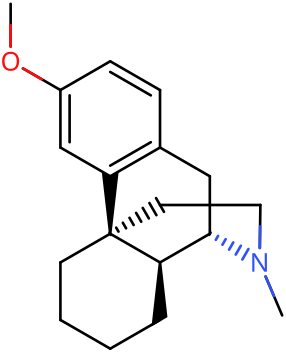
Dextromethorphan Stats & Data
COc1ccc2CC3N(C)CCC4(CCCCC34)c2c1MKXZASYAUGDDCJ-NJAFHUGGSA-NInteraction Warnings
A dangerous rise in blood pressure and heart rate can occur when DXM is combined with a stimulant such as amphetamine and/or cocaine.
Pharmacology
DrugBankDescription
Dextromethorphan is a levorphanol derivative and codeine analog commonly used as a cough suppressant and also a drug of abuse. Although similar in structure to other opioids, it has minimal interaction with opioid receptors. Dextromethorphan was granted FDA approval before 3 December 1957.
Mechanism of Action
Dextromethorphan is an agonist of NMDA and sigma-1 receptors. It is also an antagonist of α3/β4 nicotinic receptors. However, the mechanism by which dextromethorphan's receptor agonism and antagonism translates to a clinical effect is not well understood.
Pharmacodynamics
Dextromethorphan is an opioid-like molecule indicated in combination with other medication in the treatment of coughs and pseudobulbar affect. It has a moderate therapeutic window, as intoxication can occur at higher doses. Dextromethorphan has a moderate duration of action. Patients should be counselled regarding the risk of intoxication.
Metabolism
Dextromethorphan can be N-demethylated to 3-methoxymorphinan by CYP3A4, CYP2D6, and CYP2C9 or O-demethylated to dextrorphan by CYP2D6 and CYP2C9. Dextrorphan is N-demethylated by CYP3A4 and CYP2D6, while 3-methoxymorphinan is O-demethylated by CYP2D6. Both are metabolized to form 3-hydroxymorphinan. Dextrorphan and 3-hydroxymorphinan are both O-glucuronidated or O-sulfated.
Absorption
A 30mg oral dose of dextromethorphan reaches a Cmax of 2.9 ng/mL, with a Tmax of 2.86 h, and an AUC of 17.8 ng\*h/mL.
Indication
Dextromethorphan is indicated in combination with brompheniramine and pseudoephedrine in the treatment of coughs and upper respiratory symptoms associated with allergies or the common cold. Dextromethorphan is also used in combination with guaifenesin as an over-the-counter product to relieve a cough. Dextromethorphan in combination with quinidine is indicated in the treatment of pseudobulbar affect.
Half-life
Dextromethorphan has a half life of 3-30 hours.
Protein Binding
Dextromethorphan is 60-70% protein bound in serum.
Volume of Distribution
The volume of distribution of dextromethorphan is 5-6.7L/kg.
Metabolites
Receptor Profile
Receptor Actions
Receptor Binding
Measured Affinities
Guide to PHARMACOLOGYMeasured binding and functional data for dextromethorphan, curated by the IUPHAR/BPS Guide to PHARMACOLOGY. Each row cites the paper it came from. Lower concentrations mean tighter binding — a value in the sub-nanomolar range indicates a very potent interaction.
| Target | Action | Measure | Value | Concentration | Species | Source |
|---|---|---|---|---|---|---|
| GluN2C GRIN2C | Channel blocker | pIC50 | 6.33 | 467.74 nM | Human | PMID 17303642 |
| sigma non-opioid intracellular receptor 1 SIGMAR1 | Agonist | pKi | 6.28 | 524.81 nM | Human | PMID 10087012 |
| TAS2R1 TAS2R1 | Agonist | - | — | — | Human | PMID 20022913 |
Reading this. pKi, pEC50 and pIC50 are negative log molar values, so a higher number means a tighter interaction; the concentration column converts them for you. Values from non-human species are laboratory measurements and do not translate directly to human effect. Receptor affinity is not a dose — it describes what a molecule binds, not how much of it is safe to take.
Receptor data from the IUPHAR/BPS Guide to PHARMACOLOGY (v2026.2), licensed CC BY-SA 4.0. Matched to this substance by InChIKey.
History & Culture
1946–1958
The racemic parent compound racemethorphan was first described in patent applications by Hoffmann-La Roche in Switzerland and the United States in 1946 and 1947, respectively, with a patent granted in 1950. Resolution of the two isomers using tartaric acid was published in 1952. Dextromethorphan was subsequently patented in the United States in 1954 by Hoffmann-La Roche after research in the early 1950s demonstrated its antitussive properties in animal studies. The compound received FDA approval in 1958 and was introduced as an over-the-counter cough suppressant, becoming a popular alternative to codeine-based preparations.
1954–1964
The U.S. federal government conducted research seeking a non-addictive codeine alternative through a program known as MKPILOT. This work was completed at the Addictive Research Center, part of the U.S. Public Health Service Hospital in Lexington, Kentucky, where a researcher tested approximately 800 drugs on patients with addiction, including dextromethorphan. The research was partially funded through CIA involvement, with at least $282,215 transferred to the Office of Naval Research as part of U.S. Navy and CIA-funded investigations into nonaddictive substitutes for codeine. The CIA's interest in this research was classified as secret.
1960–1975
The first recorded instances of recreational dextromethorphan use date to 1962. During this period, the substance became available in an over-the-counter tablet form marketed under the brand name Romilar. In the early 1960s, figures associated with the Beat movement and counterculture experimented with dextromethorphan in its Romilar formulation, including poets Allen Ginsberg and Peter Orlovsky, musician Daevid Allen of Soft Machine, and author Jack Kerouac. Reports of recreational use emerged internationally by the mid-1960s, with documented use among young people near Brisbane, Australia around 1968 to 1969, who described perceptual changes, visual hallucinations, and altered temporal perception. By 1973, growing misuse within the counterculture prompted the voluntary withdrawal of Romilar tablets from the market following a significant burst in sales. Manufacturers subsequently introduced cough syrup formulations designed to deter abuse. Dextromethorphan was specifically excluded from the 1970 Controlled Substances Act to prevent its classification as an analog of levomethorphan, a Schedule II substance with opioid activity. The popularity and extensive abuse of dextromethorphan was formally recognized by 1975.
1986–present
In response to abuse concerns, several countries implemented stricter controls. In 1986, the Swedish National Board of Health and Welfare reclassified dextromethorphan as a prescription medication due to teenage abuse. Indonesia became the only country to prohibit single-component dextromethorphan entirely, with the National Agency of Drug and Food Control banning such sales both over-the-counter and by prescription.
1990–2010
The widespread adoption of internet access during the 1990s facilitated rapid dissemination of information about dextromethorphan, with online discussion groups forming around its use and acquisition. Usenet became an active forum for discussing the substance's properties and extraction methods from commercial syrups. By 1996, pure dextromethorphan hydrobromide powder became available from online chemical vendors, allowing users to circumvent syrup preparations. The early 2000s saw a significant rise in nonmedical use, particularly among adolescents. California reported elevated rates of misuse from 1999 to 2004, while Texas rave parties reportedly featured dextromethorphan as an alternative to MDMA. Analysis by DanceSafe between February 1999 and March 2000 found that 21% of pills sold as MDMA or ecstasy actually contained dextromethorphan. In 2004, the DEA conducted Operation Web Tryp, a large-scale enforcement action that significantly reduced online availability of pure dextromethorphan powder. In 2010, the FDA approved a combination of dextromethorphan and quinidine for the treatment of pseudobulbar affect. That same year, the FDA's Drug Safety and Risk Management Committee voted 15-9 against scheduling dextromethorphan despite documented nonmedical use. According to the Consumer Healthcare Products Association, approximately 90% of nonprescription cough medicines contain dextromethorphan, with 133 million packages sold in the United States in 2009. The DEA continues to classify it as a drug of concern due to its widespread availability to adolescents and young adults.
Subjective Effects
Physical
The subjective physical effects of DXM can be broken down into nine components all of which progressively intensify proportional to dosage.
- Disconnection from tactile input
- Spontaneous tactile sensations: The DXM body high is a sharp, pleasurable tingling sensation which is location specific to the hands, feet and head.
- Suppression of touch: This partially to entirely suppresses one's own sense of touch, creating feelings of numbness within the extremities. It is responsible for the anaesthetic properties of this substance.
- Physical autonomy
- Loss of motor control: A loss of gross and fine motor control alongside of balance and coordination is prevalent within DXM and becomes especially strong at higher dosages. This means that one should be sitting down before the onset unless they are experienced in case of falling over and injuring oneself.
- Euphoria: This results in feelings of physical euphoria which range between mild pleasure to powerful all-encompassing bliss.
- Decreased bodily weight: This creates the sensation that the body is floating and has become entirely weightless. This effect is strangely stimulating and encourages physical activities at low to moderate dosages by making the body feel light and effortless to move.
- Dizziness: Although uncommon, some people report dizziness under the influence of DXM.
- Nausea: High dose DXM trips can sometimes result in nausea and vomiting at the peak of the trip. This is more intense than the nausea found within Ketamine and MXE. For most people, however, this is surprisingly not as unpleasant as they would initially expect due to the accompanying detachment from the physical senses.
Cognitive
The head space of DXM is often described as particularly impairing, disorientating and generally less clear headed in comparison to that of MXE and Ketamine.
- Disconnection from consciousness
- Ego suppression, loss and death
- Time distortion
- Introspection
- Deja-Vu
- Removal of cultural filter
- Conceptual thinking
- Direct communication with the subconscious
- States of unity and interconnectedness
Sensory
- Enhancements
- Suppression
- Distortions
- Hallucinations
DXM exhibits a full array of dissociative distortions and alterations in visual perception.
- Perspective distortions
- Environmental cubism
- Environmental orbism
- Scenery slicing
At high dosages, DXM can produce a full range of high level hallucinatory states in a fashion that is less consistent and reproducible than that of many other commonly used psychedelics.
- Internal hallucinations: These hallucinatory states can be described as containing plots, settings, autonomous entity contact and scenarios. They are more common within dark environments and can be described as internal in their manifestation, lucid in believability and fixed in style. They can include both new experiences and memory replays which are capable of being weeks in length and real time in experience.
- External hallucinations
- Decreased visual acuity
- Suppression of pattern recognition
- Blurred vision
- Double vision
Forked from Subjective Effect Documentation by Josie Kins, November 2012. Via dose.wiki (CC0).
The toxicity and long-term health effects of recreational DXM use in humans has not been studied in any scientific context and the exact toxic dosage is unknown. Anecdotal evidence suggests that there do not seem to be any negative health effects attributed to simply trying DXM at low to moderate doses by itself and using it sparingly, however, many DXM users report that waiting a week between their respective plateaus before doing DXM again (one week after first plat., two weeks after 2nd plat., etc.) can potentially prevent or minimize severe damage to the kidneys and many other organs including the heart and liver due to an excess of assorted toxic chemicals in the blood stream after DXM use. This 1-4 week period gives your body time to filter out these chemicals and help get you back to baseline levels to where its safe to do again.
LD50
LD50: 165 mg/kg (mice) (L1858)LD50: 350 mg/kg (rat) (L1858)
Carcinogenicity
No indication of carcinogenicity to humans (not listed by IARC).
Overdose
Anecdotal evidence suggests that the risk of DXM overdose becomes significant at roughly 15mg/kg to 20mg/kg, or roughly 1000mg - 1500mg in a 70kg person. DXM overdose can have a wide range of effects, including delusions, hallucinations, psychosis, confusion, panic attacks, mania, sedation and severe balance issues, sometimes very inappropriate or violent behavior, increased heart rate, nystagmus and amnesia. More serious side effects include anesthesia, respiratory depression, dangerously high fever, risk of accidental injury, self-harm and seizures.
Addiction & dependence
As with other dissociatives, DXM produces dependence with chronic use and has moderate abuse potential. When dependence has developed, cravings and withdrawal effects may occur if a person suddenly stops their usage. A formal survey of dextromethorphan users showed that more than half of users reported experience of the following withdrawal symptoms individually for the first week after long-term/addictive dextromethorphan use: fatigue, apathy, flashbacks, and constipation.
Tolerance
Long-term dextromethorphan (DXM) abuse may result in a permanent irreversible tolerance due to several different mechanisms. DXM is an NMDA receptor antagonist that blocks the inhibitory effects of glutamate in the brain. With repeated use, the body compensates for this blockade by increasing glutamate production.
Effect Profile
Curated + 439 ReportsModerate dissociative depth and insight with moderate motor impairment, mild mania
User Experiences
Empirical Duration
Erowid ReportsMedian times after the dose that Erowid reports state. A curve is drawn only when reports state all four points (onset, peak begins, comedown begins, back to baseline) and the medians fall in that order. No point is estimated from another.
Community Effects
TripSitTolerance & Pharmacokinetics
drugs.wikiTolerance Decay
Tolerance to dissociative effects builds rapidly over consecutive days and decays over 1–4+ weeks; values are approximate and largely anecdotal. Cross‑tolerance with other NMDA antagonists is expected but not precisely quantified.
Cross-Tolerances
Experience Report Analysis
ErowidDemographics
Gender Distribution
Age Distribution
Reports Over Time
Effect Analysis
ErowidEffects aggregated from 439 experience reports (439 single-substance Erowid)
Effect Sentiment Distribution
Confidence Distribution
Each bar is the share of reports mentioning the effect; its whisker, and the band on the rows below, is the 95% interval: where the share could plausibly be with other reports of the same kind.
Positive Effects 11
Adverse Effects 12
Show 8 neutral or unclassified mentions
Also reported in combinations. In the 363 Dextromethorphan reports where another drug was taken too, 64 (17.6%) mention hospital, emergency services or an overdose, 14 (3.9%) a seizure and 16 (4.4%) psychosis. In the 439 single-substance reports: 18.2%, 2.3% and 4.3%. These are not in the figures above: they cannot be put down to Dextromethorphan alone, and a mention is not always something that happened to the writer.
Dose-Response Correlation
How effect frequency changes across dose levels. Whiskers, and the numbers' hover text, give each figure's 95% interval.
Not drawn, too few reports (a dose tier needs 20): Oral Light (n=13). Why 20?
View data table
| Effect | Common (n=65) | Strong (n=59) | Heavy (n=57) |
|---|---|---|---|
| Anxiety | 47.7% (95% interval 36 to 60 percent) | 45.8% (95% interval 34 to 58 percent) | 54.4% (95% interval 42 to 67 percent) |
| Visual Distortions | 50.8% (95% interval 39 to 62 percent) | 40.7% (95% interval 29 to 53 percent) | 40.4% (95% interval 29 to 53 percent) |
| Music Enhancement | 46.2% (95% interval 35 to 58 percent) | 44.1% (95% interval 32 to 57 percent) | 38.6% (95% interval 27 to 52 percent) |
| Nausea | 46.2% (95% interval 35 to 58 percent) | 39.0% (95% interval 28 to 52 percent) | 33.3% (95% interval 22 to 46 percent) |
| Confusion | 29.2% (95% interval 20 to 41 percent) | 42.4% (95% interval 31 to 55 percent) | 42.1% (95% interval 30 to 55 percent) |
| Dissociation | 23.1% (95% interval 14 to 35 percent) | 37.3% (95% interval 26 to 50 percent) | 24.6% (95% interval 15 to 37 percent) |
| Color Enhancement | 29.2% (95% interval 20 to 41 percent) | 27.1% (95% interval 17 to 40 percent) | 36.8% (95% interval 26 to 50 percent) |
| Stimulation | 32.3% (95% interval 22 to 44 percent) | 25.4% (95% interval 16 to 38 percent) | 17.5% (95% interval 10 to 29 percent) |
| Closed-Eye Visuals | 29.2% (95% interval 20 to 41 percent) | 32.2% (95% interval 22 to 45 percent) | 29.8% (95% interval 20 to 43 percent) |
| Euphoria | 30.8% (95% interval 21 to 43 percent) | 25.4% (95% interval 16 to 38 percent) | 24.6% (95% interval 15 to 37 percent) |
| Empathy | 18.5% (95% interval 11 to 30 percent) | 28.8% (95% interval 19 to 41 percent) | 26.3% (95% interval 17 to 39 percent) |
| Memory Suppression | 12.3% (95% interval 6 to 22 percent) | 13.6% (95% interval 7 to 24 percent) | 28.1% (95% interval 18 to 41 percent) |
| Sedation | 20.0% (95% interval 12 to 31 percent) | 15.3% (95% interval 8 to 26 percent) | 24.6% (95% interval 15 to 37 percent) |
| Hospital | 12.3% (95% interval 6 to 22 percent) | 22.0% (95% interval 13 to 34 percent) | 24.6% (95% interval 15 to 37 percent) |
| Auditory Effects | 21.5% (95% interval 13 to 33 percent) | 18.6% (95% interval 11 to 30 percent) | 10.5% (95% interval 5 to 21 percent) |
Subjective Effect Ontology
Experience ReportsStructured effect tags extracted from 802 experience reports using a controlled vocabulary of 220+ canonical effects across 15 domains.
Auditory
Cognitive
Emotional
Gastrointestinal
Motor
Selfhood
Tactile
Visual
Dose–Effect Mapping
Experience ReportsHow reported effects shift across dose tiers, based on 439 single-substance experience reports. The shaded band on each bar is its 95% interval. An arrow (↑ ↓) marks a change between the lowest and highest tier that count an effect only when the gap is bigger than chance would explain; ~ means no clear change. How changes are called
Not drawn, too few reports (a dose tier needs 20): Oral Light (n=13). Why 20?
| Effect | Common (n=65) | Strong (n=59) | Heavy (n=57) | Change with dose |
|---|---|---|---|---|
| anxiety | (no clear change: +7 points from Common to Heavy, 95% interval −11 to +24) | |||
| visual distortions | (no clear change: −10 points from Common to Heavy, 95% interval −27 to +7) | |||
| music enhancement | (no clear change: −8 points from Common to Heavy, 95% interval −24 to +10) | |||
| nausea | (no clear change: −13 points from Common to Heavy, 95% interval −29 to +4) | |||
| confusion | (no clear change: +13 points from Common to Heavy, 95% interval −4 to +29) | |||
| dissociation | (no clear change: +2 points from Common to Heavy, 95% interval −13 to +17) | |||
| color enhancement | (no clear change: +8 points from Common to Heavy, 95% interval −9 to +24) | |||
| stimulation | (no clear change: −15 points from Common to Heavy, 95% interval −29 to +1) | |||
| closed-eye visuals | (no clear change: +1 points from Common to Heavy, 95% interval −15 to +17) | |||
| euphoria | (no clear change: −6 points from Common to Heavy, 95% interval −21 to +10) | |||
| empathy | (no clear change: +8 points from Common to Heavy, 95% interval −7 to +23) | |||
| memory suppression | (+16 points from Common to Heavy, 95% interval +2 to +30) | |||
| sedation | (no clear change: +5 points from Common to Heavy, 95% interval −10 to +19) | |||
| hospital | (no clear change: +12 points from Common to Heavy, 95% interval −2 to +26) | |||
| auditory effects | (no clear change: −11 points from Common to Heavy, 95% interval −24 to +2) | |||
| motor impairment | (no clear change: −4 points from Common to Heavy, 95% interval −18 to +10) | |||
| tactile enhancement | — | (no clear change: −7 points from Common to Strong, 95% interval −19 to +6) | ||
| introspection | (no clear change: −1 points from Common to Heavy, 95% interval −14 to +12) | |||
| pupil dilation | (no clear change: −1 points from Common to Heavy, 95% interval −14 to +12) | |||
| open-eye visuals | (no clear change: +6 points from Common to Heavy, 95% interval −5 to +18) |
Showing top 20 of 34 effects
Risk Escalation
Sentiment AnalysisAverage frequency of positive vs adverse effects across dose tiers. A tier's average is the mean share of the effects counted in that tier, not a share of reports, and its range is a deliberately wide 95% interval. A tier with more reports also counts rarer effects, which pulls its average down, so compare single effects in the breakdown rather than these averages. There, the shaded band on each bar is its 95% interval, and Change is marked up or down only when the gap between two tiers is bigger than chance would explain. How changes are called
Not drawn, too few reports (a dose tier needs 20): Light (n=13). Why 20?
View effect breakdown
Adverse Effects
| Effect | Common (n=65) | Strong (n=59) | Heavy (n=57) | Change |
|---|---|---|---|---|
| Anxiety | no clear change (no clear change: +7 points from Common to Heavy, 95% interval −11 to +24) | |||
| Nausea | no clear change (no clear change: −13 points from Common to Heavy, 95% interval −29 to +4) | |||
| Confusion | no clear change (no clear change: +13 points from Common to Heavy, 95% interval −4 to +29) | |||
| Memory Suppression | +16 pts (+16 points from Common to Heavy, 95% interval +2 to +30) | |||
| Motor Impairment | no clear change (no clear change: −4 points from Common to Heavy, 95% interval −18 to +10) | |||
| Pupil Dilation | no clear change (no clear change: −1 points from Common to Heavy, 95% interval −14 to +12) | |||
| Sweating | no clear change (no clear change: +7 points from Common to Heavy, 95% interval −2 to +18) | |||
| Muscle Tension | no clear change (no clear change: −6 points from Common to Heavy, 95% interval −16 to +4) | |||
| Increased Heart Rate | no clear change (no clear change: −4 points from Common to Heavy, 95% interval −14 to +5) | |||
| Psychosis | no clear change (no clear change: +1 points from Common to Heavy, 95% interval −8 to +10) | |||
| Headache | no clear change (no clear change: −1 points from Common to Heavy, 95% interval −10 to +8) | |||
| Seizure | — | no clear change (no clear change: +0.1 points from Strong to Heavy, 95% interval −8 to +9) | ||
| Appetite Suppression | — | — | — | |
| Jaw Clenching | — | — | — |
Positive Effects
| Effect | Common (n=65) | Strong (n=59) | Heavy (n=57) | Change |
|---|---|---|---|---|
| Music Enhancement | no clear change (no clear change: −8 points from Common to Heavy, 95% interval −24 to +10) | |||
| Color Enhancement | no clear change (no clear change: +8 points from Common to Heavy, 95% interval −9 to +24) | |||
| Stimulation | no clear change (no clear change: −15 points from Common to Heavy, 95% interval −29 to +1) | |||
| Euphoria | no clear change (no clear change: −6 points from Common to Heavy, 95% interval −21 to +10) | |||
| Empathy | no clear change (no clear change: +8 points from Common to Heavy, 95% interval −7 to +23) | |||
| Tactile Enhancement | — | no clear change (no clear change: −7 points from Common to Strong, 95% interval −19 to +6) | ||
| Introspection | no clear change (no clear change: −1 points from Common to Heavy, 95% interval −14 to +12) | |||
| Focus Enhancement | no clear change (no clear change: −0.4 points from Common to Heavy, 95% interval −11 to +11) | |||
| Body High | no clear change (no clear change: −2 points from Common to Heavy, 95% interval −12 to +8) | |||
| Pain Relief | — | — | — | |
| Creativity Enhancement | — | — | — |
Dosage Distribution
Dose distribution from experience reports, one dose per report (the first listed). Doses above Q3 + 3×IQR, far above what people typically take, are left out of the median and range and listed under each route: most are real heavy doses or overdoses, not mistakes.
6 reports gave a dose above the typical range (2,000–3,000 mg), so they are not in the figures above. 4 of them mention hospital, emergency services or an overdose. Listing a dose here does not mean it is safe.
1 dose more than 50 times the median may be a typing or unit error and is not in the figures either: check the report.
Show the reports
- 3,000 mg · mentions hospital, emergency services or an overdose
- 2,400 mg · mentions hospital, emergency services or an overdose
- 2,000 mg
- 2,000 mg · mentions hospital, emergency services or an overdose
- 2,000 mg
- 2,000 mg · another drug taken too · mentions hospital, emergency services or an overdose
Possibly a typing or unit error:
Real-World Dose Distribution
ErowidFrom 815 of 1037 recorded dose entries: those that state a weight (mg, g or µg), in routes with at least five of them. Values above Q3 + 3×IQR, far above what people typically take, are left out; they can include real heavy doses and overdoses, not only mistakes.
Oral (n=790)
Insufflated (n=6)
Common Combinations
Most co-occurring substances, as a share of all 802 reports filed under Dextromethorphan; whiskers are 95% intervals
Form / Preparation
Most common forms and preparations, as a share of the 556 reports that give one; whiskers are 95% intervals
Body-Weight Dosing
Dose per kg of body weight, one dose per report (the first listed), from reports giving a weight of 30–250 kg. Doses above Q3 + 3×IQR, far above what people typically take, are left out of the median and range and listed under each route.
5 reports gave a dose above the typical range (25.21–44.118 mg/kg), so they are not in the figures above. 3 of them mention hospital, emergency services or an overdose. Listing a dose here does not mean it is safe.
1 dose more than 50 times the median may be a typing or unit error and is not in the figures either: check the report.
Show the reports
- 44.118 mg/kg · mentions hospital, emergency services or an overdose
- 29.412 mg/kg
- 29.412 mg/kg · another drug taken too · mentions hospital, emergency services or an overdose
- 27.027 mg/kg · another drug taken too
- 25.21 mg/kg · mentions hospital, emergency services or an overdose
Possibly a typing or unit error:
Redose Patterns
Redosing behavior across 610 reports
Legal Status
| Country | Status | Notes |
|---|---|---|
| Australia | Pharmacy Medicine (OTC) | Available over-the-counter from pharmacies. Import restrictions may apply to DXM-only products. Robitussin Dry Cough Forte is among the available DXM-only preparations. |
| Austria | Unscheduled (Pharmacy Only) | Not listed in the Suchtmittelgesetz (Federal Law on Narcotics). Sales restricted to pharmacies but preparations are available without prescription. |
| Belgium | OTC | Available over-the-counter without prescription and without age restriction. DXM-only products available at some pharmacies. |
| Brazil | OTC | DXM-containing products sold over-the-counter without prescription. |
| Canada | Exempt from CDSA | Specifically listed as exempt from the Controlled Drugs and Substances Act. Available over-the-counter without prescription and can legally be obtained in powder form. |
| China | Psychotropic Drug Class II | Classified as a Class II psychotropic substance effective July 1, 2024. Single-ingredient DXM medications restricted to hospital sales. Combination products containing DXM with other active ingredients such as guaifenesin remain available over-the-counter. |
| Czech Republic | Mixed (Formulation Dependent) | Some pharmacies require prescription for tablet formulations while liquid preparations may be available without prescription. |
| Denmark | Prescription Type A | The DXM-containing product Dexofan is classified as a prescription type A medication, requiring a doctor's prescription for purchase. |
| Egypt | Controlled (Dose Dependent) | Products containing more than 10 mg per dose are controlled and require a prescription. Combination products with lower DXM content may be available over-the-counter. |
| Estonia | Prohibited/Restricted | Among the few countries where DXM-containing antitussive preparations face significant restrictions beyond standard pharmacy controls. |
| Finland | Pharmacy Only (OTC) | Listed in the medicinal product list and restricted to pharmacy sales. Can be purchased without prescription and without age restriction. Some products require a permit to sell. |
| France | Behind Counter (No Prescription) | Available at pharmacies without a prescription but kept behind the counter rather than on open shelves. |
| Germany | Unscheduled (Pharmacy Only) | Not listed in the Betäubungsmittelgesetz (Federal Law on Narcotics). Sales restricted to pharmacies but available without prescription in syrup and tablet forms. |
| Hong Kong | Pharmacy Only (ID Required) | Does not require a prescription but purchasers must provide identification to the pharmacy. Some product lines have been discontinued from the market. |
| Hungary | Mixed (Formulation Dependent) | Cough syrups containing DXM available over-the-counter. Pure DXM capsules require a prescription. |
| Iran | OTC | DXM-only and DXM combination products available over-the-counter without prescription. |
| Israel | OTC | Available in popular over-the-counter cough medicines without prescription. |
| Japan | Legal (OTC) | DXM is legal and has been available in various retail settings. Historically sold in specialized shops. |
| Latvia | Prohibited/Restricted | Among the few countries where DXM-containing antitussive preparations face significant restrictions beyond standard pharmacy controls. |
| Malaysia | Controlled Medication | Classified as a controlled medication available from pharmacies and clinics. Recreational use is explicitly prohibited under law. |
| Mexico | Uncontrolled | Not listed in the General Health Law (Ley General de Salud) as a controlled substance. Classified as a category VI drug under Article 226, meaning DXM-only products can be sold without prescription at any retailer, including non-pharmacy establishments. |
| Netherlands | Pharmacy Only (Restricted) | As of January 1, 2011, no longer available over-the-counter outside of pharmacies. Pharmacies are required to record buyer identification information. |
| New Zealand | OTC | Available over-the-counter without identification requirements. Products including Robitussin Dry Cough Forte widely available. |
| Poland | OTC (Restricted) | Available over-the-counter in tablet, capsule, and syrup forms. Purchasers must be over 18 years of age and are limited to purchasing no more than 360 mg of DXM per transaction at a single pharmacy. |
| Romania | Mixed (Formulation Dependent) | Pure DXM preparations require a prescription. Liquid formulations and products marketed as Tussin are available over-the-counter, though enforcement varies. |
| Russia | Schedule III | Listed as a Schedule III controlled substance following government anti-DXM campaigns. Subject to tighter restrictions than in most other countries. |
| Singapore | Class A Prescription Drug | Classified as a Class A prescription medication. Cannot be purchased without a valid prescription from a physician. |
| South Korea | Controlled (with exemptions) | Listed as a controlled psychotropic substance. However, combination products meeting specific requirements are exempt from control if the single dose contains 7.5-15 mg and daily usage does not exceed 60 mg. |
| Sweden | Controlled (Narcotics Class V) | Classified as a controlled narcotic substance. The cough medicine Tussidyl containing DXM was withdrawn from Swedish sales in 1999 due to abuse concerns and associated risks. No longer marketed in Sweden. |
| Switzerland | Abgabekategorie B (Prescription) | Classified as a category B pharmaceutical, generally requiring a prescription or pharmacist consultation. Reclassified in 2018 from category C, which had previously allowed over-the-counter purchase. |
| Thailand | Behind Counter | Available behind the pharmacy counter. A prescription is obtained from the dispensing pharmacist at point of sale. |
| Turkey | Prescription Only | DXM-only products require a prescription for purchase. Availability may be limited. |
| United Kingdom | Pharmacy Only Medication | Specifically exempted from control under the Misuse of Drugs Act 1971 and 2001. Restricted to pharmacy sales at the discretion of the pharmacist. Purchasers typically must be at least 16 years of age. Multiple purchases may be refused or questioned. |
| United States | Unscheduled (OTC) | Specifically excluded from the Controlled Substances Act of 1970. Sold over-the-counter and regulated by the FDA when sold for human consumption. Many states and retailers require purchasers to be 18 or older. California enacted legislation effective January 1, 2012 prohibiting sales to minors without prescription. Illinois passed legislation effective January 1, 2007 restricting sales to FDA-compliant over-the-counter formulations. New York prohibited sales to those under 18 as of September 2013. Selling pure powder has resulted in convictions for selling misbranded drugs. |
Harm Reduction
drugs.wikiDXM polistirex is an extended‑release resin complex; its slower, flatter absorption commonly produces a weaker peak with a much longer tail than DXM HBr. Because come‑up may take 1–3 hours, premature redosing can stack exposures and lead to unexpectedly long, dysphoric, or anxious trips; wait at least 4–6 hours before considering any additional dosing and avoid it entirely with ER products. CYP2D6 genetics and inhibitors strongly change exposure: poor metabolizers (≈9%) can have ~8× higher bioavailability and ~8× longer half‑life than extensive metabolizers, producing unusually prolonged effects and higher toxicity risk; potent CYP2D6 inhibitors (quinidine, fluoxetine, paroxetine, bupropion) can mimic PM status. Avoid combination OTCs: acetaminophen (hepatotoxicity above ~3–4 g/day), first‑gen antihistamines (anticholinergic delirium; QT), doxylamine/diphenhydramine (delirium/seizure risk), guaifenesin (severe nausea/vomiting), and decongestants (cardiovascular strain). Mixing with serotonergic antidepressants (SSRIs/SNRIs/MAOIs), tramadol, linezolid, St. John’s wort, or MDMA increases serotonin‑toxicity risk (agitation, hyperthermia, clonus, diaphoresis)—seek emergency care if these occur. Do not attempt to defeat the polistirex coating (e.g., crushing/acid tricks or crude ‘extractions’); release becomes unpredictable and may not convert to free DXM. Expect impaired coordination and judgment for the rest of the day and often into the next morning—do not drive, swim, or perform hazardous tasks for at least 12–24 hours after significant doses. Many syrups contain sorbitol and other excipients that can cause GI upset, dehydration, and electrolyte loss—sip oral fluids with electrolytes and avoid heavy physical exertion. Start low if on any psychiatric medication or with a history of psychosis, bipolar disorder, seizure disorder, significant hypertension, or liver disease; dissociatives can precipitate mania/psychosis and increase BP/HR. Space use 2–4 weeks or longer to manage tolerance and reduce compulsive patterns; frequent redosing increases adverse mental health outcomes. Always read the exact product label: ER bottles often state ‘dextromethorphan polistirex equivalent to 30 mg DXM HBr per 5 mL’; this is a labeling equivalence for cough dosing, not a guarantee of equal recreational effect. If severe agitation, hyperthermia, rigid muscles, confusion, or seizures occur, this may signal serotonin toxicity or severe overdose—seek urgent medical help and avoid anticholinergic sedatives unless directed by a clinician.
References
Data Sources
Cited References
Additional references
- Erowid DXM FAQ (General Info + Product Ingredient Risks)
- Erowid Guide to DXM in Non‑Prescription Drugs (ingredient cautions; sorbitol note)
- StatPearls: Dextromethorphan (mechanism, contraindications, metabolism, adverse effects)
- StatPearls: Dextromethorphan Toxicity (toxicokinetics; ER dose labeling; serotonin syndrome)
- DrugBank Review: Pharmacology of DXM relevant to DXM/quinidine (CYP2D6 inhibition massively increases DXM)
- TripSit Wiki: DXM Draft (polistirex ~50–75% potency vs HBr; 1.5–2× longer)
- TripSit DXM Calculator / HR hub (plateaus, avoid combos)
- Bluelight: DXM poli vs HBr, extraction myths (ER coating not converted; unpredictable)
- Reddit r/dxm: Polistirex 'equivalent to 30 mg HBr per 5 mL' label math; ~1.5× adjustment cautions (community consensus)
- TripSit Drug Combination Chart (general interaction framework; flags serotonergic risks)