
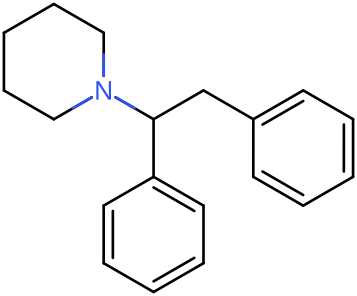
Diphenidine Stats & Data
C1CCN(CC1)C(CC2=CC=CC=C2)C3=CC=CC=C3JQWJJJYHVHNXJH-UHFFFAOYSA-NReceptor Profile
Receptor Actions
History & Culture
Diphenidine was originally synthesized in 1924 through a Bruylants reaction, a nitrile displacement method that would later prove instrumental in the discovery of phencyclidine over three decades later in 1956. Despite this early synthesis, the compound remained largely obscure for decades and did not see recreational use until much later. The substance emerged on the research chemical market in 2013, appearing shortly after regulatory actions in the United Kingdom restricted arylcyclohexylamines including ketamine. As a diarylethylamine rather than an arylcyclohexylamine, diphenidine fell outside the scope of these specific bans, making it temporarily available through grey market vendors. However, due to its considerably longer duration of action and typical oral route of administration, users generally did not consider it a direct substitute for ketamine's shorter-acting effects. Beginning in 2014, diphenidine was detected in adulterated products in Japan, particularly herbal incense blends sold alongside synthetic cannabinoids. One product marketed as "Aladdin Spacial Edition" in the Shizuoka Prefecture was found to contain diphenidine combined with 5-fluoro-AB-PINACA, while another blend called "Herbal Incense. The Super Lemon" containing diphenidine alongside AB-CHMINACA and 5F-AMB was implicated in a fatal overdose. Additional fatalities have since been reported involving diphenidine in combination with multiple other substances including cathinones, benzodiazepines, and alcohol, typically sold through "bath salt" and "liquid aroma" products.
Subjective Effects
Physical
- Tactile disconnection
- Spontaneous tactile sensations: The diphenidine body high is a sharp, pleasurable tingling sensation which is location specific to the hands, feet and head.
- Tactile suppression: This partially to entirely suppresses one's own sense of touch, creating feelings of numbness within the extremities. It is responsible for the anaesthetic properties of this substance.
- Physical autonomy
- Motor control loss: A loss of gross and fine motor control alongside of balance and coordination is prevalent within diphenidine and becomes especially strong at higher dosages.
- Physical euphoria: This results in feelings of physical euphoria which range between mild pleasure to powerful all-encompassing bliss.
- Decreased bodily weight: This creates the sensation that the body is floating and has become entirely weightless. This effect is strangely stimulating and encourages physical activities at low to moderate dosages by making the body feel light and effortless to move.
- Dizziness: Although uncommon, some people report dizziness under the influence of diphenidine.
- Nausea: High dose diphenidine trips can sometimes result in nausea and vomiting at the peak of the trip. For most people, this is surprisingly not as unpleasant as they would initially expect due to the accompanying detachment from the physical senses.
Cognitive
The general head space of diphenidine is often described as particularly euphoric and clear headed in comparison to that of DXM and ketamine.
- Consciousness disconnection
- Ego suppression, loss and death
- Thought deceleration
- Information processing suppression
- Time distortion
- Cognitive euphoria
- Introspection
- Déjà vu
- Conceptual thinking
- Compulsive redosing
Sensory
- Enhancements
- Suppression
- Distortions
- Hallucinations
- Perspective distortions
- Environmental cubism
- Environmental orbism
- Scenery slicing
At high dosages, diphenidine can produce a full range of high level hallucinatory states in a fashion that is less consistent and reproducible than that of many other commonly used psychedelics.
- Internal hallucinations: (Autonomous entities, Settings, sceneries, and landscapes, Alterations in perspective and Scenarios and plots) - In comparison to other dissociatives, this effect can occur at heavy dosages but is considerably less common than the same effect found within psychedelics and deliriants. It can be comprehensively described as delirious in believability, fixed in style, equal in new experiences and memory replays in content, autonomous in controllability and solid in style.
- Visual disconnection: This eventually results in diphenidine's equivalent of the famous 'K-hole' or more specifically, holes, spaces and voids alongside of structures.
- Visual acuity suppression
- Double vision: This component is prevalent at moderate to heavy dosages and makes reading impossible unless one closes an eye.
- Pattern recognition suppression: This effect generally occurs at higher dosages and makes one unable to recognize and interpret perceivable visual data.
Forked from Subjective Effect Documentation by Josie Kins, January 2015. Via dose.wiki (CC0).
Toxicity
PsychonautWikiThe toxicity and long-term health effects of recreational diphenidine use do not appear to have been studied in any scientific context and the exact toxic dosage is unknown. This is because diphenidine has very little history of human usage. Some anecdotal reports suggest diphenidine may increase the risk of mania and psychosis. This is common with many dissociatives, particularly with those that provide stimulation such as PCP. It has been reported that regular use can lead to increased blood pressure and rapid heart rate.
Addiction & dependence
As with other NMDA receptor antagonists, the chronic use of diphenidine can be considered moderately addictive with a high potential for abuse. It is likely capable of causing psychological dependence among certain users. When addiction has developed, cravings and withdrawal effects may occur if one suddenly stops their usage.
Effect Profile
Curated + 18 ReportsStrong dissociative depth and insight with strong motor impairment and mania
Moderate euphoria with low stimulation, focus, and anxiety/jitters
Duration Timeline
BluelightCommunity Effects
TripSitTolerance & Pharmacokinetics
drugs.wikiTolerance Decay
Model is an approximate, harm‑reduction oriented representation based on dissociative class patterns and user reports; high inter‑individual variability. Space use by ≥1–2 weeks to minimize escalation. Data quality: anecdotal/community.
Cross-Tolerances
Demographics
Gender Distribution
Too few reports for a chart: gender is known from 14 reports, and a split is drawn only from 20 reports or more. Counts are shown instead. Why 20?
- Male 11 of 14
- Female 2 of 14
- Not Specified 1 of 14
Age Distribution
Reports Over Time
Effect Analysis
Erowid + BluelightEffects aggregated from 18 experience reports (11 single-substance Erowid + 7 Bluelight)
Effect Sentiment Distribution
Confidence Distribution
Each bar is the share of reports mentioning the effect; its whisker, and the band on the rows below, is the 95% interval: where the share could plausibly be with other reports of the same kind.
Too few reports for bars: these effects come from 11 single-substance Erowid and 7 analyzed Bluelight reports, and a bar is drawn only from 20 reports or more. With fewer, a percentage cannot tell a common effect from a rare one. Counts are shown instead. Why 20?
Positive Effects 41
Adverse Effects 7
Show 14 neutral or unclassified mentions
Also reported in combinations. In the 3 Diphenidine reports where another drug was taken too, 1 mentions hospital, emergency services or an overdose, 0 a seizure and 1 psychosis (too few reports for percentages). In the 11 single-substance reports: 1, 0 and 0. These are not in the figures above: they cannot be put down to Diphenidine alone, and a mention is not always something that happened to the writer.
Real-World Dose Distribution
ErowidFrom 15 of 21 recorded dose entries: those that state a weight (mg, g or µg), in routes with at least five of them. Values above Q3 + 3×IQR, far above what people typically take, are left out; they can include real heavy doses and overdoses, not only mistakes.
Oral (n=14)
Form / Preparation
Most common forms and preparations, as a share of the 8 reports that give one
Too few reports for bars: these forms come from 8 reports, and a bar is drawn only from 20 reports or more. With fewer, a percentage cannot tell a common effect from a rare one. Counts are shown instead. Why 20?
- Powder / Crystals 5 of 8
- Capsule 2 of 8
Legal Status
| Country | Status | Notes |
|---|---|---|
| United Kingdom | Grey market (historical, circa 2013-2015) | Diphenidine emerged on the grey market following the 2013 UK ban on arylcyclohexylamines. As a diarylethylamine rather than an arylcyclohexylamine, it was not initially covered by this scheduling and was reportedly available through research chemical vendors. Sources from this period described diphenidine as existing in a legal grey area, with the caveat that legal status could vary by jurisdiction and possession might still carry legal risk. |
Harm Reduction
drugs.wiki- Clinically documented intoxications (STRIDA, Sweden, 2014 cohort) showed hypertension, tachycardia, anxiety, confusion, hallucinations, and severe cases requiring hospitalization 1–3 days; polysubstance co-use was present in 87% of cases. This underscores the danger of combining with other psychoactives.
- TripSit and community reports place oral onset at 15–30 minutes with 2–5 hours of main effects and 4–24 hours of after-effects (insomnia, cognitive fog), so plan set/setting and sleep hygiene accordingly.
- Vaporizing/smoking produces a much steeper onset and is associated with airway irritation and strong compulsion to redose; at least one detailed user report required bronchodilator therapy after vaping. Avoid this ROA if you have any respiratory issues.
- Identity errors have occurred in the market (e.g., D2PM shipped as diphenidine). Always reagent-test and, where available, use laboratory drug checking; never assume vendor labels are accurate.
- Combining with CNS depressants (opioids, benzos, alcohol) markedly increases risks of loss of consciousness and aspiration; combination charts and HR wikis flag these as high risk. If emergency sedation is needed (e.g., agitation), medical settings often use benzodiazepines with monitoring; do not attempt to self-sedate.
- Dissociatives can cause amnesia, ataxia, wandering, and accidents at strong doses. Use a sober sitter, restrict access to hazards, and avoid public spaces. Community threads repeatedly highlight “blank-slate” episodes with impaired recall.
- Rapid pharmacodynamic tolerance develops (within-session) and cross-tolerance exists across dissociatives. To reduce escalation, space sessions by at least 1–2 weeks and avoid redosing cycles in the same 24 h.
- Because human pharmacokinetics are poorly characterized, avoid stacking doses; residual effects can linger into the next day. Use precise weighing (≥1 mg resolution) and consider volumetric dosing for sub-20 mg measurements.
- Nasal use can be harsh; rinsing with sterile saline after insufflation may reduce local irritation per general HR practice. Prefer non-inhalational routes to protect lungs.
- If you feel unwell (e.g., severe agitation, chest pain, collapsed), seek medical help and be candid about substances taken; hospital teams have treated such cases and monitor for hypertensive crises, arrhythmias, and severe agitation.
References
Cited References
- ACMD Review of Evidence on Diphenidine (UK, 2023)
- Berger et al. 2009 - NMDA Receptor Affinities of Diphenidine Enantiomers
- Bluelight: The Big & Dandy Diphenidine Thread
- Case of Non-Fatal Intoxication with Diphenidine (2017)
- Deaths Related to Diarylethylamines - Journal of Psychopharmacology 2025
- Erowid: Diphenidine Experience Vaults
- European Monitoring Centre - NPS Report on Dissociatives 2024
- Intoxications by Diphenidine & MXP - Clinical Toxicology 2015 (STRIDA)
- PsychonautWiki: Diphenidine
- UNODC: Early Warning Advisory - Diphenidine Profile
- Wallach et al. 2015 - Preparation and Characterization of Diphenidine
- Wallach et al. 2016 - Pharmacological Investigations of Dissociative Legal Highs
- WHO Critical Review Report - Diphenidine (2020)
- Pharmacological Investigations of Dissociative ‘Legal Highs’ – PLOS ONE 2016
- 1,2-Diarylethylamine NMDA Affinity Table
- Preparation and Characterization of Diphenidine Analogs – Drug Testing & Analysis 2015
Additional references
- TripSit – Diphenidine
- TripSit – Drug combinations chart
- Bluelight – Big & Dandy Diphenidine Thread
- Bluelight – Diphenidine experienced 300 mg (vaporizing caution)
- Bluelight – Vendor sent D2PM in place of Diphenidine (mislabel risk)
- STRIDA case series – Clin Toxicol (2015)
- Drug checking services (Toronto DCS, about)