
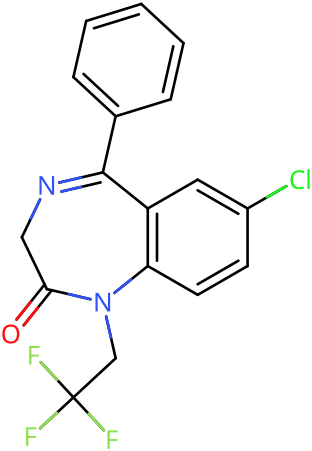
Halazepam Stats & Data
FC(F)(F)CN1C(=O)CN=C(c2ccccc2)c2cc(Cl)ccc12WYCLKVQLVUQKNZ-UHFFFAOYSA-NPharmacology
DrugBankDescription
Halazepam is a _benzodiazepine_ derivative drug exerting anxiolytic, anticonvulsant, sedative, a muscle relaxing effects. It has been shown to be less toxic than chlordiazepoxide or diazepam. This drug is no longer marketed in the United States, and was withdrawn by _Schering_, its manufacturer, in 2009.
Mechanism of Action
Benzodiazepines bind nonspecifically to benzodiazepine receptors BNZ1, which mediates sleep, and BNZ2, which affects affects muscle relaxation, anticonvulsant activity, motor coordination, and memory. As benzodiazepine receptors are thought to be coupled to gamma-aminobutyric acid-A (GABAA) receptors, this enhances the effects of GABA by increasing GABA affinity for the GABA receptor. Binding of GABA to the site opens the chloride channel, resulting in a hyperpolarized cell membrane that prevents further excitation of the cell.
Indication
Used to relieve anxiety, nervousness, and tension associated with anxiety disorders.
Receptor Profile
Receptor Actions
Receptor Binding
Toxicity
PubChemBenzodiazepines bind nonspecifically to benzodiazepine receptors BNZ1, which mediates sleep, and BNZ2, which affects affects muscle relaxation, anticonvulsant activity, motor coordination, and memory. As benzodiazepine receptors are thought to be coupled to gamma-aminobutyric acid-A (GABAA) receptors, this enhances the effects of GABA by increasing GABA affinity for the GABA receptor.
Carcinogenicity
No indication of carcinogenicity to humans (not listed by IARC).
Health effects (PubChem excerpts)
Withdrawal symptoms include anxiety, convulsions, and possible death. They cause slurred speech, disorientation and "drunken" behavior. They are physically and psychologically addictive.
Effect Profile
CuratedStrong anxiolysis and euphoria with strong cognitive impairment, mild sedation
Tolerance & Pharmacokinetics
drugs.wikiNo tolerance chart. Our decay curves for these drugs were estimates, and a curve can make tolerance look longer-lasting than it is, which is the dangerous direction.
How fast tolerance to these drugs fades after a break has not been measured well enough to draw, so don't count on a dose you used to take still being safe: after time off, start with a much smaller amount and don't use alone. Mixing sedatives with each other, with alcohol or with opioids sharply raises the risk of a fatal overdose. If you've been using regularly, don't stop suddenly: withdrawal from benzodiazepines, alcohol or GHB/GBL can cause seizures or delirium, so get medical help to cut down gradually.
Sources: FRANK: benzodiazepines · Alcohol and Drug Foundation: GHB · FDA 2020: benzodiazepine boxed warning · FDA 2019: gabapentinoids and breathing · NHS: alcohol use disorder
Cross-Tolerances
Harm Reduction
drugs.wikiHalazepam is an oral benzodiazepine that is converted hepatically to the long-acting active metabolite desmethyldiazepam (a.k.a. nordazepam), which has a very long and variable elimination half-life; this can cause next-day psychomotor impairment and cumulative sedation over repeated doses. To reduce stacking and accidental overdose, avoid same-day redosing and be especially cautious on consecutive days of use. Combining halazepam with other central nervous system depressants (alcohol, opioids, GHB/GBL, Z-drugs, barbiturates) markedly increases the risk of profound sedation, respiratory depression, aspiration, and death; such combinations should be avoided. Older adults and people with liver impairment are at higher risk for prolonged sedation, confusion, and falls; smaller test doses and longer spacing between doses reduce risk. Do not abruptly stop after days to weeks of daily or near-daily use; benzodiazepine withdrawal can include anxiety rebound, insomnia, tremor, and in severe cases seizures; gradual tapering is safer than sudden cessation. Driving and operating machinery should be avoided at least until the following day and longer if residual effects persist, as long-acting metabolites can impair reaction time and memory. In pregnancy and lactation, benzodiazepines and their long-acting metabolites can accumulate in the neonate and breastfed infant; if exposure occurs, monitor infants for sedation, poor feeding, and hypotonia. Snorting or injecting crushed tablets or powders provides no established benefit, increases harm, and may introduce insoluble binders; oral administration is the least risky ROA for pharmaceutical benzodiazepines. Use of CYP2C19 or CYP3A4 inhibitors (or poor-metabolizer genotypes) can increase desmethyldiazepam exposure by analogy with diazepam and clorazepate; consider this when other medications or grapefruit-like foods are involved.
References
Cited References
- DrugBank: Halazepam and its major metabolite
- FP Notebook: Diazepam (Benzodiazepine Equivalents)
- Medtigo: Halazepam Dosing & Uses
- PsychonautWiki: Benzodiazepines
- PsychonautWiki: Dangerous Combinations
- PubMed: Abuse potential of halazepam and diazepam
- Sellers EM et al. (1998) Current Psychotherapeutic Drugs (2nd ed.)
- TripSit: Drug Combinations Wiki
- TripSit Wiki: Uncommon Benzodiazepines
- Tripsitter: Halazepam Fact Sheet & Harm Reduction Guide
Additional references
- DrugBank: Halazepam (DB00801)
- Ashton Manual (Chapter 1, Table 1) via Drugs-Forum PDF
- TripSit Drug Combination Guidance
- StatPearls: Diazepam (metabolism to desmethyldiazepam; long metabolite half-life)
- NCBI Medical Genetics Summaries: Diazepam therapy and CYP2C19 genotype (CYP2C19/3A4 to desmethyldiazepam)
- LactMed (NCBI Bookshelf): Clorazepate (prodrug of nordazepam) and infant accumulation