
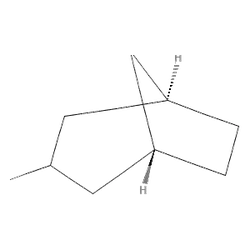
Hyoscyamine Stats & Data
RKUNBYITZUJHSG-VFSICIBPSA-NPharmacology
DrugBankDescription
Hyoscyamine is a tropane alkaloid and the levo-isomer of atropine. It is commonly extracted from plants in the _Solanaceae_ or nightshade family. Research into the action of hyoscyamine in published literature dates back to 1826. Hyoscyamine is used for a wide variety of treatments and therapeutics due to its antimuscarinic properties. Although hyoscyamine is marketed in the United States, it is not FDA approved.
Mechanism of Action
Hyoscyamine competitively and non-selectively antagonises muscarinic receptors in the smooth muscle, cardiac muscle, sino-atrial node, atrioventricular node, exocrine nodes, gastrointestinal tract, and respiratory tract. Antagonism of muscarinic M1, M4, and M5 receptors in the central nervous system lead to cognitive impairment; antagonism of M2 in the sinoatrial and atrioventricular nodes leads to bradycardia and lowers contractility; and antagonism of M3 in smooth muscle results in reduced peristalsis, bladder contraction, salivary secretions, gastric secretions, bronchial secretions, sweating, increased bronchodilation, mydriasis, and cycloplegia.
Pharmacodynamics
Hyoscyamine is not FDA approved, and so it has not official indications. However, it is used as an antimuscarinic agent in a number of treatments and therapies. Hyoscyamine has a short duration of action as it may need to be given multiple times per day. Patients should be counselled regarding the risks and signs of anticholinergic toxicity.
Metabolism
Hyoscyamine is largely unmetabolized, however a small amount is hydrolyzed into tropine and tropic acid.
Absorption
Hyoscyamine is completely absorbed by sublingual and oral routes, though exact data regarding the Cmax, Tmax, and AUC are not readily available.
Indication
As a drug that is not FDA approved, hyscyamine has no official indications. Intravenous hysocyamine has been used to reduce gastric motility, reduce pancreatic pain and secretions, to facilitate imaging of the gastrointestinal tract, treat anticholinesterase toxicity, treat certain cases of partial heart block, improve visualization of the kidneys, and for symptomatic relief of biliary and renal colic. Intravenous hyoscyamine is also used pre-operatively to reduce secretions of the mouth and respiratory tract to facilitate intubation. Oral hyoscyamine is used to treat functional intestinal disorders, for symptomatic relief of biliary and renal colic, and symptomatic relief of acute rhinitis.
Half-life
The half life of hyoscyamine is 3.5 hours.
Elimination
The majority of hyoscyamine is eliminated in the urine as the unmetabolized parent compound.
Toxicity
DrugBankToxicity (DrugBank)
Patients experiencing an overdose may present with headache, nausea, vomiting, dizziness, dry mouth, difficulty in swallowing, dilated pupils, blurred vision, urinary retention, hot dry and flushed skin, tachycardia, hypertension, hypotension, respiratory depression, CNS stimulation, fever, ataxia, excitation, lethargy, stupor, coma, and paralysis. Patients should be treated with symptomatic and supportive therapy which may include emesis, gastric lavage, activated charcoal, artificial respiration, or intravenous physostigmine. Dialysis is expected to remove hyoscyamine sulfate from circulation.
Experience Report Analysis
ErowidDemographics
Gender Distribution
Too few reports for a chart: gender is known from 1 report, and a split is drawn only from 20 reports or more. Counts are shown instead. Why 20?
- Male 1 of 1