
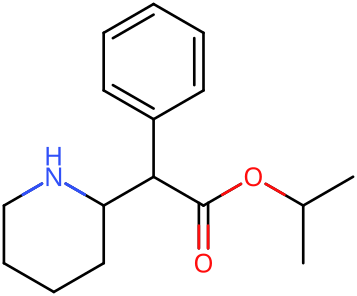
Isopropylphenidate Stats & Data
CC(C)OC(=O)C(C1CCCCN1)c1ccccc1AZVPADMEIMLODT-UHFFFAOYSA-NInteraction Warnings
The neurotoxic effects of MDMA may be increased when combined with other stimulants.
This combination may increase strain on the heart.
Pharmacology
DrugBankDescription
4-(Isopropylamino)diphenylamine, also known as IPPD, is a chemical compound commonly used as an antiozonant in rubbers, particularly those used for tires. It is also a known allergen. Sensitivity to this compound may be identified with a clinical patch test.
Indication
4-(Isopropylamino)diphenylamine is approved for use within allergenic epicutaneous patch tests which are indicated for use as an aid in the diagnosis of allergic contact dermatitis (ACD) in persons 6 years of age and older.
Subjective Effects
Physical
The physical effects of isopropylphenidate are often described as less uncomfortable and euphoric than ethylphenidate. They can be broken down into several components which progressively intensify proportional to dosage.
- Stimulation: Isopropylphenidate is usually considered to be energetic and stimulating in a fashion that is distinct but much weaker than that of amphetamine or methamphetamine and stronger than that of modafinil and caffeine. At lower to moderate doses, it encourages general productivity, but at higher dosages it encourages physical activities such as dancing, socializing, running, or cleaning. The particular style of stimulation which isopropylphenidate presents can be described as forced. This means that at higher doses, it becomes difficult or impossible to keep still as jaw clenching, involuntarily bodily shakes and vibrations become present, resulting in extreme shaking of the entire body, unsteadiness of the hands, and a general lack of motor control.
- Dehydration
- Appetite suppression
- Vasoconstriction
- Increased heart rate
Cognitive
The cognitive effects of isopropylphenidate can be broken down into several components which progressively intensify proportional to dosage. The general head space of isopropylphenidate is described by many as one of mental stimulation, increased focus, and powerful euphoria. It contains a large number of typical stimulant cognitive effects. Although negative side effects are usually mild at low to moderate doses, they become increasingly likely to manifest themselves with higher amounts or extended usage. This particularly holds true during the offset of the experience.
- Thought acceleration
- Wakefulness
- Analysis enhancement
- Focus enhancement: This component is most effective at low to moderate doses as anything higher will usually impair concentration.
- Motivation enhancement
- Euphoria: The euphoric rush associated with isopropylphenidate use (as a result of dopamine reuptake inhibition) is very short-lived and compulsive, similar to that of cocaine.
- Cognitive fatigue: This component can occur during the offset of this compound as a rebound effect which is usually equal in its intensity to the enhancements which occurred before it.
Forked from Subjective Effect Documentation by Josie Kins, September 2015. Via dose.wiki (CC0).
Toxicity
PsychonautWikiThe toxicity and long-term health effects of recreational isopropylphenidate use do not seem to have been studied in any scientific context and the exact toxic dosage is unknown. This is because isopropylphenidate has very little history of human usage. Anecdotal evidence from people who have tried isopropylphenidate within the community suggests that there do not seem to be any negative health effects attributed to simply trying this drug at low to moderate doses by itself and using it sparingly (but nothing can be completely guaranteed). It is strongly recommended that one use harm reduction practices when using this drug.
Effect Profile
Curated + 1 ReportsModerate stimulation and euphoria with strong anxiety/jitters
Tolerance & Pharmacokinetics
drugs.wikiTolerance Decay
Empirically modeled from community stimulant-use patterns; tolerance rises over consecutive days and substantially wanes over 1–2 weeks of abstinence. Data quality is anecdotal; individuals vary widely.
Cross-Tolerances
Experience Report Analysis
ErowidDemographics
Gender Distribution
Too few reports for a chart: gender is known from 7 reports, and a split is drawn only from 20 reports or more. Counts are shown instead. Why 20?
- Not Specified 2 of 7
- Male 5 of 7
Age Distribution
Reports Over Time
Real-World Dose Distribution
ErowidFrom 20 of 27 recorded dose entries: those that state a weight (mg, g or µg), in routes with at least five of them. Values above Q3 + 3×IQR, far above what people typically take, are left out; they can include real heavy doses and overdoses, not only mistakes.
Rectal (n=20)
Form / Preparation
Most common forms and preparations, as a share of the 4 reports that give one
Too few reports for bars: these forms come from 4 reports, and a bar is drawn only from 20 reports or more. With fewer, a percentage cannot tell a common effect from a rare one. Counts are shown instead. Why 20?
- Powder / Crystals 3 of 4
Harm Reduction
drugs.wiki• Dosage and timing: Community-sourced reference doses for IPPH converge around oral 5–20 mg common and insufflated 5–20 mg common; start low and allow full onset before redosing to avoid inadvertent stacking. This is based on reference figures compiled in Drug Users Bible and corroborating forum reports.
• ROA-specific onset: Intranasal onset is typically faster (≈5–15 min) and duration shorter than oral; this mirrors methylphenidate’s ROA differences and is echoed in user reports for IPPH. Avoid interpreting a slow oral come-up as a cue to redose early.
• Nasal harm: Multiple user reports describe significant intranasal discomfort with phenidates, including IPPH; repeated snorting can irritate/damage mucosa. Prefer oral use, space sessions widely, and if snorted, perform gentle saline rinses hours later (not immediately). Avoid adding baking soda or ad hoc buffers—these can worsen irritation or alter absorption unpredictably.
• Cardiovascular risk: As an NDRI stimulant, IPPH can raise heart rate and blood pressure; those with hypertension, arrhythmias, or cardiovascular disease should avoid. If severe headache, chest pain, or BP approaches emergency ranges, seek help promptly.
• Caffeine synergy: Even small IPPH doses combined with high caffeine loads can produce tremor, jitteriness, and eye twitching; moderate caffeine and avoid energy drinks on IPPH days.
• Alcohol: Co-use increases overall strain and can impair judgment; unlike methylphenidate, IPPH was developed in part to reduce certain interaction liabilities, but human data are limited. Prefer to avoid alcohol on IPPH.
• Seizure threshold: Combining stimulants with bupropion or tramadol may lower seizure threshold; keep doses conservative, avoid sleep deprivation, dehydration, or electrolyte imbalance (e.g., after heavy sweating), and do not mix with MAOIs.
• Compulsive redosing: Users describe milder euphoria than methylphenidate but still report redosing loops; pre-measure and limit access to discourage binges.
• Sleep: Insomnia can occur, especially with late-day dosing; set a personal cutoff several hours before bedtime and prioritize recovery sleep after use days.
• Drug checking: IPPH has appeared in checking program submissions; verify identity where services exist, and be aware that mislabeled stimulants circulate.
• Legal note (UK): Phenidates including IPPH were targeted in UK controls in 2015; possession/supply laws evolved—always check your current local law before purchase or possession.
References
Cited references
- Drug Users Bible: IPPH overview and reference doses
- Bluelight IPPH thread (reports on effects, nasal irritation, dosing)
- Bluelight Isopropylphenidate Mega-thread (selectivity, functional profile; anecdotal)
- Drugs‑Forum: Isopropylphenidate paper abstract (reduced interaction liability claim)
- TripSit Wiki (methylphenidate page) – ROA timing comparator
- Effect Index – Increased blood pressure (stimulants)
- Toronto Drug Checking Service – expected drug list includes isopropylphenidate