
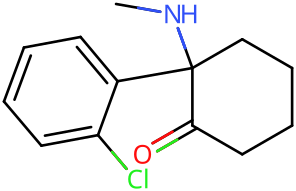
Ketamine Stats & Data
CNC1(CCCCC1=O)c1ccccc1ClYQEZLKZALYSWHR-UHFFFAOYSA-NPharmacology
DrugBankDescription
Ketamine is an NMDA receptor antagonist with a potent anesthetic effect. It was developed in 1963 as a replacement for phencyclidine (PCP) by Calvin Stevens at Parke Davis Laboratories. It started being used for veterinary purposes in Belgium and in 1964 was proven that compared to PCP, it produced minor hallucinogenic effects and shorter psychotomimetic effects. It was FDA approved in 1970, and from there, it has been used as an anesthetic for children or patients undergoing minor surgeries but mainly for veterinary purposes.
Mechanism of Action
Ketamine interacts with N-methyl-D-aspartate (NMDA) receptors, opioid receptors, monoaminergic receptors, muscarinic receptors and voltage sensitive Ca ion channels. Unlike other general anaesthetic agents, ketamine does not interact with GABA receptors.
Pharmacodynamics
Ketamine is a rapid-acting general anesthetic producing an anesthetic state characterized by profound analgesia, normal pharyngeal-laryngeal reflexes, normal or slightly enhanced skeletal muscle tone, cardiovascular and respiratory stimulation, and occasionally a transient and minimal respiratory depression. The anesthetic state produced by Ketamine has been termed as "dissociative anesthesia" in that it appears to selectively interrupt association pathways of the brain before producing somesthetic sensory blockade. It may selectively depress the thalamoneocortical system before significantly obtunding the more ancient cerebral centers and pathways (reticular-activating and limbic systems). Ketamine enhances descending inhibiting serotoninergic pathways and can exert antidepressive effects. These effects are seen in concentrations ten times lower than the needed concentration for anesthetic proposes. The effect of ketamine can be described as analgesic by the prevention of central sensitization in dorsal horn neurons as well as by the inhibition on the synthesis of nitric oxide. Ketamine can present cardiovascular changes and bronchodilatation.
Metabolism
Ketamine presents a mainly hepatic metabolism and its major metabolite is norketamine. The biotransformation of ketamine corresponds to N-dealkylation, hydroxylation of the cyclohexone ring, conjugation to glucuronic acid and dehydration of the hydroxylated metabolites for the formation of cyclohexene derivatives.
Absorption
Ketamine absorption is very rapid and the bioavailability is around 93%. After the first pass metabolism, only 17% of the administered dose is absorbed. It distributes very rapidly and presents a distribution half-life of 1.95 min. The Cmax levels at peak reach 0.75 mcg/ml in plasma and 0.2 mcg/ml in cerebrospinal fluid.
Indication
Ketamine is indicated as an anesthetic agent for recommended diagnostic and surgical procedures. If skeletal muscle relaxation is needed, it should be combined with a muscle relaxant. If the surgical procedure involves visceral pain, it should be supplemented with an agent that obtunds visceral pain. Ketamine can be used for induction of anesthesia prior other general anesthetic agents and as a supplement of low potency agents. Reports have indicated a potential use of ketamine as a therapeutic tool for the management of depression when administered in lower doses. These reports have increased the interest for ketamine in this area and several clinical trials are launched for this indication.
Half-life
The reported half-life in preclinical studies for ketamine is 186 min.
Protein Binding
The plasma protein binding of ketamine accounts for 53.5% of the administered dose.
Elimination
Pharmacokinetic studies have resulted in the recovery of 85-95% of the administered dose in urine mainly in the form of metabolites. Some other routes of elimination of ketamine are bile and feces. When administered intravenously the resultant recovery is distributed by 91% of the administered dose in urine and 3% in feces.
Volume of Distribution
The apparent volume of distribution of the central compartment and at steady-state are 371.3 ml/kg and 4060.3 ml/kg, respectively.
Clearance
The clearance rate of ketamine is high and of around 95 L/h/70kg.
Metabolites
Receptor Profile
Receptor Actions
Receptor Binding
Measured Affinities
Guide to PHARMACOLOGYMeasured binding and functional data for ketamine, curated by the IUPHAR/BPS Guide to PHARMACOLOGY. Each row cites the paper it came from. Lower concentrations mean tighter binding — a value in the sub-nanomolar range indicates a very potent interaction.
| Target | Action | Measure | Value | Concentration | Species | Source |
|---|---|---|---|---|---|---|
| GluN2C GRIN2C | Channel blocker | pIC50 | 6.18 | 660.69 nM | Human | PMID 17303642 |
Reading this. pKi, pEC50 and pIC50 are negative log molar values, so a higher number means a tighter interaction; the concentration column converts them for you. Values from non-human species are laboratory measurements and do not translate directly to human effect. Receptor affinity is not a dose — it describes what a molecule binds, not how much of it is safe to take.
Receptor data from the IUPHAR/BPS Guide to PHARMACOLOGY (v2026.2), licensed CC BY-SA 4.0. Matched to this substance by InChIKey.
History & Culture
Ketamine was first synthesized in 1962 by American scientist Calvin Stevens at Parke Davis Laboratories, initially designated "CI581." Stevens sought a safer anesthetic to replace phencyclidine, which produced severe and prolonged hallucinogenic effects upon recovery from anesthesia. By 1965, ketamine had demonstrated clinical utility as an anesthetic, and researcher Edward Domino coined the term "dissociative anesthetic" to describe its unique pharmacological profile. The United States Food and Drug Administration approved ketamine for human use in 1970. Ketamine's favorable safety margin proved particularly valuable in combat medicine. Its minimal respiratory depression compared to other available anesthetics, combined with its sympathomimetic properties, led to its extensive deployment as a field anesthetic during the Vietnam War. The substance remains on the World Health Organization's Essential Drugs List as one of the minimum medical requirements for a basic healthcare system.
Recreational use of ketamine was first documented among medicinal chemists in the United States as early as 1965, spreading more widely by 1967. During the 1970s, patients recovering from ketamine anesthesia began reporting unwanted visions, drawing broader attention to the substance's psychoactive properties beyond clinical settings. In 1978, neuroscientist John Lilly published "The Scientist," an autobiographical account describing his extensive personal explorations with ketamine that helped popularize awareness of its dissociative effects among countercultural audiences. Recreational use expanded through the 1980s, and by the early 1990s ketamine had become more widespread in Europe, where it gained notoriety as an adulterant in MDMA tablets and became closely associated with the nightclub and rave scenes. By 1995, the United States Drug Enforcement Administration had placed ketamine on its emerging drugs list due to its growing presence in electronic music culture.
Ketamine has accumulated numerous street names reflecting its diverse cultural contexts, including "Special K," "K," "Kit Kat," "kitty," "cat tranquilizer" (referencing its veterinary applications), "Cat Valium," and "Jet." The term "K-hole" describes a profound dissociative state involving visual and auditory hallucinations achieved at high doses, which has become a significant concept within psychedelic culture. Several prominent figures documented their entheogenic experiences with ketamine extensively, including John Lilly, Marcia Moore, and D.M. Turner. Turner's death by drowning during unsupervised ketamine use became a cautionary example of the serious physical risks posed by the drug's dissociative and anesthetic properties. More recently, actor Matthew Perry's death in October 2023, attributed primarily to the acute effects of ketamine, brought renewed public attention to the substance's dangers. Statistical data revealed more than 90 ketamine-related deaths in England and Wales between 2005 and 2013.
The identification of ketamine's rapid antidepressant effects in 2000 represented a major breakthrough in psychiatric treatment. Research demonstrated that sub-anesthetic doses could produce immediate or near-immediate relief of depressive and suicidal symptoms, with therapeutic effects persisting up to three days following a single administration. This discovery has been characterized as the single most important advance in depression treatment in more than fifty years. The finding fundamentally shifted the direction of antidepressant research and development, generating widespread interest in NMDA receptor antagonists as a novel class of rapidly-acting treatments for mood disorders.
Subjective Effects
Physical
The subjective physical effects of ketamine can be broken down into eight components all of which progressively intensify proportional to dosage.
- Spontaneous tactile sensations: The ketamine body high is a sharp, pleasurable tingling sensation which is location specific to the hands, feet and head.
- Tactile suppression: This partially to entirely suppresses one's sense of touch, creating feelings of numbness within the extremities. It is responsible for the anaesthetic properties of this substance.
- Motor control loss: A loss of gross and fine motor control alongside of balance and coordination is prevalent within ketamine and becomes especially strong at higher dosages. This means that one should be sitting down before the onset (unless experienced) in case of falling over and injuring oneself.
- Euphoria: This results in feelings of physical euphoria which range between mild pleasure to powerfully all-encompassing bliss.
- Decreased bodily weight: This creates the sensation that the body is floating and has become entirely weightless. This effect is strangely stimulating and encourages physical activities at low to moderate dosages by making the body feel light and effortless to move.
- Dizziness: Although uncommon, some people report dizziness under the influence of ketamine.
- Nausea: High dose ketamine trips can sometimes result in nausea and vomiting at the peak of the trip. For most people, this is surprisingly not as unpleasant as they would initially expect due to the accompanying detachment from the physical senses.
- Tactile disconnection
- Physical autonomy
Cognitive
In comparison to other dissociatives, the cognitive effects of ketamine are often described as particularly forceful towards introspection and with more analytical thought process when compared to that of DXM and MXE.
- Consciousness disconnection
- Ego suppression, loss and death
- Time distortion
- Introspection
- Deja-Vu
- Personal bias suppression
- Conceptual thinking
- Direct communication with the subconscious
- Unity and interconnectedness
Sensory
- Enhancements
- Suppression
- Distortions
- Hallucinations
Ketamine exhibits a full array of dissociative distortions and alterations in visual perception.
- Perspective distortions
- Environmental cubism
- Environmental orbism
- Scenery slicing
At high dosages, ketamine can produce a full range of high level hallucinatory states in a fashion that is less consistent and reproducible than that of many other commonly used psychedelics.
- External hallucinations: In comparison to other dissociatives, this effect can occur at heavy dosages but is extremely infrequent in comparison to the same effect found within deliriants. It can be comprehensively described as delirious in believability, autonomous in controllability and solid in style. The most common theme for this effect to follow is one of experiencing and talking to friends around oneself when they are not actually present.
- Internal hallucinations: In comparison to other dissociatives, this effect can occur at heavy dosages, but is considerably less common than the same effect found within psychedelics and deliriants. It can be comprehensively described as delirious in believability, fixed in style, equal in new experiences and memory replays in content, autonomous in controllability and solid in style.
- Visual disconnection: This eventually results in the experience of the famous 'K-hole' or, more specifically, holes, spaces and voids alongside of structures.
- Double vision: This component is prevalent at moderate to heavy dosages and makes reading impossible unless one closes an eye.
- Pattern recognition suppression: This effect generally occurs at higher dosages and makes one unable to recognize and interpret perceivable visual data.
- Visual acuity suppression
Forked from Subjective Effect Documentation by Josie Kins, May 2013. Via dose.wiki (CC0).
Short-term exposure of cultures of GABAergic neurons to ketamine at high concentrations led to a significant loss of differentiated cells in one study, and non-cell death-inducing concentrations of ketamine (10 μg/ml) may still initiate long-term alterations of the dendritic arbor in differentiated neurons. More recent studies of ketamine-induced neurotoxicity have focused on primates in an attempt to use a more accurate model than rodents. One such study administered daily ketamine doses consistent with typical recreational doses (1 mg/kg IV) to adolescent cynomolgus monkeys for varying periods of time. Decreased locomotor activity and indicators of increased cell death in the prefrontal cortex were detected in monkeys given daily injections for six months, but not those given daily injections for one month.
Carcinogenicity
No indication of carcinogenicity to humans (not listed by IARC).
Liver injury risk
No documented concern
Overdose
Fatal ketamine overdoses are rare. Ketamine's toxicity drastically increases when it is mixed with other substances. Overdoses can cause respiratory depression, vomiting, positional asphyxia, heart problems, rhabdomyolysis causing kidney failure and rarely seizures.
Addiction & dependence
Ketamine has moderate to high abuse potential and produces psychological dependence with chronic use. When dependence has developed, cravings and withdrawal effects may occur if a person suddenly stops their usage. Tolerance to the main effects of ketamine develops with prolonged and repeated use.
Organ-specific toxicity
Short-term exposure of cultures of GABAergic neurons to ketamine at high concentrations led to a significant loss of differentiated cells in one study, and non-cell death-inducing concentrations of ketamine (10 μg/ml) may still initiate long-term alterations of the dendritic arbor in differentiated neurons. More recent studies of ketamine-induced neurotoxicity have focused on primates in an attempt to use a more accurate model than rodents. One such study administered daily ketamine doses consistent with typical recreational doses (1 mg/kg IV) to adolescent cynomolgus monkeys for varying periods of time.
Toxicity (DrugBank)
Preclinical studies related to the blocking of NMDA receptors have shown an increase in apoptosis in the developing brain which results in cognitive deficits when used for longer than 3 hours. Toxicity studies regarding carcinogenesis have not been performed. Regarding mutagenesis and fertility, ketamine showed to be clastogenic and to not have effects on fertility.
Effect Profile
Curated + 569 ReportsStrong dissociative depth with moderate insight and motor impairment, low mania
User Experiences
Duration Timeline
BluelightEmpirical Duration
Erowid ReportsMedian times after the dose that Erowid reports state. A curve is drawn only when reports state all four points (onset, peak begins, comedown begins, back to baseline) and the medians fall in that order. No point is estimated from another.
Community Effects
TripSitTolerance & Pharmacokinetics
drugs.wikiTolerance Decay
Cross-Tolerances
Demographics
Gender Distribution
Age Distribution
Reports Over Time
Effect Analysis
Erowid + BluelightEffects aggregated from 411 experience reports (361 single-substance Erowid + 208 Bluelight)
Effect Sentiment Distribution
Confidence Distribution
Each bar is the share of reports mentioning the effect; its whisker, and the band on the rows below, is the 95% interval: where the share could plausibly be with other reports of the same kind.
Positive Effects 53
Adverse Effects 55
Show 33 more adverse effects
Show 44 neutral or unclassified mentions
Also reported in combinations. In the 351 Ketamine reports where another drug was taken too, 37 (10.5%) mention hospital, emergency services or an overdose, 5 (1.4%) a seizure and 21 (6.0%) psychosis. In the 361 single-substance reports: 12.7%, 1.1% and 2.8%. These are not in the figures above: they cannot be put down to Ketamine alone, and a mention is not always something that happened to the writer.
Dose-Response Correlation
How effect frequency changes across dose levels. Whiskers, and the numbers' hover text, give each figure's 95% interval.
Not drawn, too few reports (a dose tier needs 20): Intramuscular Heavy (n=16), Insufflated Common (n=10), Insufflated Strong (n=16). Why 20?
View data table
| Effect | Heavy (n=36) |
|---|---|
| Dissociation | 72.2% (95% interval 56 to 84 percent) |
| Anxiety | 58.3% (95% interval 42 to 73 percent) |
| Euphoria | 47.2% (95% interval 32 to 63 percent) |
| Music Enhancement | 44.4% (95% interval 30 to 60 percent) |
| Visual Distortions | 44.4% (95% interval 30 to 60 percent) |
| Confusion | 41.7% (95% interval 27 to 58 percent) |
| Empathy | 36.1% (95% interval 22 to 52 percent) |
| Auditory Effects | 30.6% (95% interval 18 to 47 percent) |
| Color Enhancement | 27.8% (95% interval 16 to 44 percent) |
| Closed-Eye Visuals | 22.2% (95% interval 12 to 38 percent) |
| Nausea | 22.2% (95% interval 12 to 38 percent) |
| Sedation | 22.2% (95% interval 12 to 38 percent) |
| Time Distortion | 19.4% (95% interval 10 to 35 percent) |
| Ego Dissolution | 19.4% (95% interval 10 to 35 percent) |
| Body High | 19.4% (95% interval 10 to 35 percent) |
Subjective Effect Ontology
Experience ReportsStructured effect tags extracted from 762 Erowid & Bluelight experience reports using a controlled vocabulary of 220+ canonical effects across 15 domains.
Auditory
Cognitive
Emotional
Gastrointestinal
Motor
Selfhood
Tactile
Visual
Dose–Effect Mapping
Experience ReportsHow reported effects shift across dose tiers, based on 361 single-substance experience reports. The shaded band on each bar is its 95% interval. An arrow (↑ ↓) marks a change between the lowest and highest tier that count an effect only when the gap is bigger than chance would explain; ~ means no clear change. How changes are called
Not drawn, too few reports (a dose tier needs 20): Intramuscular Heavy (n=16), Insufflated Common (n=10), Insufflated Strong (n=16). Why 20?
Limited tier coverage — most reports fall within the Heavy range. Effects at other dose levels may not be represented.
| Effect | Heavy (n=36) | Change with dose |
|---|---|---|
| dissociation | ||
| anxiety | ||
| euphoria | ||
| music enhancement | ||
| visual distortions | ||
| confusion | ||
| empathy | ||
| auditory effects | ||
| color enhancement | ||
| closed-eye visuals | ||
| nausea | ||
| sedation | ||
| time distortion | ||
| ego dissolution | ||
| body high | ||
| introspection | ||
| stimulation | ||
| open-eye visuals | ||
| hospital | ||
| memory suppression |
Showing top 20 of 23 effects
Dosage Distribution
Dose distribution from experience reports, one dose per report (the first listed). Doses above Q3 + 3×IQR, far above what people typically take, are left out of the median and range and listed under each route: most are real heavy doses or overdoses, not mistakes.
Oral
1 report gave a dose above the typical range (2,000 mg), so it is not in the figures above. Listing a dose here does not mean it is safe.
Show the report
Intramuscular
1 dose more than 50 times the median may be a typing or unit error and is not in the figures either: check the report.
Insufflated
3 reports gave a dose above the typical range (1,000 mg), so they are not in the figures above. Listing a dose here does not mean it is safe.
Intravenous
Real-World Dose Distribution
ErowidFrom 537 of 830 recorded dose entries: those that state a weight (mg, g or µg), in routes with at least five of them. Values above Q3 + 3×IQR, far above what people typically take, are left out; they can include real heavy doses and overdoses, not only mistakes.
Rectal (n=32)
Insufflated (n=297)
Oral (n=29)
Intravenous (n=29)
Intramuscular (n=124)
Smoked (n=7)
Sublingual (n=5)
Common Combinations
Most co-occurring substances, as a share of all 712 reports filed under Ketamine; whiskers are 95% intervals
Form / Preparation
Most common forms and preparations, as a share of the 506 reports that give one; whiskers are 95% intervals
Body-Weight Dosing
Dose per kg of body weight, one dose per report (the first listed), from reports giving a weight of 30–250 kg. Doses above Q3 + 3×IQR, far above what people typically take, are left out of the median and range and listed under each route.
Intramuscular
1 report gave a dose above the typical range (5.085 mg/kg), so it is not in the figures above. Listing a dose here does not mean it is safe.
1 dose more than 50 times the median may be a typing or unit error and is not in the figures either: check the report.
Insufflated
3 reports gave a dose above the typical range (12.5–15 mg/kg), so they are not in the figures above. 1 of them mentions hospital, emergency services or an overdose. Listing a dose here does not mean it is safe.
Show the reports
- 15 mg/kg · another drug taken too · mentions hospital, emergency services or an overdose
- 14.225 mg/kg · another drug taken too
- 12.5 mg/kg
Oral
1 report gave a dose above the typical range (33.898 mg/kg), so it is not in the figures above. Listing a dose here does not mean it is safe.
Show the report
Intravenous
Unknown
Redose Patterns
Redosing behavior across 551 reports
Legal Status
| Country | Status | Notes |
|---|---|---|
| Australia | Schedule 8 | Possession, manufacture, or supply without authority is illegal. Classified as a controlled drug requiring strict regulation. |
| Austria | Prescription only (NR medication) | Legal for medical and veterinary use. Repeated dispense prohibited. Illegal when sold, possessed, or produced without a prescription under the Neue-Psychoaktive-Substanzen-Gesetz (NPSG). |
| Belgium | Prescription only | Legal for medical and veterinary use. Possession without prescription can result in arrest. |
| Brazil | Controlled (veterinary) | Legal for veterinary use only. Illegal when sold or possessed for human use. |
| Cambodia | Controlled | Not legal to possess without a prescription. Some pharmacies may sell ketamine, though most consider it forbidden. |
| Canada | Schedule I (CDSA) | Controlled under the Controlled Drugs and Substances Act as an analogue of phencyclidine (PCP). Sale, possession, and production are illegal unless authorized for medical, scientific, or industrial purposes. |
| China | Schedule II | Classified as a class II psychiatric drug. Trade is limited to licensed wholesalers and retail sales are prohibited. |
| Croatia | Controlled | Possession and distribution regulated under national drug legislation. |
| Czech Republic | Schedule IV (List 7) | Available exclusively with a prescription under Nařízení vlády č. 463/2013 Sb. Sales and distribution controlled under the Medicines Act. |
| Denmark | Controlled | Illegal except for scientific and medicinal uses as of February 8, 2008. |
| France | Schedule IV (Narcotic) | Listed as a narcotic in Annexe IV of the Liste des substances classées comme stupéfiants. Injectable preparations classified as Médicine - List I and subject to strict controls. |
| Germany | Prescription only (Anlage 1 AMVV) | Available by prescription for medical and veterinary use. Illegal when sold or possessed without a prescription. |
| Hong Kong | Schedule I | Classified as a dangerous drug with strict controls on possession, manufacture, and distribution. |
| India | Unscheduled | Not listed under the Narcotic Drugs and Psychotropic Substances Act, 1985. Reportedly available over-the-counter in many pharmacies. |
| Italy | Tabella I | Listed in Tabella I of Tabelle delle sostanze stupefacenti e psicotrope. Illegal to possess, purchase, or sell. |
| Japan | Narcotic | Classified as a narcotic under the Narcotic and Psychotropic Drugs Control Act (麻薬及び向精神薬取締法). |
| Luxembourg | Prohibited | Prohibited substance for recreational use under national drug legislation. |
| Malaysia | Illegal | Controlled under Section 39b of the Dangerous Drugs Act. Possession and sale are illegal. |
| Mexico | Category 3 | Classified under Mexico's General Health Law as having therapeutic value but constituting a problem for public health. Acquisition restricted to licensed veterinarians only under Medicines Administration Regulations. |
| Netherlands | Unscheduled (medication) | Treated as a medication rather than a controlled substance. Not listed in List 1 or 2 of the Opium Act. Sales require appropriate pharmaceutical licensing. |
| New Zealand | Class C | Reclassified as a Class C substance in February 2008, the same category as cannabis and codeine. |
| Norway | Class A | Classified as a Class A drug since 1999. Sold under the brand name Ketalar for authorized medical use. |
| Poland | Controlled | Illegal to possess, manufacture, and sell except for authorized medical purposes. |
| Singapore | Class A | Class A controlled drug. Traffickers face 5-20 years imprisonment and 5-15 strokes of the cane. Possession of more than 113g is deemed trafficking. |
| Slovakia | Schedule II | Added to Schedule II (Grade 2) in October 2009, aligned with the 1971 United Nations Convention on Psychotropic Substances. |
| South Korea | Controlled | Controlled substance as of January 2005. Possession and sale are illegal. |
| Spain | Schedule IV | Classified as a Schedule IV substance under Spanish drug control legislation. |
| Sweden | Schedule IV | Scheduled as of July 1, 2005 following increased reports of recreational misuse. |
| Switzerland | Controlled (Verzeichnis B) | Specifically named under Verzeichnis B. Possession or handling without a license is illegal. Medicinal use is permitted. |
| Taiwan | Schedule III | Controlled under national narcotics legislation with restrictions on possession and distribution. |
| Turkey | Green prescription only | Available only with a 'green prescription' designation. Illegal when sold or possessed without a prescription. |
| United Kingdom | Class B | Reclassified as a Class B drug under the Misuse of Drugs Act 1971 on June 10, 2014. Previously classified as Class C from January 1, 2006. Prior to 2006, possession was legal though sales required licensing. |
| United States | Schedule III | Emergency scheduled by the DEA on August 12, 1999. Previously unscheduled with FDA-regulated sales. Possession without prescription or license is illegal. Esketamine nasal spray (Spravato) was FDA-approved in March 2019 for treatment-resistant depression under restricted distribution. |
References
Data Sources
Cited References
- Bluelight: How often can you safely do Ketamine
- Bluelight: Ketamine Tolerance
- Bluelight: Ketamine usage frequency dosage breaks
- Bluelight: Recommended dose of Ketamine (S+) isomer
- Bluelight: What counts as frequent ketamine use
- Global Drug Survey - Welcome to the K-hole
- Hi-Ground - Ketamine harm reduction sheet
- PMC: Ketamine-Associated Ulcerative Cystitis
- PMC: Ketamine Tolerance in Rats
- PulmCrit - The ketamine-tolerant patient
- Reddit: r/ketamine - Tolerance FAQ
- StatPearls - Ketamine
- The Psychedelic Society - Ketamine Harm Reduction
- TripSit: Drug Combination Chart
- People Magazine – severe cystitis from chronic use