
MDA Stats & Data
NGBBVGZWCFBOGO-UHFFFAOYSA-NInteraction Warnings
This combination may increase strain on the heart.
Pharmacology
DrugBankDescription
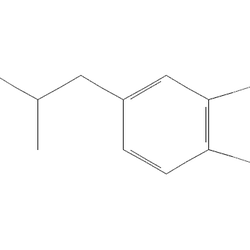
An amphetamine derivative that inhibits uptake of catecholamine neurotransmitters. It is a hallucinogen. It is less toxic than its methylated derivative but in sufficient doses may still destroy serotonergic neurons and has been used for that purpose experimentally. PubChem
Receptor Profile
Receptor Actions
History & Culture
1910–1941
MDA was first synthesized by German chemists Carl Mannich and W. Jacobsohn in 1910, though its psychoactive properties remained unknown for two decades. The compound's mind-altering effects were discovered through self-experimentation by American chemist Gordon Alles in July 1930, who administered a total of 126 milligrams to himself and experienced hallucinogenic effects, euphoria, and a sense of well-being alongside peripheral stimulant effects. Notably, Alles did not formally describe these findings in the scientific literature until 1959. Following his experiments, Alles licensed MDA to the pharmaceutical company Smith, Kline & French. The first systematic animal studies commenced in 1939, with human clinical trials beginning in 1941 to evaluate the compound's potential therapeutic applications for Parkinson's disease. However, these early investigations found that MDA was actually detrimental to individuals with Parkinson's, leading researchers to abandon this avenue of exploration.
1949–1961
Between 1949 and 1957, Smith, Kline & French conducted extensive human trials involving over five hundred subjects to assess MDA's potential as an antidepressant and appetite suppressant. The compound showed some promise in treating psychoneurotic depression and was described as having analeptic (stimulant) properties in humans by 1953. This research eventually led to several patents: H.D. Brown patented MDA as a cough suppressant in 1958, Smith, Kline & French secured a patent for its use as an ataractic (tranquilizing agent) in 1960, and it was subsequently patented as an appetite suppressant under the trade name "Amphedoxamine" in 1961. In 1986, the World Health Organization recommended "tenamfetamine" as the compound's International Nonproprietary Name, suggesting that pharmaceutical development interest persisted into that decade.
1950–1953
During the early Cold War period, the United States Army conducted experiments with MDA under the code designation EA-1298 as part of broader efforts to develop chemical agents that could function as truth serums or incapacitating weapons. These military and intelligence programs administered relatively unexplored psychoactive compounds to both knowing and unknowing subjects with minimal ethical oversight. One such experiment proved fatal. In January 1953, a psychiatric patient named Harold Blauer died at the New York State Psychiatric Institute after being intravenously injected with 450 milligrams of MDA without his knowledge or consent. The Army had contracted with physicians at the institute to test new chemicals from Edgewood Arsenal, and Blauer's death occurred during what was reportedly his fifth injection as part of these experiments, which have since been associated with the larger Project MKUltra program.
Several researchers investigated MDA's potential applications in psychotherapy during the 1960s and 1970s. Chilean psychiatrist Claudio Naranjo extensively documented the compound's therapeutic value, publishing his findings in the book "The Healing Journey." Psychologist Richard Yensen also explored the drug's utility in clinical settings. These researchers found that MDA facilitated emotional openness and introspection in patients, foreshadowing the later interest in MDMA for similar therapeutic purposes.
1963–1992
MDA began appearing in recreational contexts around 1963 to 1964, making it the first entactogen to achieve widespread non-medical use and predating its more famous derivative MDMA by more than a decade. The compound earned nicknames including the "hug drug" and was sometimes said to stand for "Mellow Drug of America," reflecting its reputation for enhancing empathy and emotional warmth. During this period, MDA was inexpensive and readily obtainable as a research chemical from scientific supply houses, alongside other compounds like mescaline and LSD that were sold under their chemical names. This accessibility contributed to its popularity as the psychedelic movement expanded in the late 1960s. By early 1968, clandestine production had grown significantly enough that the Bureau of Drug Abuse Control reported seizing over 1.4 kilograms of MDA along with 11 kilograms of precursor chemicals from an illegal laboratory in New York. MDA experienced a notable resurgence in 1992 when a large batch of pills marketed as "Snowballs" circulated throughout the United Kingdom and Europe. These tablets unexpectedly contained MDA rather than MDMA, and were dosed at approximately 200 milligrams per pill—well into the strong to heavy dose range. This miscalculation resulted in widespread reports of intense and unexpected hallucinogenic experiences among users who had anticipated MDMA's effects, demonstrating MDA's more pronounced psychedelic character at higher doses.
Subjective Effects
Physical
- Spontaneous tactile sensations
- Stimulation
- Vibrating vision
- Dehydration
- Difficulty urinating
- Tactile enhancement
- Increased perspiration
- Temporary erectile dysfunction
- Increased heart rate
- Increased blood pressure
Cognitive
- Cognitive euphoria
- Empathy, love and sociability enhancement
- Time distortion
- Unity and interconnectedness
- Thought acceleration
- Anxiety suppression
- Mindfulness
- Immersion enhancement
- Creativity enhancement
Sensory
- Enhancements
- Distortions
- Hallucinations
- Drifting: (melting, breathing, morphing and flowing)
- Tracers
- After images
- Depth perception distortions
- Symmetrical texture repetition
- Colour shifting
- Scenery slicing
- Perspective distortions
- Recursion
- Colour enhancement
- Pattern recognition enhancement
- External hallucinations: (autonomous entities; settings, sceneries, and landscapes; alterations in perspective and scenarios and plots)
- Internal hallucinations
- Peripheral information misinterpretation
Forked from Subjective Effect Documentation work by Josie Kins, August 2016. Via dose.wiki (CC0).
Toxicity
PsychonautWikiAnecdotal evidence from people within the Psychonaut community who have tried MDA suggests that there are no negative health effects attributed to simply trying the drug by itself at low to moderate doses and using it very sparingly (but nothing can be completely guaranteed). Independent research should always be done to ensure that a combination of two or more substances is safe before consumption. Harold Blauer died in January 1953 after being intravenously injected with 450 mg of MDA. MDA is also known to be more neurotoxic when compared to substances such as MDMA or MDE. It is strongly recommended that one use harm reduction practices when using this substance.
Effect Profile
Curated + 109 ReportsStrong visuals and auditory effects with strong body load, mild headspace
Strong euphoria, stimulation, and sensory enhancement with moderate empathy
Strong euphoria with strong anxiety/jitters, moderate stimulation, low focus
Community Effects
TripSitTolerance & Pharmacokinetics
drugs.wikiNo tolerance chart. No study has measured how long tolerance to it lasts, so this page shows what is known instead of a curve.
No study has measured tolerance to MDA: the two controlled human studies each gave a single dose, and none has tested repeat doses. PsychonautWiki estimates that tolerance halves in about 3 days and is gone in about 7, without citing a source. What is known about repeat MDMA doses has not been tested for MDA.
Sources: Baggott et al. 2019 · Straumann et al. 2025 · PsychonautWiki: MDA
Cross-Tolerances
Demographics
Gender Distribution
Age Distribution
Reports Over Time
Effect Analysis
Erowid + BluelightEffects aggregated from 106 experience reports (56 single-substance Erowid + 53 Bluelight)
Effect Sentiment Distribution
Confidence Distribution
Each bar is the share of reports mentioning the effect; its whisker, and the band on the rows below, is the 95% interval: where the share could plausibly be with other reports of the same kind.
Positive Effects 74
Adverse Effects 58
Show 38 more adverse effects
Show 15 neutral or unclassified mentions
Also reported in combinations. In the 63 MDA reports where another drug was taken too, 3 (4.8%) mention hospital, emergency services or an overdose, 0 (0.0%) a seizure and 2 (3.2%) psychosis. In the 56 single-substance reports: 3.6%, 0.0% and 3.6%. These are not in the figures above: they cannot be put down to MDA alone, and a mention is not always something that happened to the writer.
Subjective Effect Ontology
Experience ReportsStructured effect tags extracted from 169 Erowid & Bluelight experience reports using a controlled vocabulary of 220+ canonical effects across 15 domains.
Emotional
Dosage Distribution
Dose distribution from experience reports, one dose per report (the first listed). Doses above Q3 + 3×IQR, far above what people typically take, are left out of the median and range and listed under each route: most are real heavy doses or overdoses, not mistakes.
2 reports gave a dose above the typical range (350–750 mg), so they are not in the figures above. 1 of them mentions hospital, emergency services or an overdose. Listing a dose here does not mean it is safe.
Real-World Dose Distribution
ErowidFrom 82 of 192 recorded dose entries: those that state a weight (mg, g or µg), in routes with at least five of them. Values above Q3 + 3×IQR, far above what people typically take, are left out; they can include real heavy doses and overdoses, not only mistakes.
Oral (n=67)
Insufflated (n=10)
Common Combinations
Most co-occurring substances, as a share of all 119 reports filed under MDA; whiskers are 95% intervals
Form / Preparation
Most common forms and preparations, as a share of the 78 reports that give one; whiskers are 95% intervals
Body-Weight Dosing
Dose per kg of body weight, one dose per report (the first listed), from reports giving a weight of 30–250 kg. Doses above Q3 + 3×IQR, far above what people typically take, are left out of the median and range and listed under each route.
2 reports gave a dose above the typical range (6.228–10.027 mg/kg), so they are not in the figures above. 1 of them mentions hospital, emergency services or an overdose. Listing a dose here does not mean it is safe.
Show the reports
- 10.027 mg/kg · another drug taken too · mentions hospital, emergency services or an overdose
- 6.228 mg/kg · another drug taken too
Redose Patterns
Redosing behavior across 83 reports
Legal Status
| Country | Status | Notes |
|---|---|---|
| Australia | Controlled substance | Classified as a controlled substance under national drug legislation. Unlicensed possession, production, and distribution are prohibited. |
| Austria | Illegal (SMG) | Prohibited under the Suchtmittelgesetz (SMG), the Austrian Narcotics Act. Possession, production, and sale without authorization are criminal offenses. |
| Brazil | Controlled substance | Listed as a controlled substance under Brazilian drug legislation. Production, distribution, and possession are illegal. |
| Canada | Schedule I (CDSA) | Added to Schedule I of the Controlled Drugs and Substances Act in 2012. Manufacturing, trafficking, and possession without authorization carry significant criminal penalties. |
| France | Stupéfiant | Classified as a stupéfiant, designating it as a recognized drug of abuse under French law. Possession, purchase, sale, and manufacture are illegal. |
| Germany | Anlage I BtMG | Controlled under Anlage I of the Betäubungsmittelgesetz (Narcotics Act) since September 1, 1984. Manufacturing, possession, import, export, purchase, sale, and dispensing without a license are prohibited. |
| Italy | Tabella I | Listed in Tabella I of the controlled substances tables (Tabelle delle sostanze stupefacenti e psicotrope). Possession, purchase, and sale are illegal. |
| Netherlands | Illegal | Prohibited substance under Dutch drug legislation. Possession, production, and sale are criminal offenses. |
| New Zealand | Class A (Schedule I) | Classified as a Class A controlled drug under New Zealand's Misuse of Drugs Act. This represents the most restrictive category with the most severe penalties. |
| Russia | Schedule I | Listed as a Schedule I prohibited substance under Russian Federation drug control legislation. No medical use is recognized. |
| Switzerland | Verzeichnis D | Specifically named as a controlled substance under Verzeichnis D of the Swiss narcotics scheduling system. |
| United Kingdom | Class A | Controlled as a Class A substance under the Misuse of Drugs Act 1971. Selling, buying, or possessing without a license is illegal, with Class A offenses carrying the most severe penalties. |
| United States | Schedule I | Designated as a Schedule I controlled substance under the Controlled Substances Act. Manufacturing, purchasing, possessing, or distributing without DEA authorization is a federal crime. |
Harm Reduction
drugs.wiki- Dose and duration: Modern aggregated user data place primary effects at ~4–8 hours with 20–90 min onset; older literature sometimes lists longer durations. Plan hydration, cooling breaks, and a clear comedown window. Idiosyncratically long effects are reported in a minority. [Evidence: Erowid MDA dosage/effects pages and duration review.] - Hydration and heat: To reduce hyperthermia/dehydration risk during dancing/heat, sip 300–500 mL non‑alcoholic, preferably isotonic fluids per hour and take regular cool‑down breaks. Avoid overhydration which can cause hyponatremia. [Evidence: Saferparty ‘Safer Use’ guidance; MDMA clinical toxicology reviews generalize to MDA.] - Redosing: Because MDA is long‑acting and tolerance rises acutely, redosing adds disproportionate toxicity (cardiovascular strain, overheating) with limited benefit; many services advise against it. [Evidence: Saferparty MDA page.] - Drug checking: MDA often co‑occurs with or is mis‑sold as MDMA; tablets and crystals may also contain synthesis by‑products. Use reagent kits and/or professional drug checking where available before use. [Evidence: Saferparty warnings; Erowid/DrugsData updates.] - Serotonin toxicity: Combining with MAOIs, DXM, or tramadol markedly raises serotonin syndrome risk; avoid. SSRIs/SNRIs usually dampen effects; however, stacking serotonergics increases cumulative load. [Evidence: TripSit combination guidance; MDMA toxicology reviews referencing MDA as a component.] - Temperature/setting: Stimulant‑psychedelic profile increases overheating and anxiety risk in crowded/hot venues; schedule rest, cooling, and quiet space. [Evidence: MDMA/entactogen toxicology, applied to closely related MDA.] - Tolerance/spacing: Frequent use is linked to more severe comedowns and mood dips. Community guidance suggests spacing experiences by at least several weeks to months. [Evidence: TripSit MDA harm‑reduction notes.] - Neurotoxicity: Animal literature indicates both MDMA and MDA can cause long‑lasting serotonergic changes; relative potency is debated. High ambient temperature and repeated/high dosing increase risk. Conservative dosing, spacing, and temperature management are prudent. [Evidence: Pharmacology reviews and animal studies summarized by Erowid; TripSit note that MDA may be more neurotoxic.] - Comedown care: Expect bruxism, jaw tension, sleep disruption, and low mood. Gentle stretching, magnesium for muscle tension (mixed evidence), nutrition, sleep hygiene, and avoiding alcohol can help recovery. [Evidence: Aggregated user reports and HR org advice.] - Pharmacokinetics uncertainty: Human half‑life data for MDA are sparse; effects can outlast expected timelines particularly with CYP2D6 inhibition or poor‑metabolizer status. Treat timing conservatively. [Evidence: DrugBank entry (lack of half‑life), MDMA CYP2D6 data extrapolated; stated as inference.] - Special populations: Cardiovascular disease, hepatic impairment, or seizure history increases risk; avoid. Poor CYP2D6 metabolizers or those on CYP2D6 inhibitors may experience stronger/longer effects. [Evidence: MDMA toxicology/CYP2D6 role, extrapolated to MDA.]
References
Data Sources
Cited References
- Baggott et al. 2010 - Investigating Hallucinogen-Induced Visions Using MDA
- Erowid: MDA Vault
- Johnson et al. 1986 - Effects of MDA and MDMA Enantiomers on Neurotransmitter Release
- Mannich & Jacobsohn 1910 - Original MDA Synthesis
- Nash et al. 1994 - Effect of MDA Isomers on 5-HT2A and 5-HT2C Receptors
- Rothman & Baumann 2009 - Serotonergic Drugs and Valvular Heart Disease
- DrugBank: MDA
- Drug Users Bible: MDA
- Bluedark: 3,4 Methylenedioxyamphetamine
Additional references
- Erowid MDA Dosage
- Erowid MDA Effects/Duration
- Erowid: Re‑examining MDA Duration
- TripSit Wiki: MDA
- TripSit: Drug combinations (general references for serotonergic/stimulant risks)
- DrugBank: Tenamfetamine (MDA)
- Saferparty: MDA / MDEA / MBDB profile (dosing, duration, safer use)
- Saferparty: MDA substance page
- Saferparty warnings: MDMA with MDA (co‑occurrence/mislabel)
- Erowid / DrugsData update (examples of MDA in ‘Molly’)
- EUDA MDMA drug profile (CYP2D6 role, hyponatremia/hyperthermia context; used for inference to MDA)
- Erowid archive: Long‑term serotonergic changes with MDMA/MDA in animals (review)