
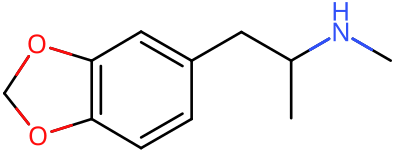
MDMA Stats & Data
[Cl-].CNC(C)Cc1ccc2OCOc2c1.[H+]LUWHVONVCYWRMZ-UHFFFAOYSA-NInteraction Warnings
The neurotoxic effects of MDMA may be increased when combined with other stimulants.
This combination may increase strain on the heart.
Pharmacology
DrugBankDescription
An N-substituted amphetamine analog. It is a widely abused drug classified as a hallucinogen and causes marked, long-lasting changes in brain serotonergic systems. It is commonly referred to as MDMA or ecstasy. It is a widely abused drug classified as a hallucinogen and causes marked, long-lasting changes in brain serotonergic systems.
Mechanism of Action
It enters neurons via carriage by the monoamine transporters. Once inside, MDMA inhibits the vesicular monoamine transporter, which results in increased concentrations of serotonin, norepinephrine, and dopamine into the cytoplasm, and induces their release by reversing their respective transporters through a process known as phosphorylation. It also acts as a weak 5-HT1 and 5-HT2 receptor agonist. MDMA's unusual entactogenic effects have been hypothesized to be, at least partly, the result of indirect oxytocin secretion via activation of the serotonin system. Oxytocin is a hormone released following events like hugging, orgasm, and childbirth, and is thought to facilitate bonding and the establishment of trust. Based on studies in rats, MDMA is believed to cause the release of oxytocin, at least in part, by both directly and indirectly agonizing the serotonin 5-HT1A receptor.
Pharmacodynamics
MDMA acts as a releasing agent of serotonin, norepinephrine, and dopamine.
Metabolism
Midomafetamine, or MDMA, is reported to undergo extensive CYP-mediated hepatic metabolism, with CYP2D6 playing a major role in humans. Other CYP enzymes contributing to MDMA metabolism are CYP3A4 and COMT. MDMA is metabolized via two primary metabolic pathways. It may undergo O-demethylenation followed by catechol-O-methyltransferase (COMT)-catalyzed methylation and/or glucuronide/sulfate conjugation. In contrast, it may also undergo N-dealkylation, deamination, and oxidation to the corresponding benzoic acid derivatives conjugated with glycine. Due to autoinhibition of CYP2D6 and CYP2D8, MDMA displays a complex, nonlinear pharmacokinetics profile, with the zeroth order kinetics occurring at higher doses. It is thought that this can result in sustained and higher concentrations of MDMA if the user takes consecutive doses of the drug.
Indication
Clinical trials are now testing the therapeutic potential of MDMA for post-traumatic stress disorder (PTSD) and anxiety associated with terminal cancer. MDMA is one of the four most widely used illicit drugs in the U.S.
Half-life
6–10 (though duration of effects is typically actually 3–5 hours)
Elimination
renal
Receptor Profile
Receptor Actions
Receptor Binding
History & Culture
1912–1959
MDMA was first synthesized in 1912 by German chemist Anton Köllisch while working at the pharmaceutical company Merck. Contrary to persistent myths about the compound being developed as an appetite suppressant or psychotherapy aid, it was actually created as an intermediate in the synthesis of methylhydrastinine, a potential hemostatic agent intended to control abnormal bleeding. Merck's interest in this project stemmed from a desire to circumvent an existing patent held by competitor Bayer for a similar compound called hydrastinine. The synthesis was described in German patent 274350, filed on December 24, 1912, though Merck showed no interest in MDMA as an active agent itself. The compound remained largely forgotten until 1927, when Merck chemist Max Oberlin conducted the first pharmacological tests while searching for substances with effects similar to adrenaline or ephedrine. Oberlin noted structural similarities to ephedrine and found that MDMA had comparable effects on blood glucose levels, similar actions on vascular smooth muscle, and stronger effects on uterine tissue. However, research was discontinued due to rising costs of the starting materials needed for synthesis. In 1952, Albert van Schoor performed simple toxicological tests at Merck, likely while investigating potential stimulants or circulatory medications. In 1959, Wolfgang Fruhstorfer synthesized MDMA for further pharmacological testing, though it remains unclear whether human effects were investigated. Outside of Merck, the United States Army commissioned toxicological studies between 1953 and 1954 at the University of Michigan, examining behavioral effects in animals injected with mescaline and several analogues including MDMA. This research remained classified until 1969 and was not published until 1973, and may have been conducted with the possibility of developing MDMA as a chemical incapacitant or interrogation aid.
1965–1978
Although MDMA may have been in non-medical use in the western United States as early as 1968, its psychoactive properties did not receive sustained attention until the work of American chemist Alexander Shulgin. According to Shulgin, he synthesized MDMA in 1965 while researching methylenedioxy compounds at Dow Chemical Company, though he did not investigate its psychoactive potential at that time. Around 1970, Shulgin provided synthesis instructions to a Los Angeles chemical company founder, who subsequently passed them to a contact in the Midwest. By August 1970, reports at meetings of crime laboratory chemists indicated MDMA was being used recreationally in the Chicago area. The drug likely emerged as a substitute for MDA, a structurally related compound that had become popular among psychedelic users and was subsequently placed in Schedule I in 1970. Shulgin first learned of MDMA's psychoactive effects around 1975 from a student who described its "amphetamine-like content." The following year, a graduate student he advised at San Francisco State University described positive emotional experiences after she and two friends had consumed 100 mg of the compound. Following self-experimentation by a colleague, Shulgin synthesized MDMA and tried it himself in September and October 1976. He first reported on the drug at a conference in Bethesda, Maryland in December 1976. In 1978, Shulgin and pharmacologist David E. Nichols published the first scientific report describing MDMA's psychoactive effects in humans, characterizing it as inducing "an easily controlled altered state of consciousness with emotional and sensual overtones" comparable "to marijuana, to psilocybin devoid of the hallucinatory component, or to low levels of MDA."
1977–1985
While Shulgin did not find his own experiences with MDMA particularly powerful, he was impressed by its capacity to reduce inhibitions and believed it could have therapeutic utility. He conceptualized the drug as allowing users to strip away habitual patterns and perceive the world more clearly, leading him to call it "window." Shulgin occasionally used MDMA for personal relaxation, referring to it as "my low-calorie martini," and introduced the compound to friends, researchers, and others he thought might benefit from it. In 1977, Shulgin introduced MDMA to Leo Zeff, a semi-retired psychotherapist who had previously used psychedelic substances in his practice. Zeff was profoundly impressed and came out of retirement to promote its therapeutic applications. Over the following years, he traveled throughout the United States and occasionally to Europe, eventually training an estimated four thousand psychotherapists in its use. Zeff named the drug "Adam," believing it allowed users to access a state of primordial innocence. Psychotherapists who employed MDMA reported that it eliminated typical fear responses and enhanced communication. Sessions were typically conducted in the patient's or therapist's home, with the therapist's role minimized in favor of patient self-discovery facilitated by MDMA-induced feelings of empathy and openness. The drug was reportedly used to treat depression, substance use disorders, relationship difficulties, premenstrual syndrome, and autism. Practitioners claimed it dramatically accelerated the therapeutic process. In the western United States, it was used in couples counseling and became known as "empathy" in some therapeutic circles. Therapists and experimenters attempted to limit the spread of information about the drug while conducting informal research, hoping to avoid the criminalization that had befallen LSD and mescaline.
1976–1985
While therapeutic interest developed among psychotherapists and experimenters, a parallel recreational market began to emerge. A small scene had developed by the late 1970s, consuming perhaps 10,000 doses in 1976. MDMA spread through personal networks of therapists, psychiatrists, psychedelic users, and affluent young professionals. Early distributors were deterred from large-scale operations by concern over possible legal restrictions. Between the 1970s and mid-1980s, this relatively contained network consumed an estimated 500,000 doses. Into the early 1980s, production was dominated by a small group of therapeutically-minded chemists based in Boston who had begun manufacturing in 1976. This "Boston Group" struggled to keep pace with growing demand, and shortages frequently occurred. MDMA began appearing in nightlife contexts, spreading to nightclubs in Boston and New York City such as Studio 54 and Paradise Garage. Perceiving a commercial opportunity, Michael Clegg, who served as the Southwest distributor for the Boston Group, established his own "Texas Group" with financial backing from Texas associates. In 1981, Clegg coined the term "Ecstasy" as a marketing-friendly street name. Beginning in 1983, the Texas Group mass-produced MDMA in a Texas laboratory or imported it from California, distributing tablets through pyramid sales structures and toll-free telephone numbers. The operation accepted credit card payments and paid taxes on sales. Marketed under the brand name "Sassyfras," MDMA tablets were sold in brown bottles. The Texas Group advertised "Ecstasy parties" at bars and discotheques, positioning MDMA as a "fun drug" that was "good to dance to." It was openly distributed throughout Austin and the Dallas-Fort Worth area, gaining popularity among young professionals, college students, and gay communities.
1984–1988
After a year of planning and data collection, the Drug Enforcement Administration proposed scheduling MDMA on July 27, 1984. The agency was surprised when numerous psychiatrists, psychotherapists, and researchers filed objections and requested hearings. A DEA pharmacologist later acknowledged the agency had been unaware of MDMA's use in psychiatric practice. Administrative hearings were convened in February, June, July, and October of 1985 in Washington D.C., Los Angeles, and Kansas City. The sensationalist media coverage surrounding the proposed criminalization effectively advertised the drug to a broader public. In response to impending prohibition, the Texas Group dramatically escalated production from an estimated 30,000 tablets monthly to as many as 8,000 per day, potentially manufacturing two million tablets before the ban took effect. By some accounts, the organization was distributing 500,000 tablets per month in Dallas alone. By May 1985, MDMA use had become widespread in California, Texas, southern Florida, and the northeastern United States, with evidence of distribution in twenty-eight states and Canada. Urged by Senator Lloyd Bentsen, the DEA announced an emergency Schedule I classification on May 31, 1985, citing increased distribution, escalating street use, and new evidence of neurotoxicity from the structurally related compound MDA. The ban took effect one month later on July 1, 1985, coinciding with Nancy Reagan's "Just Say No" campaign. Based on expert testimony that MDMA possessed accepted medical applications, the presiding administrative law judge recommended classification as Schedule III, which would have permitted continued medical use. However, DEA Administrator John C. Lawn overruled this recommendation. Harvard psychiatrist Lester Grinspoon subsequently sued the DEA, arguing the agency had improperly disregarded evidence of medical utility. A federal court agreed, characterizing Lawn's reasoning as "strained" and "unpersuasive," and vacated the Schedule I classification. Less than a month later, however, Lawn reimposed Schedule I status, dismissing testimony from psychiatrists describing over 200 beneficial therapeutic cases on the grounds that these had not been published in peer-reviewed journals. The classification effectively terminated clinical research and therapeutic use in the United States.
1986–present
Following prohibition, MDMA continued to spread through underground rave and dance music cultures, eventually becoming one of the most popular recreational drugs worldwide. By 2014, it was estimated to be among the most widely used recreational substances globally, alongside cocaine and cannabis. Efforts to restore medical access began almost immediately after scheduling. In 1986, Rick Doblin founded the Multidisciplinary Association for Psychedelic Studies (MAPS) to work within regulatory frameworks toward making MDMA and other psychedelic substances available for therapeutic applications. Building on earlier anecdotal reports from therapists, MAPS pursued rigorous clinical research on MDMA-assisted psychotherapy for post-traumatic stress disorder. In 2017, the U.S. Food and Drug Administration granted breakthrough therapy designation, recognizing the treatment's potential. The terminology surrounding MDMA continued to evolve after prohibition. While "Ecstasy" (often shortened to "E," "X," or "XTC") became the dominant street term for pressed pills and tablets, the term "Molly" (short for "molecule") emerged in the 2000s as slang for crystalline or powder MDMA purported to be of high purity. The British equivalent "Mandy" serves a similar function. However, both terms have evolved into generic terminology for various euphoric stimulants sold in powder or crystal form, regardless of actual MDMA content.
Subjective Effects
Physical
The physical effects of MDMA can be broken down into five components all of which progressively intensify proportional to dosage.
- Spontaneous tactile sensations: The body high of MDMA can be described as a moderate to extreme euphoric tingling sensation that encompasses the entire body. It is capable of becoming overwhelmingly pleasurable at higher dosages. This sensation maintains a consistent presence that steadily rises with the onset and hits its limit once the peak has been reached.
- Enhancement of touch
- Stimulation: In terms of its effects on the user's physical energy levels, MDMA is commonly considered to be extremely stimulating and energetic. This encourages activities such as running, climbing and dancing in a way that makes MDMA a popular choice for musical events such as festivals and raves. The particular style of stimulation which MDMA presents can be described as forced. This means that at higher dosages it becomes difficult or impossible to keep still, as jaw clenching and involuntary bodily shakes and vibrations become present, resulting in an extreme unsteadiness of the hands and a general lack of motor control.
- Vibrating vision: A person's eyeballs may begin to spontaneously wiggle back and forth in a rapid motion, causing vision to become blurry and temporarily out of focus; a condition known as nystagmus.
- Dehydration: Dry mouth and dehydration are a universal experience with MDMA and a product of increased heart rate and an extreme motivation to engage in strenuous physical activities. While it is important to avoid becoming dehydrated, especially when out dancing in a hot environment, there have been a number of users suffering from water intoxication through over drinking so it is advised that users simply sip at water and never over drink.
- Difficulty urinating: Higher doses of MDMA result in an overall difficulty when it comes to urination, an effect that is completely temporary and harmless, due to MDMA's promotion of the release of anti-diuretic hormone (ADH). This effect can be lessened by simply relaxing but can be significantly relieved by placing a hot flannel over the genitals to warm them up and encourage blood flow.
Cognitive
The general head space of MDMA is described by many as one of extreme mental stimulation, feelings of love or empathy and powerful euphoria. It contains a large number of typical psychedelic, entactogenic and stimulant cognitive effects.
- Euphoria: Strong emotional euphoria and feelings of happiness are present within MDMA and likely a direct result of serotonin and dopamine release.
- Acceleration of thought
- Increased empathy, love and sociability: This particular effect is the most pronounced, powerful and therapeutic with MDMA than any other known substance. It is the most obvious and noticeable effect within any MDMA experience and dominates the head space. With time and repeated use however, this effect becomes severely diminished as the perspective it instils becomes fully grounded and already in place, making people feel merely stimulated and euphoric with no new found urges to communicate with others. Some users report that MDMA 'loses its magic' with as few as 10 experiences, while others have reported hundreds of uses before the empathic qualities disappear.
- Mindfulness
- Time distortion: Strong feelings of time compression are common within MDMA and speed up the experience of time quite noticeably.
- States of unity and interconnectedness: Experiences of unity, oneness and interconnectedness between level 2-3 are common within MDMA. This component most consistently manifests itself at high dosages within large crowds at raves and musical events in the form of 'becoming one with the crowd'.
Sensory
- Enhancements
- Hallucinations: Usually occurring at the end of the night, and almost always consisting of memory replays from the previous several hours. They are commonly manifested as spontaneous clips of the music that was played and garbled voices of the people that were spoken to. These can become as loud in volume as the level of noise heard at any rave or house party and can occasionally become complex enough to manifest themselves as intricate, previously unheard and completely coherent songs or symphonies of any style.
- Tracers: This effect is rarely manifested beyond level 1-3.
MDMA presents an array of visual enhancements which are mild in comparison to traditional psychedelics but still distinctively present.
- Enhancement of colours
- Enhanced pattern recognition
MDMA is capable of producing a unique range of low and high level hallucinatory states in a fashion that is significantly less consistent and reproducible than that of many other commonly used psychedelics.
- Internal hallucinations: The internal hallucinations which MDMA induces are only present as spontaneous breakthroughs at extremely high dosages. The most common way in which they manifest themselves are through hypnagogic scenarios which the user may experience as they are drifting off to sleep after a night of use, these can usually be described as memory replay from the previous several hours. These are short and fleeting but frequent and completely believable and convincing as they happen. In terms of the theme they often take the form of conversations with the people who were with you or instead manifest themselves as bizarre and extremely nonsensical plots.
- External hallucinations: These are similar to the effects found within deliriants but usually follow themes of memory replays and semi-realistic expected events. For example people could be casually holding objects or performing actions which you would expect them to in real life before disappearing and dissolving under further inspection. Common examples of this include seeing people wearing glasses when they are not and mistaking objects in the peripheral vision as human beings. At higher dosages however they are capable of becoming constant in their presence and almost entirely delirious in their nature.
Forked from Subjective Effect Documentation by Josie Kins, November 2012. Via dose.wiki (CC0).
Toxicity
PsychonautWikiThe short-term physical health risks of MDMA consumption include dehydration, bruxism, insomnia, hyperthermia, and hyponatremia. MDMA generally does not cause any serious or life threatening effects by itself unless it is associated with other extraneous factors such as exposure to prolonged high ambient temperature and humidity, prolonged physical activities, poor intake of water and lack of acclimatization. Continuous activity without sufficient rest or rehydration may cause the user's body temperature to rise to dangerous levels, and loss of fluid via excessive sweating puts the body at further risk as the stimulating and euphoric qualities of MDMA may cause the user to become oblivious to their physical condition. Diuretics such as alcohol may exacerbate these risks further due to causing excessive amounts of dehydration.
Addiction & dependence
As with other stimulants, the chronic use of MDMA can be considered moderately addictive with a high potential for abuse and is capable of causing psychological dependence among certain users. When addiction has developed, cravings and withdrawal effects may occur if one suddenly stops their usage. Tolerance to many of the effects of MDMA develops with prolonged and repeated use.
Organ-specific toxicity
The neurotoxicity of MDMA use is the subject of considerable debate. Scientific study has resulted in the general agreement that, although it is physically safe to try in a responsible context, the administration of repeated or high dosages of MDMA is most certainly neurotoxic in some form. Administration of MDMA causes subsequent down-regulation of serotonin reuptake transporters in the brain.
Effect Profile
Curated + 1,861 ReportsMild auditory effects and headspace with mild body load, low visuals
User Experiences
Strong empathy, euphoria, and sensory enhancement with moderate stimulation
User Experiences
Moderate euphoria and stimulation with mild anxiety/jitters, low focus
User Experiences
Duration Timeline
BluelightEmpirical Duration
Erowid ReportsMedian times after the dose that Erowid reports state. A curve is drawn only when reports state all four points (onset, peak begins, comedown begins, back to baseline) and the medians fall in that order. No point is estimated from another. Where the times behind a median have been read and judged misread by the extractor, it is withheld, with the reason.
No curve: the return to baseline read from 12 reports is withheld, because its median comes before the start of the comedown, and a model read of its five shortest times, not yet reviewed by a person, judged each one misread by the time extractor (a visual effect fading, a time counted from another event), so it would understate how long MDMA lasts.
Community Effects
TripSitTolerance & Pharmacokinetics
drugs.wikiNo tolerance chart. Tolerance to MDMA has only been measured over hours to a day, so this page shows what is known instead of a curve.
Within a session, a redose raises blood levels without a matching rise in effect, while blood pressure keeps climbing. A dose the next day gives about 77% more total exposure to MDMA (peak levels about 29% higher) for effects only slightly stronger than the first, because MDMA blocks the liver enzyme that clears it, which takes about 10 days to recover. How long the tolerance from one dose lasts has never been measured. In one unreplicated account in PiHKAL, the complete tolerance left by a week of daily doses was gone after 6 drug-free days, and users report weaker effects for up to 2-3 weeks. The common advice to wait 1-3 months, or to take it no more than four times a year, is a rule of thumb (from Ann Shulgin, to keep the effects, and from caution about toxicity), not a measured tolerance time.
Sources: Peiró et al. 2013 · Farré et al. 2015 · Farré et al. 2004 · O'Mathúna et al. 2008 · Yubero-Lahoz et al. 2011 · Shulgin, PiHKAL #109 · Erowid: MDMA basics · Ann Shulgin interview, 2001 · Saunders, E for Ecstasy (1993), ch. 9
Cross-Tolerances
Demographics
Gender Distribution
Age Distribution
Reports Over Time
Effect Analysis
Erowid + BluelightEffects aggregated from 1,277 experience reports (1,227 single-substance Erowid + 634 Bluelight)
Effect Sentiment Distribution
Confidence Distribution
Each bar is the share of reports mentioning the effect; its whisker, and the band on the rows below, is the 95% interval: where the share could plausibly be with other reports of the same kind.
Positive Effects 59
Adverse Effects 31
Show 9 more adverse effects
Show 24 neutral or unclassified mentions
Also reported in combinations. In the 985 MDMA reports where another drug was taken too, 93 (9.4%) mention hospital, emergency services or an overdose, 28 (2.8%) a seizure and 30 (3.0%) psychosis. In the 1,227 single-substance reports: 6.8%, 1.9% and 1.8%. One or more of the three comes up more often in the combination reports (12.6% against 9.0%), by more than chance would explain; that does not show the combination caused it. These are not in the figures above: they cannot be put down to MDMA alone, and a mention is not always something that happened to the writer.
Dose-Response Correlation
How effect frequency changes across dose levels. Whiskers, and the numbers' hover text, give each figure's 95% interval.
View data table
| Effect | Common (n=28) | Strong (n=22) | Heavy (n=28) |
|---|---|---|---|
| Empathy | 78.6% (95% interval 60 to 90 percent) | 77.3% (95% interval 57 to 90 percent) | 50.0% (95% interval 33 to 67 percent) |
| Music Enhancement | 75.0% (95% interval 57 to 87 percent) | 68.2% (95% interval 47 to 84 percent) | 42.9% (95% interval 26 to 61 percent) |
| Euphoria | 67.9% (95% interval 49 to 82 percent) | 45.5% (95% interval 27 to 65 percent) | 53.6% (95% interval 36 to 70 percent) |
| Anxiety | 46.4% (95% interval 30 to 64 percent) | 40.9% (95% interval 23 to 61 percent) | 35.7% (95% interval 21 to 54 percent) |
| Confusion | 17.9% (95% interval 8 to 36 percent) | 40.9% (95% interval 23 to 61 percent) | 28.6% (95% interval 15 to 47 percent) |
| Visual Distortions | 39.3% (95% interval 24 to 58 percent) | 27.3% (95% interval 13 to 48 percent) | 21.4% (95% interval 10 to 40 percent) |
| Stimulation | 32.1% (95% interval 18 to 51 percent) | 36.4% (95% interval 20 to 57 percent) | 39.3% (95% interval 24 to 58 percent) |
| Sedation | 32.1% (95% interval 18 to 51 percent) | 36.4% (95% interval 20 to 57 percent) | 21.4% (95% interval 10 to 40 percent) |
| Pupil Dilation | 14.3% (95% interval 6 to 32 percent) | 31.8% (95% interval 16 to 53 percent) | 17.9% (95% interval 8 to 36 percent) |
| Color Enhancement | 28.6% (95% interval 15 to 47 percent) | 27.3% (95% interval 13 to 48 percent) | 17.9% (95% interval 8 to 36 percent) |
| Nausea | 28.6% (95% interval 15 to 47 percent) | 9.1% (95% interval 2 to 28 percent) | 14.3% (95% interval 6 to 32 percent) |
| Jaw Clenching | 14.3% (95% interval 6 to 32 percent) | 18.2% (95% interval 7 to 38 percent) | 25.0% (95% interval 13 to 43 percent) |
| Tactile Enhancement | 21.4% (95% interval 10 to 40 percent) | 22.7% (95% interval 10 to 43 percent) | 17.9% (95% interval 8 to 36 percent) |
| Body High | 21.4% (95% interval 10 to 40 percent) | 9.1% (95% interval 2 to 28 percent) | 10.7% (95% interval 4 to 27 percent) |
| Auditory Effects | 14.3% (95% interval 6 to 32 percent) | 18.2% (95% interval 7 to 38 percent) | 17.9% (95% interval 8 to 36 percent) |
Subjective Effect Ontology
Experience ReportsStructured effect tags extracted from 2,262 Erowid & Bluelight experience reports using a controlled vocabulary of 220+ canonical effects across 15 domains.
Auditory
Cognitive
Emotional
Gastrointestinal
Motor
Selfhood
Somatic
Tactile
Temporal
Visual
Dose–Effect Mapping
Experience ReportsHow reported effects shift across dose tiers, based on 1227 single-substance experience reports. The shaded band on each bar is its 95% interval. An arrow (↑ ↓) marks a change between the lowest and highest tier that count an effect only when the gap is bigger than chance would explain; ~ means no clear change. How changes are called
| Effect | Common (n=28) | Strong (n=22) | Heavy (n=28) | Change with dose |
|---|---|---|---|---|
| empathy | (−29 points from Common to Heavy, 95% interval −49 to −4) | |||
| music enhancement | (−32 points from Common to Heavy, 95% interval −53 to −6) | |||
| euphoria | (no clear change: −14 points from Common to Heavy, 95% interval −37 to +11) | |||
| anxiety | (no clear change: −11 points from Common to Heavy, 95% interval −34 to +14) | |||
| confusion | (no clear change: +11 points from Common to Heavy, 95% interval −12 to +32) | |||
| visual distortions | (no clear change: −18 points from Common to Heavy, 95% interval −39 to +6) | |||
| stimulation | (no clear change: +7 points from Common to Heavy, 95% interval −17 to +30) | |||
| sedation | (no clear change: −11 points from Common to Heavy, 95% interval −32 to +12) | |||
| pupil dilation | (no clear change: +4 points from Common to Heavy, 95% interval −16 to +23) | |||
| color enhancement | (no clear change: −11 points from Common to Heavy, 95% interval −32 to +12) | |||
| nausea | (no clear change: −14 points from Common to Heavy, 95% interval −35 to +8) | |||
| jaw clenching | (no clear change: +11 points from Common to Heavy, 95% interval −10 to +31) | |||
| tactile enhancement | (no clear change: −4 points from Common to Heavy, 95% interval −24 to +17) | |||
| body high | (no clear change: −11 points from Common to Heavy, 95% interval −30 to +9) | |||
| auditory effects | (no clear change: +4 points from Common to Heavy, 95% interval −16 to +23) | |||
| introspection | (no clear change: 0 points from Common to Heavy, 95% interval −18 to +18) | |||
| muscle tension | (no clear change: +4 points from Common to Heavy, 95% interval −15 to +22) | |||
| headache | — | (no clear change: +5 points from Strong to Heavy, 95% interval −15 to +24) | ||
| open-eye visuals | — | — | counted in the Heavy tier only | |
| focus enhancement | — | (no clear change: +6 points from Common to Strong, 95% interval −11 to +27) |
Showing top 20 of 29 effects
Risk Escalation
Sentiment AnalysisAverage frequency of positive vs adverse effects across dose tiers. A tier's average is the mean share of the effects counted in that tier, not a share of reports, and its range is a deliberately wide 95% interval. A tier with more reports also counts rarer effects, which pulls its average down, so compare single effects in the breakdown rather than these averages. There, the shaded band on each bar is its 95% interval, and Change is marked up or down only when the gap between two tiers is bigger than chance would explain. How changes are called
View effect breakdown
Adverse Effects
| Effect | Common (n=28) | Strong (n=22) | Heavy (n=28) | Change |
|---|---|---|---|---|
| Anxiety | no clear change (no clear change: −11 points from Common to Heavy, 95% interval −34 to +14) | |||
| Confusion | no clear change (no clear change: +11 points from Common to Heavy, 95% interval −12 to +32) | |||
| Pupil Dilation | no clear change (no clear change: +4 points from Common to Heavy, 95% interval −16 to +23) | |||
| Nausea | no clear change (no clear change: −14 points from Common to Heavy, 95% interval −35 to +8) | |||
| Jaw Clenching | no clear change (no clear change: +11 points from Common to Heavy, 95% interval −10 to +31) | |||
| Muscle Tension | no clear change (no clear change: +4 points from Common to Heavy, 95% interval −15 to +22) | |||
| Headache | — | no clear change (no clear change: +5 points from Strong to Heavy, 95% interval −15 to +24) | ||
| Sweating | — | no clear change (no clear change: +4 points from Common to Heavy, 95% interval −13 to +21) | ||
| Motor Impairment | — | no clear change (no clear change: +4 points from Common to Heavy, 95% interval −13 to +21) | ||
| Increased Heart Rate | — | — | — |
Positive Effects
| Effect | Common (n=28) | Strong (n=22) | Heavy (n=28) | Change |
|---|---|---|---|---|
| Empathy | −29 pts (−29 points from Common to Heavy, 95% interval −49 to −4) | |||
| Music Enhancement | −32 pts (−32 points from Common to Heavy, 95% interval −53 to −6) | |||
| Euphoria | no clear change (no clear change: −14 points from Common to Heavy, 95% interval −37 to +11) | |||
| Visual Distortions | no clear change (no clear change: −18 points from Common to Heavy, 95% interval −39 to +6) | |||
| Stimulation | no clear change (no clear change: +7 points from Common to Heavy, 95% interval −17 to +30) | |||
| Color Enhancement | no clear change (no clear change: −11 points from Common to Heavy, 95% interval −32 to +12) | |||
| Tactile Enhancement | no clear change (no clear change: −4 points from Common to Heavy, 95% interval −24 to +17) | |||
| Body High | no clear change (no clear change: −11 points from Common to Heavy, 95% interval −30 to +9) | |||
| Introspection | no clear change (no clear change: 0 points from Common to Heavy, 95% interval −18 to +18) | |||
| Open-Eye Visuals | — | — | — | |
| Focus Enhancement | — | no clear change (no clear change: +6 points from Common to Strong, 95% interval −11 to +27) | ||
| Closed-Eye Visuals | no clear change (no clear change: +4 points from Common to Heavy, 95% interval −13 to +21) | |||
| Pain Relief | — | no clear change (no clear change: +2 points from Common to Strong, 95% interval −15 to +21) |
Dosage Distribution
Dose distribution from experience reports, one dose per report (the first listed). Doses above Q3 + 3×IQR, far above what people typically take, are left out of the median and range and listed under each route: most are real heavy doses or overdoses, not mistakes.
Oral
12 reports gave a dose above the typical range (330–1,500 mg), so they are not in the figures above. 2 of them mention hospital, emergency services or an overdose. Listing a dose here does not mean it is safe.
Show the reports
- 1,500 mg · another drug taken too · mentions hospital, emergency services or an overdose
- 1,400 mg
- 1,009 mg · another drug taken too
- 1,000 mg
- 500 mg
- 400 mg · another drug taken too
- 400 mg · another drug taken too
- 400 mg
- 400 mg · another drug taken too
- 350 mg · another drug taken too · mentions hospital, emergency services or an overdose
- 333 mg · another drug taken too
- 330 mg · another drug taken too
Real-World Dose Distribution
ErowidFrom 803 of 3095 recorded dose entries: those that state a weight (mg, g or µg), in routes with at least five of them. Values above Q3 + 3×IQR, far above what people typically take, are left out; they can include real heavy doses and overdoses, not only mistakes.
Oral (n=653)
Insufflated (n=97)
Smoked (n=10)
Intravenous (n=10)
Rectal (n=11)
Common Combinations
Most co-occurring substances, as a share of all 2,212 reports filed under MDMA; whiskers are 95% intervals
Form / Preparation
Most common forms and preparations, as a share of the 1,305 reports that give one; whiskers are 95% intervals
Body-Weight Dosing
Dose per kg of body weight, one dose per report (the first listed), from reports giving a weight of 30–250 kg. Doses above Q3 + 3×IQR, far above what people typically take, are left out of the median and range and listed under each route.
Oral
7 reports gave a dose above the typical range (5.731–15.03 mg/kg), so they are not in the figures above. 1 of them mentions hospital, emergency services or an overdose. Listing a dose here does not mean it is safe.
Show the reports
- 15.03 mg/kg · another drug taken too · mentions hospital, emergency services or an overdose
- 14.706 mg/kg
- 13.003 mg/kg · another drug taken too
- 12.97 mg/kg
- 7.055 mg/kg
- 7.018 mg/kg · another drug taken too
- 5.731 mg/kg · another drug taken too
Insufflated
2 reports gave a dose above the typical range (6.061–7.143 mg/kg), so they are not in the figures above. Listing a dose here does not mean it is safe.
Show the reports
Rectal
Unknown
Redose Patterns
Redosing behavior across 1490 reports
Legal Status
| Country | Status | Notes |
|---|---|---|
| Australia | Schedule 8 (Controlled Drug) | Reclassified to Schedule 8 as of July 1, 2023, allowing for limited authorized medical use. Personal quantities under 1.5 grams or 5 single doses have been decriminalized in the Australian Capital Territory since October 28, 2023. |
| Austria | Illegal | Prohibited under the Suchtmittelgesetz (SMG). Possession, production, and sale are criminal offenses. |
| Belgium | Illegal | Possession, production, and sale are prohibited under national drug legislation. |
| Brazil | Controlled substance | Listed under Portaria SVS/MS nº 344. Production, distribution, and possession are illegal. |
| Canada | Schedule I (CDSA) | Controlled under the Controlled Drugs and Substances Act. Prior to the March 2012 Safe Streets and Communities Act, MDMA and amphetamines were classified under the less restrictive Schedule III. |
| Czech Republic | Schedule I | Classified as a Schedule I controlled substance under national legislation. |
| Denmark | Illegal | Possession, production, and sale are prohibited under Danish drug control legislation. |
| Egypt | Schedule 3 | Requires a prescription or license for legal possession. Unauthorized possession, production, and distribution are prohibited. |
| Finland | Controlled substance (hard drug) | Listed in Finland's controlled substances registry in the hard-drug category. Possession, production, and sale without authorization are illegal. |
| France | Stupéfiant | Classified as a narcotic substance under French law. Possession, purchase, sale, and manufacture are prohibited. |
| Germany | Anlage I BtMG | Controlled under Anlage I of the Betäubungsmittelgesetz (Narcotics Act) since August 1, 1986. Manufacturing, possessing, importing, exporting, buying, selling, procuring, or dispensing without a license is illegal. |
| Italy | Tabella I | Listed in Tabella I of the controlled substances tables (Tabelle delle sostanze stupefacenti e psicotrope). Possession, purchase, and sale are prohibited. |
| Latvia | Schedule I | Classified as a Schedule I controlled substance. Possession, production, and distribution are illegal. |
| Luxembourg | Prohibited | Classified as a prohibited substance under national drug legislation. |
| Netherlands | List I (Opiumwet) | Classified as a hard drug under the Opium Act. Sale, manufacture, and possession of large amounts are illegal. While possession of small quantities for personal use is technically still illegal, it is generally not prosecuted. |
| New Zealand | Class B1 | Reclassified from the less restrictive Class B2 to Class B1 on August 2, 2005. Possession, manufacture, and supply carry significant criminal penalties. |
| Norway | Schedule I | Classified under the most restrictive category in Norwegian drug legislation. Buying or possessing without a license is illegal. |
| Peru | Decriminalized (personal use) | Under Article 2999 of the Peruvian penal code, personal possession of up to 250 milligrams of MDMA is not considered a criminal offense. Production and sale remain illegal. |
| Portugal | Decriminalized (personal use) | Since July 2001 under Law 30/2000, personal possession of less than 1 gram is not a criminal offense. The substance may be confiscated and the individual referred to a dissuasion commission. Production, sale, and trafficking remain criminal offenses. |
| Russia | Schedule I (prohibited) | Classified as a Schedule I prohibited substance. Possession, production, and distribution are criminal offenses. |
| Sweden | Illegal | Possession, production, and sale are prohibited under Swedish drug control legislation. |
| Switzerland | Controlled (Verzeichnis D) | Specifically listed as a controlled substance under Verzeichnis D of Swiss narcotics legislation. |
| United Kingdom | Class A | Controlled under the Misuse of Drugs Act 1971, which was amended in 1977 to include ring-substituted amphetamines and further amended in 1985 to specifically reference MDMA. Class A carries the most severe penalties for possession, supply, and production. |
| United States | Schedule I | Classified as Schedule I under the Controlled Substances Act since July 1, 1985, initially on an emergency basis. Manufacturing, buying, possessing, or distributing without a DEA license is illegal. Despite an administrative law judge recommending Schedule III placement to allow medical use, the DEA director overruled and maintained Schedule I status. |
Harm Reduction
drugs.wikiAlways verify identity and purity: use a multi‑step reagent sequence (e.g., Marquis→Mecke→Simon’s) and, where available, take advantage of FT‑IR/GC‑MS drug‑checking services; cathinones and PMA/PMMA have been repeatedly found in the market and can be lethal at typical MDMA doses. Start with a single, conservative dose and avoid redosing; MDMA displays non‑linear pharmacokinetics (CYP2D6 auto‑inhibition), so redoses can produce disproportionate plasma increases and toxicity. Maintain a moderate ambient temperature and take regular cool‑down breaks, especially when dancing; MDMA impairs thermoregulation and increases heat production, raising hyperthermia risk in hot, crowded venues. Hydration: sip isotonic fluids rather than plain water; typical harm‑reduction guidance is ≤500 mL/h when active and ~250 mL/h when resting to reduce hyponatremia risk. Hyponatremia risk is increased by excessive hypotonic fluid intake, MDMA‑induced vasopressin release, and is reported more often in females and in those on SSRIs/SNRIs. Avoid combining with serotonergic agents (MAOIs, SSRIs/SNRIs, tramadol, DXM, linezolid) due to serotonin toxicity risk; seek urgent care for agitation, clonus, hyperthermia, heavy sweating, or confusion. Certain medicines (fluoxetine/paroxetine/quinidine; ritonavir/cobicistat) can markedly elevate MDMA blood levels via CYP inhibition—use is strongly discouraged. People with cardiovascular disease, hypertension, epilepsy, or bipolar disorder are at higher risk of adverse events; sleep deprivation and dehydration further increase risk. Do not take 5‑HTP or other serotonergic supplements within 24 h before/after MDMA due to possible serotonin excess; magnesium may reduce bruxism in some users but evidence is limited. Post‑use mood dips and sleep disruption are common for 1–3 days; plan for rest, nutrition, and gentle rehydration; frequent use (e.g., <4–6 weeks between sessions) is associated with more pronounced after‑effects. Pill/tablet strengths vary widely (including 200–300 mg units); weigh powders and do not assume pill logos indicate content.
References
Data Sources
Cited References
- Bluelight: MDMA Threshold Dose Discussion (2019)
- EMCDDA: MDMA Drug Profile
- Erowid: MDMA Basics
- Erowid: MDMA Dosage
- Erowid: MDMA FAQ
- Erowid: MDMA Neurotoxicity Article (Baggott)
- Kalant 2001 - Pharmacology & Toxicology of Ecstasy
- MAPS MDMA-Assisted Therapy Phase 3 Trial (2021)
- MDMA and Bipolar Disorder Interaction
- MDMA Clinically Relevant Drug Interactions with MAOIs
- Non-linear Pharmacokinetics of MDMA (de la Torre 2000)
- Parrott 2013 - MDMA Neurotoxicity Review
- RollSafe MDMA Wiki
- Serotonin Syndrome Case Series (FAERS 2022)
- Serotonin Syndrome Overview
- TripSit: Drug Combinations Chart
- Reddit: r/researchchemicals MDMA Dosing Discussions
Additional references
- Erowid MDMA Dosage
- Kalant H. Pharmacology and toxicology of MDMA (Ecstasy). 2001.
- de la Torre R. Non-linear pharmacokinetics of MDMA in humans. 2000.
- DrugBank: MDMA (DB01454)
- Parrott AC. Human psychobiology of MDMA/ecstasy: a review. 2013.
- Erowid MDMA Neurotoxicity (Baggott)
- TripSit: Combinations Chart and MDMA facts
- Clinically relevant drug interactions with MAOIs (review) 2022.
- PubChem Compound Summary: MDMA (CID 1615)
- Drug checking: international results database (aggregates of FT‑IR/GC‑MS)
- Saferparty (Zurich) harm-reduction facts and pill warnings