
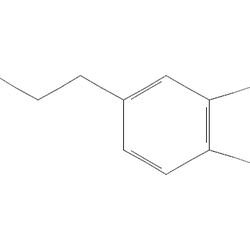
MDMPEA Stats & Data
CNCCc1ccc2OCOc2c1OPJOMVMFYOUDPK-UHFFFAOYSA-NEffect Profile
CuratedStrong euphoria with moderate stimulation and sensory enhancement, low empathy
Strong euphoria with strong anxiety/jitters, mild stimulation, low focus
Tolerance & Pharmacokinetics
drugs.wikiTolerance Decay
Acute tachyphylaxis and post‑use depletion are plausible with repeated dosing in one session; multi‑day spacing is prudent. Data quality is low/anecdotal.
Cross-Tolerances
Harm Reduction
drugs.wiki• Metabolism rationale: Primary and secondary phenethylamines (like PEA) are preferentially degraded by MAO‑B; without MAOI, central effects are brief or absent. This implies any activity from MDMPEA is likely short and dose‑inefficient, with MAOIs dramatically and unpredictably increasing potency and duration. Evidence for MDMPEA in humans is lacking; harm reduction should assume high uncertainty.
• MAOI risk: Combining phenethylamines with MAOIs can precipitate hypertensive crises, hyperthermia, agitation, and serotonin toxicity; irreversible MAOI effects can persist for weeks after stopping. Therefore, avoid MDMPEA for at least 14 days after irreversible MAOIs and several days after reversible MAOIs/RIMAs.
• Redosing hazard: Short-acting stimulants foster repeated dosing within hours, increasing cardiovascular strain and worsening post‑use mood/crash; multiple community reports of PEA+MAOI show rapid cycles and harsh comedowns. Plan a hard stop time and avoid chasing diminishing returns.
• Route risks: Nasal administration of phenethylamines tends to be more irritating, with sharper onsets, more side effects, and greater risk of dosing errors; long‑standing HR advice favors oral over nasal for phenethylamines. Unknowns magnify these risks for MDMPEA.
• Purity & identification: As an analytical standard/obscure compound, retail samples may be misidentified or adulterated. Use accredited drug checking services when possible; reagent kits cannot confirm identity or dose.
• Health screening: Avoid entirely with cardiovascular disease, uncontrolled hypertension, hyperthyroidism, seizure history, or use of serotonergic or adrenergic medications. Monitor temperature, exertion, and hydration as with other stimulants.
• Legal uncertainty: Legal status is unclear and jurisdiction‑specific. Treat as a research chemical that may fall under analogue/catch‑all controls; do not assume legality.
• Practical HR: If ignoring the absence of data, use milligram‑accurate scales, perform allergy tests, space attempts by weeks, and never combine with MAOIs. Have a trusted sober sitter for first trials and avoid mixing with other stimulants or serotonergics.
References
Cited references
- PubChem – Homarylamine (freebase) CID 10776
- PubChem – Homarylamine hydrochloride CID 23616994
- NCBI Gene – MAOB: preferentially degrades phenethylamine
- StatPearls – Monoamine Oxidase Inhibitor Toxicity (MAOI risks persist after stopping)
- TripSit – Drug combinations (MAOIs with phenethylamines/amphetamines: dangerous; caffeine/2C‑x caution; tramadol unsafe)
- TripSit – Antidepressants (MAOI cautions; examples incl. selegiline)
- TripSit – Overdose (Serotonin syndrome overview)
- Bluelight – N‑Methylphenethylamine discussion (rapid MAO breakdown; weak without MAOI)
- Bluelight – MPEA + selegiline thread (warnings about MAOI combinations)
- Bluelight – Phenethylamine + Deprenyl experiences (potent but short; harsh crash; redosing)
- Erowid – 2C‑I Basics (explicit MAOI contraindication example)
- Erowid – 2C‑T‑7 article conclusion (insufflation risk in phenethylamines)
- Erowid – Cocaine Basics (nasal damage from repeated insufflation; general stimulant HR)
- Saferparty (Zurich) – Drug Checking service overview
- Toronto Drug Checking Service – Tips to reduce harm (use of checking services)
- EUDA – Amphetamine drug profile (stimulant risks that generalize to short‑acting agents)