
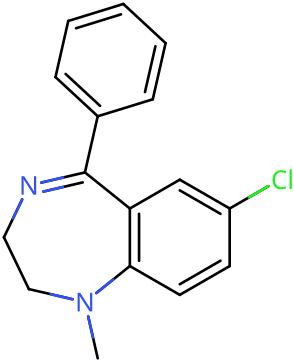
Medazepam Stats & Data
Clc1ccc2N(C)CCN=C(c3ccccc3)c2c1YLCXGBZIZBEVPZ-UHFFFAOYSA-NReceptor Profile
Receptor Actions
Toxicity
PubChemBenzodiazepines bind nonspecifically to benzodiazepine receptors BNZ1, which mediates sleep, and BNZ2, which affects affects muscle relaxation, anticonvulsant activity, motor coordination, and memory. As benzodiazepine receptors are thought to be coupled to gamma-aminobutyric acid-A (GABAA) receptors, this enhances the effects of GABA by increasing GABA affinity for the GABA receptor.
Carcinogenicity
No indication of carcinogenicity to humans (not listed by IARC).
Effect Profile
CuratedStrong anxiolysis and euphoria with strong cognitive impairment, mild sedation
Tolerance & Pharmacokinetics
drugs.wikiNo tolerance chart. Our decay curves for these drugs were estimates, and a curve can make tolerance look longer-lasting than it is, which is the dangerous direction.
How fast tolerance to these drugs fades after a break has not been measured well enough to draw, so don't count on a dose you used to take still being safe: after time off, start with a much smaller amount and don't use alone. Mixing sedatives with each other, with alcohol or with opioids sharply raises the risk of a fatal overdose. If you've been using regularly, don't stop suddenly: withdrawal from benzodiazepines, alcohol or GHB/GBL can cause seizures or delirium, so get medical help to cut down gradually.
Sources: FRANK: benzodiazepines · Alcohol and Drug Foundation: GHB · FDA 2020: benzodiazepine boxed warning · FDA 2019: gabapentinoids and breathing · NHS: alcohol use disorder
Cross-Tolerances
Harm Reduction
drugs.wikiMedazepam is long-acting largely because its clinical effects are dominated by active metabolites with very long half-lives, notably nordazepam; with repeated dosing, accumulation increases next-day sedation, psychomotor impairment, and fall risk, especially in older adults and those with hepatic impairment. Abrupt cessation after sustained use can precipitate severe withdrawal (anxiety, insomnia, tremor) and, at high dependence levels, seizures; gradual, individualized tapering is strongly advised under medical supervision. Concomitant use with opioids or alcohol markedly increases the risk of respiratory depression and fatal overdose; if opioids are involved in a setting, having naloxone available can reverse opioid toxicity but will not reverse benzodiazepine effects. Genetic and drug–drug variability in CYP2C19 and CYP3A4 metabolism (the same pathways relevant for diazepam) can prolong effects or increase sedation in poor metabolizers or when strong inhibitors are co‑administered. Avoid driving or operating machinery the day after moderate–high doses or repeated dosing due to prolonged psychomotor and memory impairment. During pregnancy and breastfeeding, benzodiazepine exposure (including via diazepam/nordazepam from medazepam) can cause neonatal sedation and feeding difficulties; alternative strategies or close monitoring are recommended if use occurs. In unregulated markets, counterfeit benzodiazepine tablets and opioid supplies contaminated with benzodiazepines (‘benzo‑dope’) are common; use trusted sources or drug checking where available, start with test doses, and never mix with other depressants.
References
Data Sources
Cited References
- Ashton, H. (2007). Benzodiazepine Equivalency Table
- DrugBank: Medazepam
- Drugs-Forum: GABAergics FAQ
- INCHEM: Medazepam (PIM 460)
- Jochemsen, R., Breimer, D. D. (1984). Pharmacokinetics of benzodiazepines
- NCATS Inxight Drugs: Medazepam
- PsychonautWiki: Benzodiazepines
- PsychonautWiki: List of Prodrugs
- TripSit: Drug Combinations
- TripSit: Risks of Combining Depressants
- Tripsitter: Medazepam (Nobrium) Fact Sheet
- Zakusov, V. V., et al. (1977). GABA-ergic mechanisms in benzodiazepines
- TripSit: Medazepam
Additional references
- DrugBank: Medazepam (DB13437)
- TripSit Wiki: Benzodiazepines overview (includes medazepam half-life and equivalence)
- Ashton Manual, Chapter 1: Table of benzodiazepines (medazepam ≈ diazepam; very long metabolite half-life)
- StatPearls: Benzodiazepines (class risks; metabolism via CYP3A4/CYP2C19; increased half-life in elderly)
- StatPearls: Diazepam (active metabolites; accumulation; half-lives)
- DrugBank: Diazepam (CYP2C19 polymorphism markedly extends diazepam and desmethyldiazepam half-lives)
- LactMed: Diazepam (breastfeeding caution; metabolite transfer)
- EUDA/EMCDDA: Perspectives on benzodiazepine misuse; scheduling list includes medazepam
- TripSit: Drug combinations (benzos + tramadol dangerous; general depressant combination cautions)
- Toronto Drug Checking Service: Benzo‑dope overview and recent trends
- Saferparty.ch warnings (mixing depressants; counterfeit tablet risk; advice to drug check)