
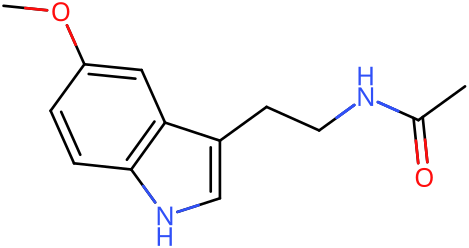
Melatonin Stats & Data
COc1ccc2ncc(CCNC(C)=O)c2c1DRLFMBDRBRZALE-UHFFFAOYSA-NPharmacology
DrugBankDescription
Melatonin is a biogenic amine that is found in animals, plants and microbes. Aaron B. Lerner of Yale University is credited for naming the hormone and for defining its chemical structure in 1958. In mammals, melatonin is produced by the pineal gland. The pineal gland is small endocrine gland, about the size of a rice grain and shaped like a pine cone (hence the name), that is located in the center of the brain (rostro-dorsal to the superior colliculus) but outside the blood-brain barrier. The secretion of melatonin increases in darkness and decreases during exposure to light, thereby regulating the circadian rhythms of several biological functions, including the sleep-wake cycle. In particular, melatonin regulates the sleep-wake cycle by chemically causing drowsiness and lowering the body temperature. Melatonin is also implicated in the regulation of mood, learning and memory, immune activity, dreaming, fertility and reproduction. Melatonin is also an effective antioxidant. Most of the actions of melatonin are mediated through the binding and activation of melatonin receptors. Individuals with autism spectrum disorders (ASD) may have lower than normal levels of melatonin. A 2008 study found that unaffected parents of individuals with ASD also have lower melatonin levels, and that the deficits were associated with low activity of the ASMT gene, which encodes the last enzyme of melatonin synthesis.
Mechanism of Action
Melatonin is a derivative of tryptophan. It binds to melatonin receptor type 1A, which then acts on adenylate cylcase and the inhibition of a cAMP signal transduction pathway. Melatonin not only inhibits adenylate cyclase, but it also activates phosphilpase C. This potentiates the release of arachidonate. By binding to melatonin receptors 1 and 2, the downstream signallling cascades have various effects in the body. The melatonin receptors are G protein-coupled receptors and are expressed in various tissues of the body. There are two subtypes of the receptor in humans, melatonin receptor 1 (MT1) and melatonin receptor 2 (MT2). Melatonin and melatonin receptor agonists, on market or in clinical trials, all bind to and activate both receptor types.The binding of the agonists to the receptors has been investigated for over two decades or since 1986. It is somewhat known, but still not fully understood. When melatonin receptor agonists bind to and activate their receptors it causes numerous physiological processes. MT1 receptors are expressed in many regions of the central nervous system (CNS): suprachiasmatic nucleus of the hypothalamus (SNC), hippocampus, substantia nigra, cerebellum, central dopaminergic pathways, ventral tegmental area and nucleus accumbens. MT1 is also expressed in the retina, ovary, testis, mammary gland, coronary circulation and aorta, gallbladder, liver, kidney, skin and the immune system.
Pharmacodynamics
Melatonin is a hormone normally produced in the pineal gland and released into the blood. The essential amino acid L-tryptophan is a precursor in the synthesis of melatonin. It helps regulate sleep-wake cycles or the circadian rhythm. Production of melatonin is stimulated by darkness and inhibited by light. High levels of melatonin induce sleep and so consumption of the drug can be used to combat insomnia and jet lag. MT1 and MT2 receptors may be a target for the treatment of circadian and non circadian sleep disorders because of their differences in pharmacology and function within the SCN. SCN is responsible for maintaining the 24 hour cycle which regulates many different body functions ranging from sleep to immune functions
Metabolism
Hepatically metabolized to at least 14 identified metabolites (identified in mouse urine): 6-hydroxymelatonin glucuronide, 6-hydroxymelatonin sulfate, N-acetylserotonin glucuronide, N-acetylserotonin sulfate, 6-hydroxymelatonin, 2-oxomelatonin, 3-hydroxymelatonin, melatonin glucuronide, cyclic melatonin, cyclic N-acetylserotonin glucuronide, cyclic 6-hydroxymelatonin, 5-hydroxyindole-3-acetaldehyde, di-hydroxymelatonin and its glucuronide conjugate. 6-Hydroxymelatonin glucuronide is the major metabolite found in mouse urine (65-88% of total melatonin metabolites in urine).
Absorption
The absorption and bioavailability of melatonin varies widely.
Indication
Used orally for jet lag, insomnia, shift-work disorder, circadian rhythm disorders in the blind (evidence for efficacy), and benzodiazepine and nicotine withdrawal. Evidence indicates that melatonin is likely effective for treating circadian rhythm sleep disorders in blind children and adults. It has received FDA orphan drug status as an oral medication for this use. A number of studies have shown that melatonin may be effective for treating sleep-wake cycle disturbances in children and adolescents with mental retardation, autism, and other central nervous system disorders. It appears to decrease the time to fall asleep in children with developmental disabilities, such as cerebral palsy, autism, and mental retardation. It may also improve secondary insomnia associated with various sleep-wake cycle disturbances. Other possible uses for which there is some evidence for include: benzodiazepine withdrawal, cluster headache, delayed sleep phase syndrome (DSPS), primary insomnia, jet lag, nicotine withdrawal, preoperative anxiety and sedation, prostate cancer, solid tumors (when combined with IL-2 therapy in certain cancers), sunburn prevention (topical use), tardive dyskinesia, thrombocytopenia associated with cancer, chemotherapy and other disorders.
Receptor Profile
Receptor Actions
Receptor Binding
Measured Affinities
Guide to PHARMACOLOGYMeasured binding and functional data for melatonin, curated by the IUPHAR/BPS Guide to PHARMACOLOGY. Each row cites the paper it came from. Lower concentrations mean tighter binding — a value in the sub-nanomolar range indicates a very potent interaction.
| Target | Action | Measure | Value | Concentration | Species | Source |
|---|---|---|---|---|---|---|
| 5-HT2B receptor HTR2B | Antagonist | pKi | 5.2 | 6,310 nM | Human | PMID 12750432 |
| MT1 receptor MTNR1A | Full agonist | pKi | — | — | Human | — |
| MT2 receptor MTNR1B | Full agonist | pKi | — | — | Human | — |
Reading this. pKi, pEC50 and pIC50 are negative log molar values, so a higher number means a tighter interaction; the concentration column converts them for you. Values from non-human species are laboratory measurements and do not translate directly to human effect. Receptor affinity is not a dose — it describes what a molecule binds, not how much of it is safe to take.
Receptor data from the IUPHAR/BPS Guide to PHARMACOLOGY (v2026.2), licensed CC BY-SA 4.0. Matched to this substance by InChIKey.
Melatonin is non-addictive, not known to be harmful, and has an extremely low toxicity relative to dose. Similar to other tryptamines, there are relatively few physical side effects associated with acute melatonin exposure. Various studies have shown that in reasonable doses in a careful context, it presents no negative cognitive, psychiatric, or toxic physical consequences. Melatonin appears to cause very few side effects as tested in the short-term (up to three months) at low doses. Two systematic reviews found no adverse effects of melatonin usage in several clinical trials, while comparative trials found the adverse effects headaches, dizziness, nausea, and drowsiness were reported about equally for both melatonin and placebo.
LD50
LD50: 3200 mg/kg (Oral, Rat) (A308)
Carcinogenicity
No indication of carcinogenicity to humans (not listed by IARC).
Addiction & dependence
Melatonin is not habit-forming. It is possible, however, to develop a mild physical dependency if this compound is used on a nightly basis for a prolonged period. This simply means that if one suddenly stops their usage of the substance without tapering, they may have trouble sleeping for a couple of days afterward.
Tolerance & Pharmacokinetics
drugs.wikiTolerance Decay
Clinically meaningful tolerance to nightly melatonin is not well established. Loss of effect is more often due to suboptimal timing, light exposure, or inappropriate formulation rather than receptor desensitization. Short breaks (several days) may restore perceived efficacy if habituation is suspected. Data quality is limited and largely anecdotal.
Experience Report Analysis
ErowidDemographics
Gender Distribution
Age Distribution
Reports Over Time
Effect Analysis
ErowidEffects aggregated from 66 experience reports (66 single-substance Erowid)
Effect Sentiment Distribution
Confidence Distribution
Each bar is the share of reports mentioning the effect; its whisker, and the band on the rows below, is the 95% interval: where the share could plausibly be with other reports of the same kind.
Positive Effects 5
Adverse Effects 5
Show 5 neutral or unclassified mentions
Also reported in combinations. In the 65 Melatonin reports where another drug was taken too, 4 (6.2%) mention hospital, emergency services or an overdose, 0 (0.0%) a seizure and 1 (1.5%) psychosis. In the 66 single-substance reports: 4.5%, 1.5% and 1.5%. These are not in the figures above: they cannot be put down to Melatonin alone, and a mention is not always something that happened to the writer.
Dose-Response Correlation
How effect frequency changes across dose levels. Whiskers, and the numbers' hover text, give each figure's 95% interval.
Not drawn, too few reports (a dose tier needs 20): Oral Strong (n=17), Oral Heavy (n=15). Why 20?
Dosage Distribution
Dose distribution from experience reports, one dose per report (the first listed). Doses above Q3 + 3×IQR, far above what people typically take, are left out of the median and range and listed under each route: most are real heavy doses or overdoses, not mistakes.
3 reports gave a dose above the typical range (40–150 mg), so they are not in the figures above. Listing a dose here does not mean it is safe.
1 dose more than 50 times the median may be a typing or unit error and is not in the figures either: check the report.
Real-World Dose Distribution
ErowidFrom 191 of 262 recorded dose entries: those that state a weight (mg, g or µg), in routes with at least five of them. Values above Q3 + 3×IQR, far above what people typically take, are left out; they can include real heavy doses and overdoses, not only mistakes.
Oral (n=172)
Sublingual (n=7)
Common Combinations
Most co-occurring substances, as a share of all 131 reports filed under Melatonin; whiskers are 95% intervals
Form / Preparation
Most common forms and preparations, as a share of the 79 reports that give one; whiskers are 95% intervals
Body-Weight Dosing
Dose per kg of body weight, one dose per report (the first listed), from reports giving a weight of 30–250 kg. Doses above Q3 + 3×IQR, far above what people typically take, are left out of the median and range and listed under each route.
3 reports gave a dose above the typical range (0.588–1.377 mg/kg), so they are not in the figures above. Listing a dose here does not mean it is safe.
1 dose more than 50 times the median may be a typing or unit error and is not in the figures either: check the report.
Redose Patterns
Redosing behavior across 104 reports
Harm Reduction
drugs.wikiMelatonin is an endogenous hormone that acts primarily as a chronobiotic, signaling biological night via MT1/MT2 receptors; it is not a general sedative-hypnotic and works best when timing aligns with circadian goals. Immediate-release is usually better for sleep-onset issues, while modified/extended-release can help with sleep maintenance; using the wrong formulation can reduce benefit. For sleep-onset insomnia, many adults respond to 0.5–1 mg taken 30–60 minutes before the intended bedtime; escalating beyond 3–5 mg often adds next-morning grogginess or vivid dreams without improving sleep. For circadian phase shifting (e.g., jet lag or delayed sleep phase), earlier-evening dosing tends to advance sleep timing and late-night dosing can delay it; consistent timing night-to-night is more important than dose size. Alcohol and other CNS depressants increase impairment and can disrupt sleep architecture; avoid combining close to bedtime if possible. Quality control of over-the-counter melatonin products varies widely; independent analyses have found large deviations from labeled dose and occasional contamination (e.g., serotonin), so prefer reputable brands with third-party testing and start low. Fluvoxamine and other strong CYP1A2 inhibitors can greatly increase melatonin levels; conversely, cigarette smoking and high caffeine intake may reduce efficacy. Melatonin can lower blood pressure modestly; those on antihypertensive or anticoagulant/antiplatelet therapy should monitor for dizziness or bruising/bleeding. Use caution in autoimmune conditions or with immunosuppressants due to melatonin’s immunomodulatory actions. Safety data in pregnancy and breastfeeding are limited; non-pharmacologic sleep measures are preferred and medical guidance is advised before use. As with any sleep aid, avoid driving or hazardous tasks for several hours after dosing and especially if feeling drowsy the next morning. If nightly use is ineffective after a week, reconsider timing, formulation, and sleep hygiene (dark environment, reduced evening light/screens) rather than increasing dose.
References
Data Sources
Cited References
Additional references
- StatPearls/NCBI Bookshelf: Melatonin (clinical overview, dosing, interactions)
- DrugBank: Melatonin (DB01065) – pharmacology and interactions
- PubChem Compound Summary for Melatonin (CID 896)
- Erland & Saxena 2017. Melatonin content of supplements varies widely; serotonin contamination (open access PMC)