
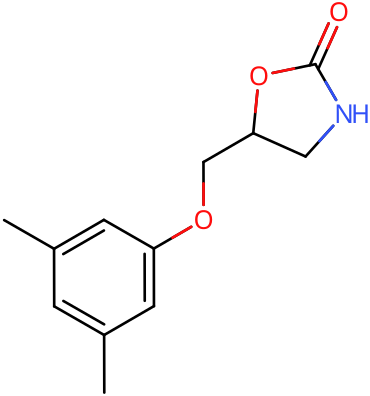
Metaxalone Stats & Data
IMWZZHHPURKASS-UHFFFAOYSA-NPharmacology
DrugBankDescription
Metaxalone is a moderate to strong muscle relaxant used in the symptomatic treatment of musculoskeletal pain caused by strains, sprains, and other musculoskeletal conditions. It is marketed by King Pharmaceuticals under the brand name Skelaxin®. Its main mechanism of action is thought to involve general central nervous system depression. Metaxalone is associated with few side effects and is available as a 800 mg scored tablet.
Mechanism of Action
The mechanism of action of metaxalone in humans has not been established, but may be due to general central nervous system depression.
Pharmacodynamics
Metaxalone is a skeletal muscle relaxant indicated as an adjunct to rest, physical therapy, and other measures for the relief of discomforts associated with acute, painful musculoskeletal conditions. The mode of action of this drug has not been clearly identified, but may be related to its sedative properties. Metaxalone does not directly relax tense skeletal muscles in man.
Absorption
The absolute bioavailability of metaxalone from Skelaxin tablets is not known.
Indication
For the treatment of painful peripheral musculoskeletal conditions and spasticity from upper motor neuron syndromes.
Elimination
Metaxalone is metabolized by the liver and excreted in the urine as unidentified metabolites.
Clearance
* 68 +/- 50 L/h Subjects received 1×400mg tablet under fasted conditions * 66 +/- 51 L/h Subjects received 2×400 mg tablets under fasted conditions
Liver injury risk
Low concern (rare serious cases reported)
Toxicity (DrugBank)
LD50=775mg/kg (Rat, oral); LD50=1690 mg/kg (Mouse, oral). When determining the LD50 in rats and mice, progressive sedation, hypnosis and finally respiratoryfailure were noted as the dosage increased. In dogs, no LD50 could be determined as the higher doses produced an emetic action in 15 to 30 minutes. Some adverse events associated with the drug include nausea, vomiting, drowsiness and CNS side effects such as dizziness, headache, and irritability.
Tolerance & Pharmacokinetics
drugs.wikiTolerance Decay
Experience Report Analysis
ErowidDemographics
Gender Distribution
Age Distribution
Reports Over Time
Effect Analysis
ErowidEffects aggregated from 11 experience reports (11 single-substance Erowid)
Effect Sentiment Distribution
Confidence Distribution
Each bar is the share of reports mentioning the effect; its whisker, and the band on the rows below, is the 95% interval: where the share could plausibly be with other reports of the same kind.
Too few reports for bars: these effects come from 11 single-substance Erowid reports, and a bar is drawn only from 20 reports or more. With fewer, a percentage cannot tell a common effect from a rare one. Counts are shown instead. Why 20?
Positive Effects 2
Adverse Effects 3
Dosage Distribution
Dose distribution from experience reports, one dose per report (the first listed). Doses above Q3 + 3×IQR, far above what people typically take, are left out of the median and range and listed under each route: most are real heavy doses or overdoses, not mistakes.
Real-World Dose Distribution
ErowidFrom 31 of 37 recorded dose entries: those that state a weight (mg, g or µg), in routes with at least five of them. Values above Q3 + 3×IQR, far above what people typically take, are left out; they can include real heavy doses and overdoses, not only mistakes.
Oral (n=31)
Common Combinations
Most co-occurring substances, as a share of all 21 reports filed under Metaxalone; whiskers are 95% intervals
Form / Preparation
Most common forms and preparations, as a share of the 14 reports that give one
Too few reports for bars: these forms come from 14 reports, and a bar is drawn only from 20 reports or more. With fewer, a percentage cannot tell a common effect from a rare one. Counts are shown instead. Why 20?
- Pill / Tablet 13 of 14
Body-Weight Dosing
Dose per kg of body weight, one dose per report (the first listed), from reports giving a weight of 30–250 kg. Doses above Q3 + 3×IQR, far above what people typically take, are left out of the median and range and listed under each route.
Redose Patterns
Redosing behavior across 15 reports
Too few reports for a chart: redosing is known from 15 reports, and a split is drawn only from 20 reports or more. Counts are shown instead. Why 20?
- Single dose 11 of 15
- Redosed 4 of 15