
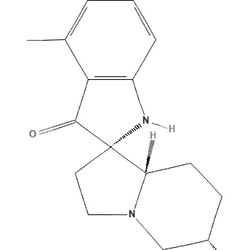
MGM-15 Stats & Data
QXFXDJATKPXTFF-LIMHOZKTSA-NEffect Profile
CuratedStrong euphoria with moderate sedation and itching/nausea, mild pain relief
Tolerance & Pharmacokinetics
drugs.wikiNo tolerance chart. Our decay curves for opioids were estimates, and a curve can make tolerance look longer-lasting than it is, which is the dangerous direction.
Opioid tolerance drops fast when you stop, and even a few days off can be enough, so a dose that used to be normal can now stop your breathing. Overdose deaths rise sharply after prison, detox or leaving treatment, and tolerance also falls during a hospital stay. After any break, start with a much smaller amount, try a test dose first, don't use alone, and keep naloxone within reach. Alcohol, benzodiazepines, gabapentinoids and other sedatives make an opioid overdose much more likely.
Sources: FRANK: heroin · National Harm Reduction Coalition · WHO: opioid overdose · Merrall et al. 2010 · Binswanger et al. 2007 · Strang et al. 2003 · FDA 2019: gabapentinoids and breathing
Cross-Tolerances
Harm Reduction
drugs.wikiMGM-15 is a semi-synthetic analogue of the kratom alkaloid 7-hydroxymitragynine (7-OH) developed alongside MGM-16 as mu/delta-opioid dual agonists; animal and in vitro work consistently finds MGM-16 more potent than MGM-15. Human pharmacokinetics for MGM-15 are unknown; harm-reduction dosing must rely on cautious titration and user reports. Duration reported online is often longer than 7-OH (many reporting 6–12 h), which increases overdose risk if redosing too early; establish a hard session limit and wait at least several hours before considering any redose. Do not combine with other depressants; animal data show 7-OH causes naloxone-reversible respiratory depression, so kratom-derived opioids should be assumed capable of dangerous respiratory effects, especially in combinations. Carry naloxone if using opioids; instruct bystanders on overdose response. Product variability is extreme: vendors may sell different salts/purities and the label “MGM-15” can refer to nonidentical products; start low, weigh doses precisely (0.001 g scale) or use volumetric dosing, and avoid eyeballing. Because identity is often uncertain, lab drug checking (e.g., LC–MS/GC–MS) is preferred; reagent kits are presumptive at best and cannot quantify potency. Many report that MGM-15 ‘lasts longer but is less euphoric’ than 7-OH; others report needing much higher doses—likely reflecting tolerance, salt form, and adulteration. Expect opioid-class effects/adverse effects: miosis, pruritus, constipation, nausea, sedation, and potential respiratory depression. If aiming to stop use or transition to buprenorphine, wait for clear opioid withdrawal before induction to avoid precipitated withdrawal; seek medical support. Avoid nasal use; at least one community report describes concerning neurological symptoms after several days of intranasal dosing. For rectal administration, dilute, lubricate, use clean equipment, and avoid frequent redosing to reduce local irritation. Driving or operating machinery while sedated is unsafe; impairment can persist into the next day.
References
Cited references
- Matsumoto et al., 2014 – MGM-16 development; MGM-15/16 mu/delta dual agonists; MGM-16 > MGM-15 potency (primary paper)
- Prevete et al., 2021 – systematic review of kratom preclinical/clinical literature; notes MGM-16 > MGM-15 potency
- 7-Hydroxymitragynine causes naloxone-reversible respiratory depression in rats (PubMed)
- Updated rat study confirming bidirectional breathing effects: mitragynine stimulates, 7-OH depresses; naloxone reversal
- Take-home naloxone reduces opioid overdose mortality (EMCDDA/Best Practice)
- Combining benzos with opioids/alcohol increases severe outcomes (CBHSQ/NCBI Bookshelf)
- TripSit interactions – opioids with benzos/alcohol/GHB flagged as dangerous; additive CNS depression cautions
- Mitragynine inhibits CYP2D6>2C9>3A4 (in vitro); potential DDI signal
- Kratom alkaloids CYP inhibition study – MG and corynantheidine potently inhibit CYP2D6 (HLM)
- Erowid – Research chemicals dosing and measurement; avoid eyeballing; volumetric dosing
- Erowid – Liquid measurement technique for accurate small dosing
- Drug checking limits (Toronto Drug Checking Service) – results may not represent batch; tech limitations
- WHO/NCBI – Buprenorphine induction: start in withdrawal to avoid precipitated withdrawal
- HHS/SAMHSA/NCBI – Buprenorphine induction guidance and timing relative to last opioid use
- Community reports on MGM-15 dosing and duration variability