
Midazolam Stats & Data
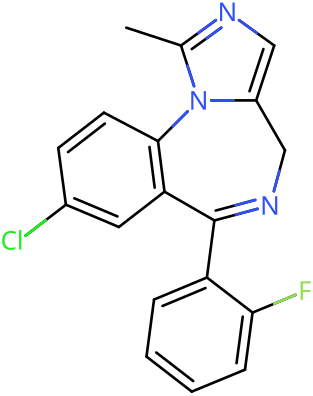
Clc1ccc2c(c1)C(=NCc1cnc(C)n12)c1ccccc1FDDLIGBOFAVUZHB-UHFFFAOYSA-NPharmacology
DrugBankDescription
Midazolam is a short-acting hypnotic-sedative drug with anxiolytic, muscle relaxant, anticonvulsant, sedative, hypnotic, and amnesic properties. It belongs to a class of drugs called _benzodiazepines_. This drug is unique from others in this class due to its rapid onset of effects and short duration of action. Midazolam is available by oral, rectal, intranasal, intramuscular (IM), and intravenous (IV) routes and has been used in various biomedical applications, including dentistry, cardiac surgery, and endoscopic procedures as pre-anesthetic medication, and as an adjunct to local anesthesia. This drug was initially approved by the US FDA in 1985, and has been approved for various indications since. In late 2018, the intramuscular preparation was approved by the FDA for the treatment of status epilepticus in adults. In May 2019, the nasal spray of midazolam was approved for the acute treatment of distinctive intermittent, stereotypic seizure episodes in patients 12 years of age and older. Midazolam is considered a schedule IV drug in the United States due to the low potential for abuse and low risk of dependence.
Mechanism of Action
The actions of benzodiazepines such as midazolam are mediated through the inhibitory neurotransmitter gamma-aminobutyric acid (GABA), which is one of the major inhibitory neurotransmitters in the central nervous system. Benzodiazepines increase the activity of GABA, thereby producing a sedating effect, relaxing skeletal muscles, and inducing sleep, anesthesia, and amnesia. Benzodiazepines bind to the benzodiazepine site on GABA-A receptors, which potentiates the effects of GABA by increasing the frequency of chloride channel opening. These receptors have been identified in different body tissues including the heart and skeletal muscle, although mainly appear to be present in the central nervous system.
Pharmacodynamics
**General effects** Midazolam is a short-acting benzodiazepine central nervous system (CNS) depressant. Pharmacodynamic properties of midazolam and its metabolites, which are similar to those of other benzodiazepine drugs, include sedative, anxiolytic, amnestic, muscle relaxant, as well as hypnotic activities. Benzodiazepines enhance the inhibitory action of the amino acid neurotransmitter gamma-aminobutyric acid (GABA). Receptors for GABA are targeted by many important drugs that affect GABA function and are commonly used in the treatment of anxiety disorder, epilepsy, insomnia, spasticity, and aggressive behavior. **Sedation and memory** The onset of sedation after intramuscular administration in adults is 15 minutes, with maximal sedation occurring 30-60 minutes after injection. In one study of adults, when tested the following day, 73% of the patients who were administered midazolam intramuscularly had no recollection of memory cards shown 30 minutes following drug administration; 40% had no recollection of the memory cards shown 60 minutes after drug administration. Onset time of sedative effects in pediatric patients begins within 5 minutes and peaks at 15-30 minutes depending upon the dose administered. In the pediatric population, up to 85% had no memory of pictures shown after receiving intramuscular midazolam compared to 5% of the placebo control group.
Metabolism
Midazolam is primarily metabolized in the liver and gut by CYP3A4 to its pharmacologic active metabolite, _alpha-hydroxymidazolam_ (also known as 1-hydroxy-midazolam), and 4-hydroxymidazolam (which makes up 5% or less of the biotransformation products). This metabolite likely contributes to the pharmacological effects of midazolam. Midazolam also undergoes N-glucuronidation via UGT1A4 after the process of hepatic oxidation by cytochrome enzymes.
Absorption
**Oral Absorption**: Rapidly absorbed after oral administration. The absolute bioavailability, if given intramuscularly (IM), is greater than 90% . Due to first pass metabolism, only 40-50% of the administered oral dose reaches the circulation. The absolute bioavailability of the midazolam syrup in pediatric patients is about 36%. **Intramuscular Absorption**: The mean peak concentration (Cmax) and time to peak (Tmax) following the IM dose was 90 ng/mL (20% CV) and 0.5 hour (50% CV). **Rectal administration**: After rectal administration midazolam is absorbed rapidly. Maximum plasma concentration is reached within 30 minutes. The absolute bioavailability is approximately 50%. **Intranasal Administration**: Midazolam is absorbed rapidly after intranasal administration. Mean peak plasma concentrations are reached within 10.2 to 12.6 minutes. The bioavailability is between 55 and 57%.
Indication
**Intravenous** Indicated for promoting preoperative sedation, anxiolysis, anesthesia induction, or amnesia. **Intramuscular** Indicated for the treatment of status epilepticus in adults. **Nasal** Indicated for the acute treatment of intermittent, stereotypic episodes of frequent seizure activity (i.e., seizure clusters, acute repetitive seizures) that are distinct from a patient’s usual seizure pattern in patients with epilepsy 12 years of age and older.
Half-life
**Intravenous**: healthy adults = 1.8 to 6.4 hours (mean of 3 hours). **Intramuscular**: Following IM administration of 10 mg midazolam, mean (±SD) elimination half-life was 4.2 (±1.87) hours.
Protein Binding
Midazolam is approximately 97% bound to plasma protein, mainly albumin, in adults. The 1-hydroxy metabolite is approximately 89% bound to plasma protein.
Elimination
The _α-hydroxymidazolam_ glucuronide conjugate of midazolam is excreted in urine. No significant amount of parent drug or metabolites is found in urine before beta-glucuronidase and sulfatase deconjugation, suggesting that the urinary metabolites are excreted mainly as conjugates. The amount of midazolam excreted unchanged in the urine when given intravenously is less than 0.5%. 45% to 57% of the dose was excreted in the urine as 1-hydroxymethyl midazolam conjugate. Plasma clearance of midazolam is higher in patients that remain in supine position, because of a 40-60 percent increase in hepatic blood flow during supination. Pregnancy may also increase the metabolism of midazolam.
Volume of Distribution
Female gender, old age, and obesity may increase the volume of distribution. Midazolam may also cross the placenta and has been detected in human milk and cerebrospinal fluid.FDA label,F2434 **Intravenous administration** 1.24 to 2.02 L/kg pediatric patients (6 months to <16 years) receiving 0.15 mg/kg IV midazolam 1 to 3.1 L/kg midazolam intravenously administered, healthy adults. **Intramuscular administration** The mean apparent volume of distribution of midazolam after a single IM dose of 10 mg midazolam in healthy adults was 2117 (±845.1) mL/kg.
Clearance
**Intramuscular**: apparent total body clearance, 367.3 (±73.5) mL/hr/kg. **Intravenous**: total clearance (Cl), 0.25 to 0.54 L/hr/kg
Receptor Profile
Receptor Actions
Receptor Binding
Measured Affinities
Guide to PHARMACOLOGYMeasured binding and functional data for midazolam, curated by the IUPHAR/BPS Guide to PHARMACOLOGY. Each row cites the paper it came from. Lower concentrations mean tighter binding — a value in the sub-nanomolar range indicates a very potent interaction.
| Target | Action | Measure | Value | Concentration | Species | Source |
|---|---|---|---|---|---|---|
| TRH1 receptor Trhr | Antagonist | pKi | 5.49 | 3,236 nM | Rat | PMID 2566295 |
| α1B-adrenoceptor Adra1b | Positive | pKi | 3.7 | 199,526 nM | Rat | PMID 10565838 |
Reading this. pKi, pEC50 and pIC50 are negative log molar values, so a higher number means a tighter interaction; the concentration column converts them for you. Values from non-human species are laboratory measurements and do not translate directly to human effect. Receptor affinity is not a dose — it describes what a molecule binds, not how much of it is safe to take.
Receptor data from the IUPHAR/BPS Guide to PHARMACOLOGY (v2026.2), licensed CC BY-SA 4.0. Matched to this substance by InChIKey.
History & Culture
1974–1982
Midazolam was synthesized in 1975 by Walser and Fryer at Hoffmann-LaRoche, Inc. in the United States. The compound was patented in 1974 and came into medical use in 1982. Its water solubility distinguished it from earlier benzodiazepines, as this property made it significantly less likely to cause thrombophlebitis than similar drugs. The anticonvulsant properties of midazolam were studied in the late 1970s, though it did not emerge as an effective treatment for convulsive status epilepticus until the 1990s.
1985–2019
The United States Food and Drug Administration first approved midazolam in 1985, and subsequent approvals for various indications have followed. As of 2010, midazolam had become the most commonly used benzodiazepine in anesthetic medicine, favored over alternatives like lorazepam and diazepam because it is shorter lasting, more potent, and causes less pain at injection sites. The drug has also gained increasing popularity in veterinary medicine due to its water solubility. In 2011, the European Medicines Agency granted marketing authorization for a buccal application form under the brand name Buccolam, initially approved for treating prolonged, acute, convulsive seizures in patients from three months to less than 18 years of age. This represented the first application of a paediatric-use marketing authorization by the EMA. In late 2018, the FDA approved an intramuscular preparation for treating status epilepticus in adults, followed by approval of a nasal spray in May 2019 for acute treatment of distinctive intermittent, stereotypic seizure episodes in patients 12 years of age and older. Midazolam is included on the World Health Organization's List of Essential Medicines and is available as a generic medication worldwide, though it remains a controlled substance in many countries.
2013–present
Midazolam was introduced for use in executions by lethal injection in certain United States jurisdictions after the manufacturer of pentobarbital disallowed that drug's use for executions. In these protocols, midazolam acts as a sedative to induce a state of deep anesthesia before other drugs are administered to stop the prisoner's heart. It has been used as part of a three-drug cocktail with vecuronium bromide and potassium chloride in Florida and Oklahoma prisons, and in a two-drug protocol with hydromorphone in Ohio and Arizona. Florida used midazolam to execute William Frederick Happ in October 2013. Ohio employed it in the execution of Dennis McGuire in January 2014, where he was heavily anesthetized within 4 minutes but required 20 additional minutes before being declared medically dead. Controversy arose when reporters observed him gasping and appearing to choke during this period, raising questions about dosing, timing, and drug selection. The usage became further controversial when condemned inmate Clayton Lockett apparently regained consciousness and began speaking midway through his 2014 Oklahoma execution, which used an untested three-drug combination including 100 mg of midazolam. In Glossip v. Gross, attorneys for three Oklahoma inmates argued that midazolam could not achieve the level of unconsciousness required for surgery and therefore constituted cruel and unusual punishment contrary to the Eighth Amendment. In June 2015, the U.S. Supreme Court ruled that they had failed to prove midazolam was cruel and unusual when compared to known, available alternatives.
2018–present
In 2018, it was revealed that the CIA had considered using midazolam as a "truth serum" on terrorist suspects in a project codenamed "Medication."
Changes in vital signs (respiratory rate, blood pressure, pulse rate) are the most frequent adverse effects associated with parenteral midazolam administration. Overdosage of midazolam hydrochloride is likely to produce symptoms that are mainly extensions of the usual pharmacologic effects of benzodiazepines, such as sedation, somnolence, confusion, impaired coordination, diminished reflexes, coma, and alterations in vital signs. Toxicity with midazolam is rare but can happen when combined with other CNS depressants like alcohol, opioids, and other tricyclic antidepressants. The risk increases with intravenous administration and in elderly individuals with COPD.
LD50
LD50: 825 mg/kg (Oral, Rat)
Carcinogenicity
No indication of carcinogenicity to humans (not listed by IARC).
Health effects (PubChem excerpts)
They cause slurred speech, disorientation and "drunken" behavior. They are physically and psychologically addictive.
Effect Profile
Curated + 3 ReportsStrong anxiolysis with strong cognitive impairment, moderate euphoria, mild sedation
Tolerance & Pharmacokinetics
drugs.wikiNo tolerance chart. Our decay curves for these drugs were estimates, and a curve can make tolerance look longer-lasting than it is, which is the dangerous direction.
How fast tolerance to these drugs fades after a break has not been measured well enough to draw, so don't count on a dose you used to take still being safe: after time off, start with a much smaller amount and don't use alone. Mixing sedatives with each other, with alcohol or with opioids sharply raises the risk of a fatal overdose. If you've been using regularly, don't stop suddenly: withdrawal from benzodiazepines, alcohol or GHB/GBL can cause seizures or delirium, so get medical help to cut down gradually.
Sources: FRANK: benzodiazepines · Alcohol and Drug Foundation: GHB · FDA 2020: benzodiazepine boxed warning · FDA 2019: gabapentinoids and breathing · NHS: alcohol use disorder
Experience Report Analysis
ErowidDemographics
Gender Distribution
Too few reports for a chart: gender is known from 7 reports, and a split is drawn only from 20 reports or more. Counts are shown instead. Why 20?
- Not Specified 1 of 7
- Male 5 of 7
- Female 1 of 7
Age Distribution
Reports Over Time
Common Combinations
Most co-occurring substances, as a share of all 7 reports filed under Midazolam
Too few reports for bars: these combinations come from 7 reports, and a bar is drawn only from 20 reports or more. With fewer, a percentage cannot tell a common effect from a rare one. Counts are shown instead. Why 20?
- Fentanyl 3 of 7
Form / Preparation
Most common forms and preparations, as a share of the 2 reports that give one
Too few reports for bars: these forms come from 2 reports, and a bar is drawn only from 20 reports or more. With fewer, a percentage cannot tell a common effect from a rare one. Counts are shown instead. Why 20?
- Liquid 2 of 2
Benzodiazepine Equivalence
Midazolam - 10mg ~=10mg Diazepam.
Legal Status
| Country | Status | Notes |
|---|---|---|
| Brazil | Prescription only | Available only with a valid medical prescription. Subject to pharmaceutical dispensing regulations requiring prescriber authorization. |
| Sweden | Prescription only | Regulated as a prescription-only medication. Dispensing requires valid medical authorization from a licensed prescriber. |
| United States | Schedule IV | Controlled under the Controlled Substances Act as a Schedule IV substance, indicating low potential for abuse and low risk of dependence relative to Schedule III substances. DEA registration number 2884. First approved by the FDA in 1985 and remains available by prescription for various medical indications including procedural sedation, anesthesia induction, and seizure treatment. |
Harm Reduction
drugs.wikiMidazolam is a short-acting benzodiazepine with strong sedative, anxiolytic, amnestic, anticonvulsant, and muscle relaxant properties. It is primarily metabolized by CYP3A4 to the active metabolite 1-hydroxymidazolam, which is glucuronidated and renally eliminated; inhibitors of CYP3A4 (e.g., azole antifungals, macrolides, protease inhibitors) and grapefruit can markedly increase sedation and duration, while inducers (e.g., rifampin, carbamazepine, phenytoin, St. John’s wort) can reduce effects. Profound respiratory depression, apnea, hypotension, and coma can occur, especially with opioids, alcohol, or other depressants; parenteral use should only occur with continuous monitoring and immediate access to airway/resuscitation equipment. Anterograde amnesia is prominent and may cause blackouts and hazardous redosing; ensure precise measurement, avoid mixing with alcohol, and have a trusted sober person if sedated. Paradoxical agitation, disinhibition, or aggression can occur, particularly in those with alcohol misuse history, psychiatric comorbidity, or at high doses. Older adults, those with hepatic dysfunction, heart failure, or renal impairment are at increased risk of prolonged sedation and adverse events due to reduced clearance and active metabolite accumulation. Driving or operating machinery should be avoided until fully alert; residual psychomotor impairment can outlast perceived sedation. Abrupt discontinuation after repeated use can precipitate severe withdrawal (including seizures); gradual medical tapering is essential for dependent individuals. Flumazenil can reverse benzodiazepine effects but is contraindicated in many mixed overdoses and in benzodiazepine dependence due to seizure risk; emergency medical care and supportive airway management are first-line in suspected overdose.
References
Cited References
Additional references
- DrugBank: Midazolam (food interactions, brands, route-specific half-lives, adverse effect notes)
- StatPearls (NCBI Bookshelf): Midazolam (mechanism, onset by route, metabolism via CYP3A4, adverse effects, paradoxical reactions, monitoring and boxed warnings, populations at risk, overdose/flumazenil cautions)
- TripSit Wiki: Benzodiazepines (general harm-reduction and mixing risks with other depressants)
- Drugs-Forum: Midazolam (ROA characteristics; community summary; to be weighed against primary sources)
- Bluelight Benzo Guides (community pharmacokinetic ranges; to be weighed against primary sources)