
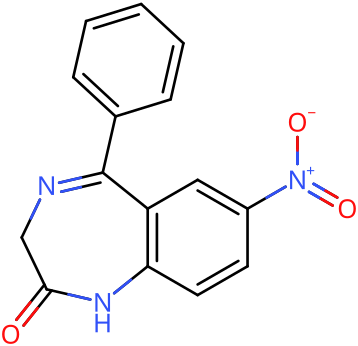
Nitrazepam Stats & Data
KJONHKAYOJNZEC-UHFFFAOYSA-NPharmacology
DrugBankDescription
A benzodiazepine derivative used as an anticonvulsant and hypnotic.
Mechanism of Action
Nitrazepam belongs to a group of medicines called benzodiazepines. This drug affects central benzodiazepine receptors, which are associated with inhibitory GABA (gamma amino butyric acid)receptors, leading to enhanced GABA binding activity. GABA is a major neurotransmitter in the brain, which causes somnolence, relaxation of muscles, a decrease in anxiety and general central nervous system depression. Nitrazepam has anticonvulsant properties that may be attributed to its ability to bind to voltage-dependent sodium channels. Sustained repetitive firing seems to be limited by benzodiazepines effect of slowing recovery of sodium channels from inactivation.
Pharmacodynamics
Nitrazepam is a type of benzodiazepine drug. It is a powerful hypnotic drug which possesses strong sedative, anxiolytic, amnestic, anticonvulsant, and skeletal muscle relaxant properties. Nitrazepam shortens the time required to fall asleep and lengthens the duration of sleep. It is also useful for the management of myoclonic seizures.
Absorption
Bioavailability is 53-94% following oral administration.
Indication
Used to treat short-term sleeping problems (insomnia), such as difficulty falling asleep, frequent awakenings during the night, and early-morning awakening.
Half-life
15-38 hours (mean elimination half life 26 hours).
Receptor Profile
Receptor Actions
Receptor Binding
Nitrazepam belongs to a group of medicines called benzodiazepines. It acts on benzodiazepine receptors in the brain which are associated with the GABA receptors causing an enhanced binding of GABA (gamma amino butyric acid) to GABAA receptors.
Carcinogenicity
No indication of carcinogenicity to humans (not listed by IARC).
Toxicity (DrugBank)
An overdose of nitrazepam may lead to impaired breathing, dizziness, decreased cognition and balance, bluish nails and lips, slurred speech, and extreme somnolence, among others. In severe overdose, these symptoms may progress to a coma with a possibility of death.
Health effects (PubChem excerpts)
They cause slurred speech, disorientation and "drunken" behavior. They are physically and psychologically addictive. May cause a potentially dangerous rash that may develop into Stevens Johnson syndrome, an extremely rare but potentially fatal skin disease.
Effect Profile
CuratedStrong anxiolysis and euphoria with strong cognitive impairment, mild sedation
Tolerance & Pharmacokinetics
drugs.wikiNo tolerance chart. Our decay curves for these drugs were estimates, and a curve can make tolerance look longer-lasting than it is, which is the dangerous direction.
How fast tolerance to these drugs fades after a break has not been measured well enough to draw, so don't count on a dose you used to take still being safe: after time off, start with a much smaller amount and don't use alone. Mixing sedatives with each other, with alcohol or with opioids sharply raises the risk of a fatal overdose. If you've been using regularly, don't stop suddenly: withdrawal from benzodiazepines, alcohol or GHB/GBL can cause seizures or delirium, so get medical help to cut down gradually.
Sources: FRANK: benzodiazepines · Alcohol and Drug Foundation: GHB · FDA 2020: benzodiazepine boxed warning · FDA 2019: gabapentinoids and breathing · NHS: alcohol use disorder
Cross-Tolerances
Harm Reduction
drugs.wikiIdentification and naming: Nitrazepam is a long-acting nitrobenzodiazepine; common brand name is Mogadon and synonyms include RO 5-3059 and RO 4-5360—use correct naming to avoid confusing it with flunitrazepam or other benzos. Residual impairment: Because the elimination half-life averages 26 hours (range ~15–38 h), next‑day psychomotor impairment and a 'hangover' effect are common, even if you feel subjectively sober. Driving or operating machinery should be avoided until fully recovered. Interindividual variability: Oral bioavailability spans ~53–94%, so two people given the same dose can have very different effects; titrate slowly and avoid stacking doses. Combination risks: Co‑use with opioids, alcohol, barbiturates or GHB/GBL markedly increases the risk of respiratory depression, loss of consciousness and fatal overdose; if any depressants are involved, do not use alone and have naloxone available when opioids are present. General CNS depressant stacking (e.g., Z‑drugs, sedating antihistamines, gabapentinoids) also increases blackout and breathing suppression risk—avoid or use only with strong safeguards. Caffeine and stimulants may mask sedation without restoring coordination or reaction time; DrugBank advises limiting caffeine and strictly avoiding alcohol while on nitrazepam. Tolerance/withdrawal: Regular use can produce tolerance within weeks and dependence; abrupt discontinuation can cause severe withdrawal including seizures—medical tapering is essential. Populations: Older adults and those with liver impairment are more prone to prolonged sedation, confusion, and falls—use lower doses with extra monitoring. Legality/access: Nitrazepam is not marketed in the United States (reducing legitimate supply there); in unregulated markets, counterfeit 'benzos' may contain more potent analogues—drug checking and conservative dosing are strongly advised. Therapeutic note: Beyond hypnotic use, nitrazepam has anticonvulsant properties (e.g., myoclonic seizures), but non-medical redosing to chase sedation can rapidly escalate risk due to delayed peaks and long half-life.
References
Cited References
Additional references
- DrugBank: Nitrazepam (DB01595) — overview, bioavailability, half-life, alcohol/caffeine/food advice, indications
- TripSit Wiki — Benzodiazepines: HR cautions (driving, blackouts, mixing depressants)
- Bluelight Benzo Guide v1 — community HR notes on nitrazepam strength, onset and practical cautions
- EMCDDA/EDUA Perspectives on Drugs: Misuse of benzodiazepines among high‑risk opioid users — overdose risk with opioid + benzo combos
- TripSit/Bluelight references to the Drug Combination Chart (generalized depressant‑depressant risk)
- Erowid DrugsData — drug checking project (context: counterfeit/unknown benzos in unregulated markets)