
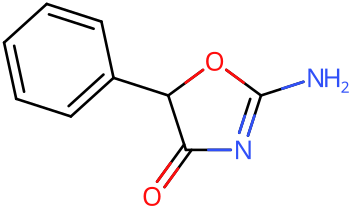
Pemoline Stats & Data
NC1=NC(=O)C(O1)c1ccccc1NRNCYVBFPDDJNE-UHFFFAOYSA-NPharmacology
DrugBankDescription
In 2005, the Food and Drug Administration (FDA) withdrew approval for pemoline. In March 2005, Abbott Laboratories (Cylert marketer) had discontinued the production of Cylert arguing economic reasons.
Pharmacodynamics
Pemoline belongs to the group of medicines called central nervous system (CNS) stimulants. It is used to treat attention deficit hyperactivity disorder (ADHD). Pemoline stimulates the brain, probably by affecting neurotransmitters, the chemicals in the brain that nerves use to communicate with each other.
Absorption
Pemoline is rapidly absorbed from the gastrointestinal tract
Indication
For treatment of Attention Deficit Hyperactivity Disorder (ADHD)
Half-life
The serum half-life of pemoline is approximately 12 hours.
Elimination
Pemoline is excreted primarily by the kidneys with approximately 50% excreted unchanged and only minor fractions present as metabolites.
Receptor Profile
Receptor Actions
Pemoline is an amphetamine type psychostimulant drug.Pemoline is used to treat narcolepsy and hyperkinetic states in children as an adjunct to psychological, educational and social measures for amphetamine, dextroamphetamine and ethylphenidate. Misuse: Performance enhancement and relief of fatigue.
Liver injury risk
High concern (frequent serious cases reported)
Toxicity (DrugBank)
Side effects include insomnia, anorexia, stomach ache, skin rashes, increased irritability, mild depression, nausea, dizziness, headache, drowsiness, and hallucinations
Effect Profile
CuratedStrong stimulation with strong anxiety/jitters, mild euphoria and focus
Tolerance & Pharmacokinetics
drugs.wikiTolerance Decay
Empirical tolerance data specific to pemoline are sparse; patterns likely resemble other prescription stimulants with modest psychological tolerance and limited pharmacodynamic tolerance due to unique mechanism and low euphoria. Users report needing higher doses after weeks of daily use, with partial reversal after several weeks off. Treat as anecdotal.
Cross-Tolerances
Harm Reduction
drugs.wikiPemoline is a CNS stimulant formerly used for ADHD and narcolepsy; FDA approval was withdrawn in 2005 after reports of acute liver failure and death, despite earlier monitoring recommendations. Avoid alcohol entirely while on pemoline; DrugBank explicitly lists alcohol avoidance and caffeine limitation, and alcohol adds independent liver risk. Baseline and periodic liver function testing is prudent if any exposure occurs; watch for warning signs of DILI (e.g., right‑upper‑quadrant pain, dark urine, pruritus, jaundice, prolonged nausea/fatigue) and stop immediately if they appear. Do not re‑challenge after suspected pemoline‑related liver injury due to risk of recurrence with greater severity. Roughly half of an oral dose is renally excreted unchanged and the serum half‑life is near 12 hours, so redosing stacks substantially; spacing doses and avoiding late‑day dosing reduces insomnia and overstimulation. Given limited euphoric effects relative to amphetamines, users may be tempted to escalate doses; this increases adverse effect risk without reliably improving therapeutic benefit. Combining with MAOIs or other stimulants increases cardiovascular/central adverse events and is discouraged by interaction guides; if any combination is unavoidable in clinical contexts, specialist oversight is essential. Because pemoline is or has been controlled (e.g., CSA Schedule IV historically) and withdrawn in many markets, products circulating online may be mislabelled; reagent testing will not assess hepatotoxicity, so sourcing does not mitigate this core risk. Consider alternative, better‑characterized treatments where available; if used off‑label, employ the lowest effective dose for the shortest feasible duration and schedule rest days.
References
Cited References
Additional references
- DrugBank: Pemoline (DB01230) — PK, half‑life, renal excretion, alcohol/caffeine advice, FDA withdrawal note
- NCBI MeSH: Pemoline — synonyms/entry terms (Cylert, PemADD, magnesium pemoline, etc.)
- TripSit Drug Combination Chart — general stimulant/MAOI and stimulant-stimulant cautions (harm‑reduction guidance)
- IsomerDesign UN/US/UK scheduling index — historical scheduling reference for Pemoline
- Bluelight discussion: Pemoline & oxazoline stimulants (user reports; anecdotal)