
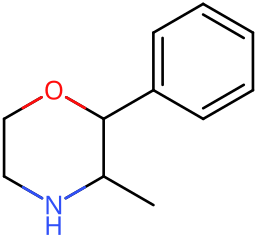
Phenmetrazine Stats & Data
CC1NCCOC1c1ccccc1OOBHFESNSZDWIU-UHFFFAOYSA-NPharmacology
DrugBankDescription
A sympathomimetic drug used primarily as an appetite depressant. Its actions and mechanisms are similar to dextroamphetamine.
Mechanism of Action
Phenmetrazine is thought to block the reuptake of norepinephrine and dopamine into the presynaptic neuron leading to an increase in the release of these monoamines into the extraneuronal space. Dopamine integrates incoming sensory stimuli, initiates and controls fine movement (nigro-neostriatal pathway), controls emotional behavior (midbrain mesolimbic-forebrain system) and controls hypothalamic-pituitary endocrine system (tubero-infundibular system). It is this latter effect on the tubero-infundibular systm that seems to lead to reduced food intake. Phenmetrazine also acts as a monoamine oxidase inhibitor.
Pharmacodynamics
Phenmetrazine is a sympathomimetic drug used primarily as an appetite depressant. Its actions and mechanisms are similar to dextroamphetamine. Amphetamines are non-catecholamine sympathomimetic amines with CNS stimulant activity. Phenmetrazine was originally sold under the tradename Preludin as an anorectic. It has since been removed from the market. It is by some considered to have a greater potential for addiction than the amphetamines, and has been abused in many countries, for example Sweden.
Metabolism
Primarily hepatic (via CYP3A and CYP2D6). Resistant to metabolism by monoamine oxidase. Metabolism involves deamination to para-hydroxyamphetamine and phenylacetone; this latter compound is subsequently oxidize to benzoic acid and excreted as glucuronide or glycine (hippuric acid) conjugate. Smaller amounts of amphetamine are converted to norephedrine by oxidation.
Absorption
Readily absorbed from the gastro-intestinal tract and buccal mucosa.
Indication
Used as an anorectic in the treatment of obesity.
Phenmetrazine hydrochloride is an antiobesity drug. Indications: Appetite suppressant (anorectic). Phenmetrazine is thought to block the reuptake of norepinephrine and dopamine into the presynaptic neuron leading to an increase in the release of these monoamines into the extraneuronal space. Dopamine integrates incoming sensory stimuli, initiates and controls fine movement (nigro-neostriatal pathway), controls emotional behavior (midbrain mesolimbic-forebrain system) and controls hypothalamic-pituitary endocrine system (tubero-infundibular system).
Carcinogenicity
No indication of carcinogenicity to humans (not listed by IARC).
Toxicity (DrugBank)
Adult monkeys have an LD50 of 15 to 20 mg/kg, whereas for young monkeys the LD50 is only 5 mg/kg. Symptoms of overdose include acute central nervous system stimulation, cardiotoxicity causing tachycardia, arrhythmias, hypertension, and cardiovascular collapse. Whilst some patients show signs of toxicity at blood concentrations of 20 µg/L, chronic abusers of amphetamine have been known to have blood concentration of up to 3000 µg/L.
Health effects (PubChem excerpts)
Using large amounts of these drugs can result in a condition known as amphetamine psychosis -- which can result in auditory, visual and tactile hallucinations, intense paranoia, irrational thoughts and beliefs, delusions, and mental confusion.
Effect Profile
CuratedStrong euphoria with strong anxiety/jitters, moderate stimulation