
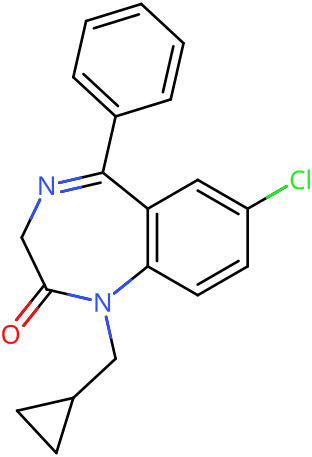
Prazepam Stats & Data
MWQCHHACWWAQLJ-UHFFFAOYSA-NPharmacology
DrugBankDescription
Prazepam is a benzodiazepine that is used in the treatment of anxiety disorders. It is a schedule IV drug in the U.S.
Mechanism of Action
Prazepam is believed to stimulate GABA receptors in the ascending reticular activating system. Since GABA is inhibitory, receptor stimulation increases inhibition and blocks both cortical and limbic arousal following stimulation of the brain stem reticular formation.
Pharmacodynamics
Prazepam is a benzodiazepine derivative with anxiolytic, anticonvulsant, sedative and skeletal muscle relaxant activity. Benzodiazepines may be habit-forming (causing mental or physical dependence), especially when taken for a long time or in high doses.
Indication
For the treatment of anxiety disorders.
Receptor Profile
Receptor Actions
Receptor Binding
Prazepam is believed to stimulate GABA receptors in the ascending reticular activating system. Since GABA is inhibitory, receptor stimulation increases inhibition and blocks both cortical and limbic arousal following stimulation of the brain stem reticular formation.
Carcinogenicity
Group 3: Not classifiable as to its carcinogenicity to humans
Toxicity (DrugBank)
Symptoms of overdose include somnolence, confusion, coma, and diminished reflexes. Respiration, pulse and blood pressure should be monitored.
Health effects (PubChem excerpts)
They cause slurred speech, disorientation and "drunken" behavior. They are physically and psychologically addictive.
Effect Profile
CuratedStrong anxiolysis with strong cognitive impairment, moderate sedation and euphoria
Tolerance & Pharmacokinetics
drugs.wikiNo tolerance chart. Our decay curves for these drugs were estimates, and a curve can make tolerance look longer-lasting than it is, which is the dangerous direction.
How fast tolerance to these drugs fades after a break has not been measured well enough to draw, so don't count on a dose you used to take still being safe: after time off, start with a much smaller amount and don't use alone. Mixing sedatives with each other, with alcohol or with opioids sharply raises the risk of a fatal overdose. If you've been using regularly, don't stop suddenly: withdrawal from benzodiazepines, alcohol or GHB/GBL can cause seizures or delirium, so get medical help to cut down gradually.
Sources: FRANK: benzodiazepines · Alcohol and Drug Foundation: GHB · FDA 2020: benzodiazepine boxed warning · FDA 2019: gabapentinoids and breathing · NHS: alcohol use disorder
Cross-Tolerances
Harm Reduction
drugs.wiki• Prazepam is a long‑acting benzodiazepine prodrug whose primary active metabolite, desmethyldiazepam (nordazepam), has an extremely long and variable half‑life; with repeated dosing, effects and impairment can accumulate across days. Plan doses conservatively and avoid redosing within the same day unless fully assessed for residual sedation. Sources: DrugBank half‑life and CYP3A4 substrate listing; TripSit/Bluelight tables.
• Mixing benzodiazepines with other CNS depressants (alcohol, opioids, GHB/GBL, barbiturates, Z‑drugs) markedly increases the risk of fatal respiratory depression, blackout, and accidental injury; this combination drives a large share of drug‑related deaths. If any depressant has been used, skip further benzodiazepines and never ‘stack’ them to sleep. Sources: TripSit benzodiazepine harm‑reduction page; Erowid benzo caution.
• Grapefruit and other strong CYP3A4 inhibitors can raise prazepam/nordazepam exposure; DrugBank explicitly lists ‘avoid grapefruit’ and categorizes prazepam as a CYP3A4 substrate. Avoid grapefruit juice/products during use and for at least 48–72 h around dosing. Source: DrugBank food interactions/CYP3A4 substrate category.
• Contraindications and cautions include severe hepatic insufficiency (risk of encephalopathy), severe respiratory insufficiency, and sleep apnoea; start at reduced doses and titrate slowly in older or debilitated adults. Source: product‑style monograph reproduced on Drugs‑Forum.
• Therapeutic courses should be as short as possible (commonly ≤8–12 weeks including taper). Physical dependence can develop within weeks; abrupt cessation may precipitate severe withdrawal (anxiety rebound, agitation, seizures) and should be avoided. Taper gradually under supervision. Sources: Drugs‑Forum monograph; TripSit warnings that benzo withdrawal can be fatal.
• Driving and hazardous tasks: next‑day cognitive/motor impairment is common with long‑acting benzodiazepines. Do not drive or operate machinery during acute effects, after dose increases, or the morning after evening dosing—especially with polydrug use or sleep debt. Source: TripSit HR page (explicit ‘inability to drive’).
• Dose equivalence varies between tables; a commonly cited range is prazepam 10–20 mg ≈ diazepam 10 mg, with one clinical compilation listing 15 mg ≈ 10 mg diazepam. Use equivalence only as rough guidance when switching, then cross‑titrate carefully. Sources: TripSit benzo table; Bluelight equivalency post.
• Caffeine can subjectively mask sedation without restoring psychomotor performance; DrugBank lists ‘limit caffeine’. Avoid using stimulants to ‘offset’ benzo sedation; this increases risk‑taking while still impaired. Source: DrugBank food interactions; general benzo HR consensus.
• Paradoxical agitation, disinhibition, and anterograde amnesia can occur, especially at higher doses, in children/older adults, or with alcohol. If paradoxical reactions emerge, discontinue and seek medical guidance. Sources: Drugs‑Forum monograph; Erowid benzo pages.
References
Cited References
Additional references
- DrugBank: Prazepam overview, food interactions, CYP3A4 substrate, brands, half-life
- TripSit Wiki: Benzodiazepines (HR guidance, half-life/equivalence table, ‘inability to drive’, mixing depressants)
- Bluelight: Benzodiazepines — Basics to Advanced (equivalency table; half-life list incl. prazepam)
- Erowid Benzodiazepine Vault (general cautions on dependence and mixing depressants)
- Drugs‑Forum Wiki: Prazepam (product‑style monograph with dosing, contraindications, taper guidance)