
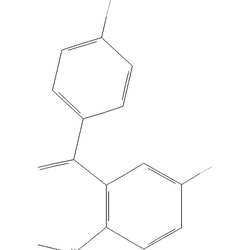
Ro5-4864 Stats & Data
PUMYFTJOWAJIKF-UHFFFAOYSA-NPharmacology
DrugBankMechanism of Action
Mitochondria isolated from rat brain were found to cleave cholesterol to produce pregnenolone, the precursor for hormonal steroids, at a mean rate of 21.0 pmol pregnenolone.mg protein-1.min-1. This rate-limiting step in steroidogenesis was significantly stimulated by PK 11195 (1-(2-chlorophenyl)-N-methyl-(1-methylpropyl)-3-isoquinoline carboxamide) and Ro5 4864 (4'-chlorodiazepam), ligands which bind to peripheral benzodiazepine receptors with high affinity. Low-affinity ligands for the peripher
Effect Profile
CuratedModerate sedation with mild anxiolysis, low cognitive impairment
Tolerance & Pharmacokinetics
drugs.wikiTolerance Decay
Rodent literature shows TSPO desensitization over several days of dosing, but human tolerance dynamics are unknown; treat as potentially habit‑forming with partial cross‑tolerance only to other TSPO ligands. Data quality is low and largely theoretical/anecdotal.
Cross-Tolerances
Harm Reduction
drugs.wiki• Identity/mechanism: Ro5-4864 has high affinity for the mitochondrial 18 kDa translocator protein (TSPO; historically “peripheral benzodiazepine receptor”) and shows minimal/atypical activity at central high‑affinity benzodiazepine sites on GABA_A receptors; flumazenil only antagonizes classical benzodiazepine site effects and should not be relied on to reverse Ro5-4864 toxicity.
• Proconvulsant potential: Multiple rodent studies show Ro5-4864 facilitates or directly induces seizures (including audiogenic seizures) in a dose‑dependent manner; a TSPO antagonist (PK11195) can block some of these effects. This strongly cautions against high doses or redosing.
• Do not use for benzodiazepine withdrawal: Because its primary action is at TSPO rather than the GABA_A benzodiazepine site, Ro5-4864 will not substitute for benzodiazepines in dependence/withdrawal and could worsen seizure risk during withdrawal. Standard withdrawal management targets GABA_A modulation with established agents under medical care.
• Dosing precision: Effects have a narrow and inconsistent window; sub‑milligram errors can dramatically change outcomes. Use a 1 mg‑accurate scale and/or volumetric dosing; label solutions clearly to avoid dosing mistakes.
• Route of administration: Oral is the only route with any community familiarity; smoking/vaping/injection are strongly discouraged due to unknown human PK, likely thermal degradation, and increased harm (local tissue reaction risk with non‑oral routes). Absence of reliable inhalation data makes potency unpredictable.
• Overdose/AE management: Expect poor response to flumazenil; supportive care with airway protection and standard anticonvulsants for seizures is the likely approach in clinical settings. Bring full substance information to emergency services immediately.
• Redosing risk: Anxiety, inner restlessness, tremor, and delayed‑onset seizures have been reported anecdotally with redoses ≥ ~5 mg; wait at least 2 hours before any cautious reassessment to avoid stacking. Community reports also document mis‑sold batches (e.g., as diclazepam).
• Contamination/mislabelling: 4‑Chlorodiazepam appeared in Europe’s Early Warning System in 2016 and, like other NPS benzodiazepines, may surface unexpectedly in markets. Use trusted drug checking when available; benzo‑adulteration of opioids has been common in many locales.
• Co‑use with opioids: Mixtures of opioids and benzodiazepine‑related drugs are frequent in unregulated markets and complicate overdose; avoid co‑use and carry naloxone if opioids might be involved (note naloxone will not reverse benzodiazepine‑like components).
• Populations at elevated risk: History of seizures/epilepsy, recent head injury, active benzodiazepine taper/withdrawal, and pregnancy (TSPO is involved in steroidogenesis) warrant extra caution or avoidance.
• Set/setting and safety: Avoid driving and hazardous tasks for at least 12–24 h after dosing; ensure a trusted, sober sitter if experimenting with micro‑doses due to paradoxical agitation risk.
References
Cited references
- PubChem – Ro 5-4864 compound summary (CID 1688)
- DrugBank article A700: Ro5‑4864 failed to alter GABA binding (classical site)
- DrugBank article A63103: TSPO binding characterization in Jurkat cells
- NCBI Bookshelf – GABAA Receptors, Seizures, and Epilepsy (flumazenil-insensitive effects at non-classical sites)
- StatPearls – Flumazenil (ineffective when sedation is not benzodiazepine-site mediated)
- PubMed – RO5‑4864 facilitates audiogenic seizures; PK11195 antagonizes (DBA/2J mice)
- PubMed – Ontogeny of susceptibility to the convulsant Ro5‑4864 (strain differences)
- MICAD – PK11195/[3H]RO5‑4864 peripheral benzodiazepine binding references
- NCBI Bookshelf – Neurosteroids: TSPO’s role in steroidogenesis
- EUDA/EMCDDA – 4‑chlorodiazepam notified to EU EWS in 2016 (NPS benzodiazepines timeline)
- Toronto Drug Checking Service – Benzo contamination in fentanyl supply (context for co‑exposure risk)
- Erowid – Liquid Measurement Technique (volumetric dosing)
- Bluelight – Ro5‑4864 community caution thread (anecdotal convulsant reports, mis‑sold as diclazepam)
- Reddit r/ObscureDrugs – Mis‑sold Ro5‑4864 on blotters (anecdotal)