
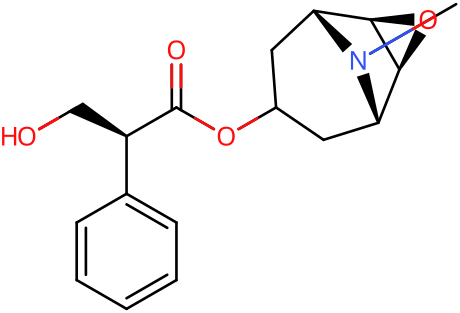
Scopolamine Stats & Data
STECJAGHUSJQJN-USLFZFAMSA-NPharmacology
DrugBankDescription
Scopolamine is a tropane alkaloid isolated from members of the _Solanaceae_ family of plants, similar to atropine and hyoscyamine, all of which structurally mimic the natural neurotransmitter acetylcholine. Scopolamine was first synthesized in 1959, but to date, synthesis remains less efficient than extracting scopolamine from plants. As an acetylcholine analogue, scopolamine can antagonize muscarinic acetylcholine receptors (mAChRs) in the central nervous system and throughout the body, inducing several therapeutic and adverse effects related to alteration of parasympathetic nervous system and cholinergic signalling. Due to its dose-dependent adverse effects, scopolamine was the first drug to be offered commercially as a transdermal delivery system, Scopoderm TTS®, in 1981. As a result of its anticholinergic effects, scopolamine is being investigated for diverse therapeutic applications; currently, it is approved for the prevention of nausea and vomiting associated with motion sickness and surgical procedures. Scopolamine was first approved by the FDA on December 31, 1979, and is currently available as both oral tablets and a transdermal delivery system.
Mechanism of Action
Acetylcholine (ACh) is a neurotransmitter that can signal through ligand-gated cation channels (nicotinic receptors) and G-protein-coupled muscarinic receptors (mAChRs). ACh signalling via mAChRs located in the central nervous system (CNS) and periphery can regulate smooth muscle contraction, glandular secretions, heart rate, and various neurological phenomena such as learning and memory. mAChRs can be divided into five subtypes, M1-M5, expressed at various levels throughout the brain. Also, M2 receptors are found in the heart and M3 receptors in smooth muscles, mediating effects apart from the direct modulation of the parasympathetic nervous system. While M1, M3, and M5 mAChRs primarily couple to Gq proteins to activate phospholipase C, M2 and M4 mainly couple to Gi/o proteins to inhibit adenylyl cyclase and modulate cellular ion flow. This system, in part, helps to control physiological responses such as nausea and vomiting. Scopolamine acts as a non-selective competitive inhibitor of M1-M5 mAChRs, albeit with weaker M5 inhibition; as such, scopolamine is an anticholinergic with various dose-dependent therapeutic and adverse effects. The exact mechanism(s) of action of scopolamine remains poorly understood.
Pharmacodynamics
Scopolamine is an anticholinergic belladonna alkaloid that, through competitive inhibition of muscarinic receptors, affects parasympathetic nervous system function and acts on smooth muscles that respond to acetylcholine but lack cholinergic innervation. Formulated as a patch, scopolamine is released continuously over three days and remains detectable in urine over a period of 108 hours. Scopolamine is contraindicated in angle-closure glaucoma and should be used with caution in patients with open-angle glaucoma due to scopolamine's ability to increase intraocular pressure. Also, scopolamine exhibits several neuropsychiatric effects: exacerbated psychosis, seizures, seizure-like, and other psychiatric reactions, and cognitive impairment; scopolamine may impair the ability of patients to operate machinery or motor vehicles, play underwater sports, or perform any other potentially hazardous activity. Women with severe preeclampsia should avoid scopolamine. Patients with gastrointestinal or urinary disorders should be monitored frequently for impairments, and scopolamine should be discontinued if these develop. Scopolamine can cause blurred vision if applied directly to the eye, and the transdermal patch should be removed before an MRI procedure to avoid skin burns. Due to its gastrointestinal effects, scopolamine can interfere with gastric secretion testing and should be discontinued at least 10 days before performing the test.
Metabolism
Little is known about the metabolism of scopolamine in humans, although many metabolites have been detected in animal studies. In general, scopolamine is primarily metabolized in the liver, and the primary metabolites are various glucuronide and sulphide conjugates. Although the enzymes responsible for scopolamine metabolism are unknown, _in vitro_ studies have demonstrated oxidative demethylation linked to CYP3A subfamily activity, and scopolamine pharmacokinetics were significantly altered by coadministration with grapefruit juice, suggesting that CYP3A4 is responsible for at least some of the oxidative demethylation.
Absorption
The pharmacokinetics of scopolamine differ substantially between different dosage routes. Oral administration of 0.5 mg scopolamine in healthy volunteers produced a Cmax of 0.54 ± 0.1 ng/mL, a tmax of 23.5 ± 8.2 min, and an AUC of 50.8 ± 1.76 ng\*min/mL; the absolute bioavailability is low at 13 ± 1%, presumably because of first-pass metabolism. By comparison, IV infusion of 0.5 mg scopolamine over 15 minutes resulted in a Cmax of 5.00 ± 0.43 ng/mL, a tmax of 5.0 min, and an AUC of 369.4 ± 2.2 ng\*min/mL. Other dose forms have also been tested. Subcutaneous administration of 0.4 mg scopolamine resulted in a Cmax of 3.27 ng/mL, a tmax of 14.6 min, and an AUC of 158.2 ng\*min/mL. Intramuscular administration of 0.5 scopolamine resulted in a Cmax of 0.96 ± 0.17 ng/mL, a tmax of 18.5 ± 4.7 min, and an AUC of 81.3 ± 11.2 ng\*min/mL. Absorption following intranasal administration was found to be rapid, whereby 0.4 mg of scopolamine resulted in a Cmax of 1.68 ± 0.23 ng/mL, a tmax of 2.2 ± 3 min, and an AUC of 167 ± 20 ng\*min/mL; intranasal scopolamine also had a higher bioavailability than that of oral scopolamine at 83 ± 10%. Due to dose-dependent adverse effects, the transdermal patch was developed to obtain therapeutic plasma concentrations over a longer period of time.
Indication
Scopolamine is indicated in adult patients for the prevention of nausea and vomiting associated with motion sickness and for the prevention of postoperative nausea and vomiting (PONV) associated with anesthesia or opiate analgesia.
Half-life
The half-life of scopolamine differs depending on the route. Intravenous, oral, and intramuscular administration have similar half-lives of 68.7 ± 1.0, 63.7 ± 1.3, and 69.1 ±8/0 min, respectively. The half-life is greater with subcutaneous administration at 213 min. Following removal of the transdermal patch system, scopolamine plasma concentrations decrease in a log-linear fashion with a half-life of 9.5 hours.
Protein Binding
Scopolamine may reversibly bind plasma proteins in humans. In rats, scopolamine exhibits relatively low plasma protein binding of 30 ± 10%.
Elimination
Following oral administration, approximately 2.6% of unchanged scopolamine is recovered in urine. Compared to this, using the transdermal patch system, less than 10% of the total dose, both as unchanged scopolamine and metabolites, is recovered in urine over 108 hours. Less than 5% of the total dose is recovered unchanged.
Volume of Distribution
The volume of distribution of scopolamine is not well characterized. IV infusion of 0.5 mg scopolamine over 15 minutes resulted in a volume of distribution of 141.3 ± 1.6 L.
Clearance
IV infusion of 0.5 mg scopolamine resulted in a clearance of 81.2 ± 1.55 L/h, while subcutaneous administration resulted in a lower clearance of 0.14-0.17 L/h.
Receptor Profile
Receptor Actions
Receptor Binding
History & Culture
Plants naturally containing scopolamine, including Atropa belladonna (deadly nightshade), Brugmansia (angel's trumpet), Datura (jimsonweed), Hyoscyamus niger, Mandragora officinarum, Scopolia carniolica, Latua, and Duboisia myoporoides, have been recognized and utilized for various purposes in both the New and Old Worlds since ancient times, and possibly since prehistory. Throughout history, these scopolamine-containing plants have been employed psychoactively for spiritual and magical purposes. In western culture, they were particularly associated with witchcraft, where preparations were made into topical ointments—most notably the legendary "flying ointment." In these entheogenic preparations, scopolamine was considered the primary psychoactive compound responsible for hallucinogenic effects. Indigenous groups throughout the Americas, including Native American tribes such as the Chumash, similarly employed these plants in their spiritual practices. Biblical texts contain multiple references to mandrake, a psychoactive and hallucinogenic plant root containing scopolamine. The plant was associated with fertility and sexual desire, featuring prominently in the story of Rachel, who sought the root while struggling with infertility.
1880–1960s
Scopolamine was officially isolated in 1880 by the German scientist Albert Ladenburg, making it one of the earlier alkaloids to be purified from plant sources. The compound was first described in scientific literature in 1881. Following its isolation, scopolamine became available in various purified salt forms, including hydrochloride, hydrobromide, hydroiodide, and sulfate preparations. Medical applications developed rapidly. In 1899, Dr. Schneiderlin recommended the combination of scopolamine and morphine for surgical anesthesia, and the practice began seeing sporadic use. The application to obstetric anesthesiology was first proposed by Richard von Steinbuchel in 1902. Carl Gauss at Freiburg, Germany took up this work beginning in 1903, developing and refining the technique. The method, which exploited the drug synergy between scopolamine and morphine, became known as "Dämmerschlaf" (twilight sleep) or the "Freiburg method." This approach remained widely used in the United States until the 1960s, when growing chemophobia and a cultural shift toward more natural childbirth led to its abandonment.
1944–present
Aboriginal peoples of the eastern Australian states had developed a traditional bush medicine from the soft corkwood tree (Duboisia myoporoides). This preparation was employed by the Allied forces during World War II to prevent seasickness among soldiers crossing the English Channel during the Invasion of Normandy. The substance was subsequently found to be useful in the production of both scopolamine and hyoscyamine, which found applications in eye surgery. This discovery led to the establishment of a multimillion-dollar pharmaceutical industry in Queensland based on the cultivation and processing of Duboisia.
1959–1981
Scopolamine was first synthesized in 1959, though extraction from plant sources has remained more efficient than synthesis to the present day. The compound received its first FDA approval on December 31, 1979, and is currently available in both oral tablet and transdermal formulations. Due to its dose-dependent adverse effects, scopolamine became the first drug to be commercially offered as a transdermal delivery system when Scopoderm TTS was introduced in 1981. This innovation in drug delivery helped manage the compound's side effect profile while maintaining therapeutic efficacy. The medication appears on the World Health Organization's List of Essential Medicines, and as of 2023, it ranked as the 69th most commonly prescribed medication in the United States with more than 9 million prescriptions annually.
1900s–present
The effects of scopolamine were investigated for potential use as a truth serum in interrogation settings during the early 20th century. However, these investigations were ultimately abandoned due to the compound's significant side effects, which compromised the reliability of any information obtained. Despite the formal discontinuation of such research, documented cases of governmental use have emerged. In 2009, evidence confirmed that the Czechoslovak state security secret police had employed scopolamine on at least three occasions to extract confessions from individuals accused of antistate dissent.
Powdered scopolamine has acquired the street name "devil's breath" and has become associated with criminal activity, particularly robbery and assault. The highest documented prevalence of misuse occurs in Colombia, where unofficial estimates suggest approximately 50,000 scopolamine-related incidents occur annually. A 2012 travel advisory issued by the U.S. Overseas Security Advisory Council warned travelers about the criminal use of scopolamine in Colombia, noting that the substance is most commonly administered to victims in liquid or powder form through contaminated foods and beverages. In popular media and television, scopolamine has been portrayed as a method to brainwash or control individuals, facilitating fraud and other crimes against incapacitated victims.
Subjective Effects
Physical
- Increased bodily weight: The first noticeable sensation is that of having an extremely heavy body, as if the gravity has been multiplied by a thousand. This makes it extremely difficult and uncomfortable to move.
- Spontaneous tactile sensations: Users commonly report all-encompassing, sharp and extremely painful jolts of electricity that spontaneously manifest themselves in a similar rhythm to hiccups.
- Difficulty urinating and Frequent urination: This can be described as a feeling of concrete blocking your urethra and painfully conflicts with a frequent need to urinate.
- Pupil dilation: Datura blocks receptors in the muscles of the eye that constrict pupil size. This can result in an extreme sensitivity to light which can last for weeks after the experience in certain cases. Prolonged usage is reputed to cause blindness.
- Muscle cramps
- Nausea
- Dizziness
- Restless leg syndrome
- Abnormal heartbeat
- Increased heart rate
Cognitive
- Depression
- Anxiety
- Paranoia
- Thought deceleration
- Emotion suppression
- Information processing suppression
- Amnesia
- Language suppression
- Time distortion
- Paranoia
- Dream potentiation
- Delineation of thought
Sensory
- Suppression
- Hallucinations
As for visual distortions and alterations, effects experienced are detailed below:
- Drifting: (melting, breathing, morphing and flowing) - In comparison to other hallucinogens, this effect can be described as intricate in complexity, jittery, slow and rigid in motion, static in their permanence, realistic in believability, and interactive in plasticity
- Visual haze
- After images
The effects of Datura are extremely efficient at inducing delirious hallucinations which can be broken into the two categories described below:
- External hallucinations: ([Effect::Autonomous entities]], Settings, sceneries, and landscapes, Alterations in perspective and Scenarios and plots) - In comparison to other classes of hallucinogen, this effect occurs more frequently than that of any other at moderate to heavy dosages and is the defining feature of the experience. It can be comprehensively described through its variations as delirious in believability, autonomous in controllability and solid in style. The most common themes for these hallucinations include those of both everyday occurrences such as smoking phantom cigarettes, talking to people who are not there, insects and sinister, nightmarish experiences.
- Internal hallucinations: (Autonomous entities, Settings, sceneries, and landscapes, Alterations in perspective and Scenarios and plots) - In comparison to other classes of hallucinogen, this effect occurs briefly and spontaneously at moderate dosages but becomes progressively extended in its occurrence and duration proportional to dosage before eventually becoming all encompassing. It can be comprehensively described through its variations as delirious in believability, interactive in style, equal in new experiences and memory replays in content, autonomous in controllability and solid in style.
- Shadow people
- Unspeakable horrors
Datura does not enhance visual stimuli in the way that psychedelics do; instead they tend to degrade and decrease visual aptitude both increasing hallucination and degrading vision. These components are detailed below:
- Visual acuity suppression: This effect can result in blurry vision to the point of blindness, sometimes lasting for days after the trip itself.
- Pattern recognition suppression
- Vibrating vision
Forked from Subjective Effect Documentation work by Josie Kins, April 2015. Via dose.wiki (CC0).
Datura is known to be extremely unpredictable and has the potential to result in severe consequences, hospitalization or death. The toxicity and long-term health effects of regular datura usage do not seem to have been studied in any scientific context and the exact toxic dosage is unknown. This is because long-term datura usage is very rare and the vast majority of people who try it do not desire to repeat the experience. In traditional cultures, a great deal of experience with and detailed knowledge of datura was critical to minimize harm. Many fatal incidents result from modern users ingesting datura.
Liver injury risk
No documented concern
Toxicity (DrugBank)
Scopolamine overdose may manifest as lethargy, somnolence, coma, confusion, agitation, hallucinations, convulsion, visual disturbance, dry flushed skin, dry mouth, decreased bowel sounds, urinary retention, tachycardia, hypertension, and supraventricular arrhythmias. In some cases, overdose symptoms may appear similar to those associated with withdrawal following discontinuation. However, withdrawal symptoms such as bradycardia, headache, nausea, abdominal cramps, and sweating can help to distinguish between these possibilities. Overdose management primarily involves the removal of all transdermal patch systems combined with symptomatic and supportive care. Ensuring an adequate airway, supplemental oxygen, establishing intravenous access, and continuous monitoring are recommended. In cases where patients have swallowed one or more patch systems, it may be necessary to remove them or administer activated charcoal. Animal studies revealed an oral LD50 of 1880 mg/kg in mice and 1270 mg/kg in rats, and a subcutaneous LD50 of 1650 mg/kg in mice and 296 mg/kg in rats.
Effect Profile
Curated + 12 ReportsStrong visuals and auditory effects with mild body load and headspace
Tolerance & Pharmacokinetics
drugs.wikiTolerance Decay
Cross-Tolerances
Experience Report Analysis
ErowidDemographics
Gender Distribution
Too few reports for a chart: gender is known from 17 reports, and a split is drawn only from 20 reports or more. Counts are shown instead. Why 20?
- Male 15 of 17
- Female 2 of 17
Age Distribution
Reports Over Time
Effect Analysis
ErowidEffects aggregated from 12 experience reports (12 single-substance Erowid)
Effect Sentiment Distribution
Confidence Distribution
Each bar is the share of reports mentioning the effect; its whisker, and the band on the rows below, is the 95% interval: where the share could plausibly be with other reports of the same kind.
Too few reports for bars: these effects come from 12 single-substance Erowid reports, and a bar is drawn only from 20 reports or more. With fewer, a percentage cannot tell a common effect from a rare one. Counts are shown instead. Why 20?
Positive Effects 2
Adverse Effects 4
Show 3 neutral or unclassified mentions
Also reported in combinations. In the 5 Scopolamine reports where another drug was taken too, 1 mentions hospital, emergency services or an overdose, 0 a seizure and 0 psychosis (too few reports for percentages). In the 12 single-substance reports: 3, 0 and 0. These are not in the figures above: they cannot be put down to Scopolamine alone, and a mention is not always something that happened to the writer.
Real-World Dose Distribution
ErowidFrom 11 of 18 recorded dose entries: those that state a weight (mg, g or µg), in routes with at least five of them. Values above Q3 + 3×IQR, far above what people typically take, are left out; they can include real heavy doses and overdoses, not only mistakes.
Oral (n=11)
Form / Preparation
Most common forms and preparations, as a share of the 12 reports that give one
Too few reports for bars: these forms come from 12 reports, and a bar is drawn only from 20 reports or more. With fewer, a percentage cannot tell a common effect from a rare one. Counts are shown instead. Why 20?
- Pill / Tablet 5 of 12
- Patch 4 of 12
- Liquid 2 of 12
Redose Patterns
Redosing behavior across 12 reports
Too few reports for a chart: redosing is known from 12 reports, and a split is drawn only from 20 reports or more. Counts are shown instead. Why 20?
- Single dose 10 of 12
- Redosed 2 of 12
Legal Status
| Country | Status | Notes |
|---|---|---|
| Canada | Prescription medication | Available as a prescription pharmaceutical product. Injectable formulations marketed for intramuscular, intravenous, and subcutaneous administration. |
| Singapore | Over-the-counter availability | Transdermal therapeutic system available as an over-the-counter product without prescription requirement. |
| United States | FDA-approved prescription medication | Approved by the FDA on December 31, 1979 for prevention of nausea and vomiting associated with motion sickness and surgical procedures. Available as prescription tablets, injections, and transdermal patches. Some transdermal formulations are marketed as over-the-counter products. |
References
Cited References
- Erowid: Anticholinergic Smoking Cessation Therapy
- Erowid: Scopolamine Vault
- FDA - Transdermal Scopolamine Label
- NIST Chemistry WebBook - Scopolamine
- PsychonautWiki: Datura (Scopolamine)
- StatPearls - Scopolamine
- TripSit: Wiki - Scopolamine
- PubChem: Scopolamine
- Erowid Vaults: Scopolamine Basics
- Schmidt, P. “Transdermal Scopolamine: Pharmacology & Clinical Applications.” Am J Med Sci, 1985.