
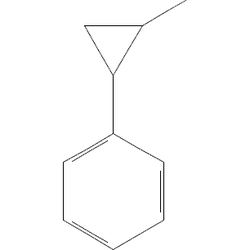
Tranylcypromine Stats & Data
AELCINSCMGFISI-UHFFFAOYSA-NPharmacology
DrugBankDescription
A propylamine formed from the cyclization of the side chain of amphetamine. This monoamine oxidase inhibitor is effective in the treatment of major depression, dysthymic disorder, and atypical depression. It also is useful in panic and phobic disorders (From AMA Drug Evaluations Annual, 1994, p311). Tranylcypromine is a racemate comprising equal amounts of (1R,2S)- and (1S,2R)-2-phenylcyclopropan-1-amine with the chiral centers both located on the cylopropane ring. An irreversible monoamine oxidase inhibitor that is used as an antidepressant (INN tranylcypromine).
Mechanism of Action
Tranylcypromine irreversibly and nonselectively inhibits monoamine oxidase (MAO). Within neurons, MAO appears to regulate the levels of monoamines released upon synaptic firing. Since depression is associated with low levels of monoamines, the inhibition of MAO serves to ease depressive symptoms, as this results in an increase in the concentrations of these amines within the CNS.
Pharmacodynamics
Tranylcypromine belongs to a class of antidepressants called monoamine oxidase inhibitors (MAOIs). Tranylcypromine is a non-hydrazine monoamine oxidase inhibitor with a rapid onset of activity. MAO is an enzyme that catalyzes the oxidative deamination of a number of amines, including serotonin, norepinephrine, epinephrine, and dopamine. Two isoforms of MAO, A and B, are found in the body. MAO-A is mainly found within cells located in the periphery and catalyzes the breakdown of serotonin, norepinephrine, epinephrine, dopamine and tyramine. MAO-B acts on phenylethylamine, norepinephrine, epinephrine, dopamine and tyramine, is localized extracellularly and is found predominantly in the brain. While the mechanism of MAOIs is still unclear, it is thought that they act by increasing free serotonin and norepinephrine concentrations and/or by altering the concentrations of other amines in the CNS. It has been postulated that depression is caused by low levels of serotonin and/or norepinephrine and that increasing serotonergic and norepinephrinergic neurotransmission results in relief of depressive symptoms. MAO A inhibition is thought to be more relevant to antidepressant activity than MAO B inhibition. Selective MAO B inhibitors, such as selegiline, have no antidepressant effects.
Absorption
Interindividual variability in absorption. May be biphasic in some individuals. Peak plasma concentrations occur in one hour following oral administration with a secondary peak occurring within 2-3 hours. Biphasic absorption may represent different rates of absorption of the stereoisomers of the drug, though additional studies are required to confirm this.
Indication
For the treatment of major depressive episode without melancholia.
Half-life
1.5-3.2 hours in patients with normal renal and hepatic function
Measured Affinities
Guide to PHARMACOLOGYMeasured binding and functional data for tranylcypromine, curated by the IUPHAR/BPS Guide to PHARMACOLOGY. Each row cites the paper it came from. Lower concentrations mean tighter binding — a value in the sub-nanomolar range indicates a very potent interaction.
| Target | Action | Measure | Value | Concentration | Species | Source |
|---|---|---|---|---|---|---|
| Monoamine oxidase B MAOB | Inhibition | pIC50 | 4.72 | 19,055 nM | Human | PMID 15110846 |
| Monoamine oxidase A MAOA | Inhibition | pIC50 | 4.7 | 19,953 nM | Human | PMID 15110846 |
| lysine demethylase 1A KDM1A | Inhibition | pIC50 | 4.4 | 39,811 nM | Human | PMID 23386436 |
| CYP8A1 PTGIS | Inhibition | - | — | — | Human | PMID 824685 |
Reading this. pKi, pEC50 and pIC50 are negative log molar values, so a higher number means a tighter interaction; the concentration column converts them for you. Values from non-human species are laboratory measurements and do not translate directly to human effect. Receptor affinity is not a dose — it describes what a molecule binds, not how much of it is safe to take.
Receptor data from the IUPHAR/BPS Guide to PHARMACOLOGY (v2026.2), licensed CC BY-SA 4.0. Matched to this substance by InChIKey.
Signs and Symptoms of Overdose Toxic doses of this medication are possible if the dosage exceeds 60 mg/d; the lethal dose is 75 mg/kg. There have been 20 acute overdoses and 10 fatalities recorded from tranylcypromine. Management of Overdose
Carcinogenicity
No indication of carcinogenicity to humans (not listed by IARC).
Toxicity (DrugBank)
In overdosage, some patients exhibit insomnia, restlessness and anxiety, progressing in severe cases to agitation, mental confusion and incoherence. Hypotension, dizziness, weakness and drowsiness may occur, progressing in severe cases to extreme dizziness and shock. A few patients have displayed hypertension with severe headache and other symptoms. Rare instances have been reported in which hypertension was accompanied by twitching or myoclonic fibrillation of skeletal muscles with hyperpyrexia, sometimes progressing to generalized rigidity and coma.
Health effects (PubChem excerpts)
Rare cases have been reported of hypertensive crisis, serotonin syndrome, myoclonus, hyperpyrexia, psychosis, and delirium, some of which progressed to coma. Additionally, in sensitive individuals or at extreme dosages, hypotension may lead to shock. [Wikipedia]
Effect Profile
CuratedModerate stimulation and euphoria with moderate anxiety/jitters
Tolerance & Pharmacokinetics
drugs.wikiTolerance Decay
Classical recreational-style tolerance modeling is not applicable. Clinical “tolerance” to antidepressant effect may not develop; however, receptor adaptations and withdrawal phenomena can occur with abrupt cessation. Cross‑tolerance applies pharmacodynamically to other irreversible MAOIs (phenelzine, isocarboxazid).
Experience Report Analysis
ErowidDemographics
Gender Distribution
Too few reports for a chart: gender is known from 2 reports, and a split is drawn only from 20 reports or more. Counts are shown instead. Why 20?
- Male 2 of 2
Age Distribution
Reports Over Time
Harm Reduction
drugs.wikiIrreversible MAOI: although the parent drug’s plasma half-life is ~1.5–3.2 hours, enzyme inhibition persists until new MAO is synthesized, so interaction risks remain for at least 14 days after stopping (and often 10–21 days). Maintain a 14‑day washout when switching to or from serotonergic antidepressants; extend to 5 weeks after fluoxetine due to its long half-life. Hypertensive crisis (“cheese reaction”) can occur from dietary tyramine or sympathomimetic drugs; earliest sign is often a severe occipital headache, and can progress to chest pain, palpitations, shortness of breath, confusion, and seizures — seek emergency care immediately. Serotonin syndrome risk is high if combined with serotonergic medicines (e.g., SSRIs/SNRIs, clomipramine, MDMA, tramadol, DXM, linezolid, methylene blue); symptoms include agitation, hyperreflexia, clonus, fever, diaphoresis, diarrhea — urgent evaluation is required. Avoid OTC cold/cough products that contain dextromethorphan or decongestants (pseudoephedrine, phenylephrine); many carry a label warning against use within 14 days of an MAOI. Follow a low‑tyramine diet throughout therapy and for 2 weeks after stopping; avoid aged cheeses, cured/fermented meats, soy sauce/miso/yeast extracts, fava beans, and tap/draft beers; packaged spirits in modest amounts still require caution for hypotension/CNS effects. For planned surgery or dental procedures, inform anesthesia providers; some agents (e.g., meperidine, serotonergic antiemetics) are contraindicated, and perioperative plans may need adjustment. Tranylcypromine has a stimulant-like profile and can cause insomnia and orthostatic hypotension; dosing earlier in the day and dividing doses may reduce insomnia and BP swings. Rare hepatotoxicity has been reported; baseline and periodic liver function and blood pressure monitoring are prudent in clinical use. Carry an MAOI alert card/bracelet listing key contraindications (meperidine, DXM, serotonergic antidepressants, sympathomimetics) so emergency staff can avoid dangerous drugs.
References
Cited references
- StatPearls: Tranylcypromine (updated Jan 19, 2025) – dosing, contraindications, diet, washout windows, hypertensive crisis & serotonin syndrome
- DrugBank DB00752 – pharmacokinetics and food interactions (tyramine foods, alcohol caution)
- StatPearls: MAO Inhibitors – adverse effects (cheese reaction), serotonergic toxicity overview
- StatPearls: Dextromethorphan Toxicity – serotonin syndrome risk with MAOIs/DXM
- TripSit Wiki/Combination resources – MAOI combinations cautionary context
- Bluelight: List of Dangerous & Potentially Unsafe Combinations – community HR consensus on MAOIs with serotonergic/stimulant agents
- Drugs-Forum Wiki: Monoamine Oxidase Inhibitors – hypertensive crisis & serotonin syndrome explanations