
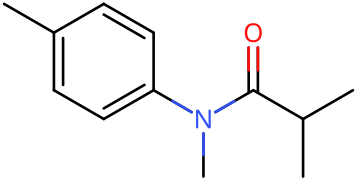
2-NMC Stats & Data
CC1=CC=C(C=C1)N(C)C(=O)C(C)CGYXHTKZVPMDHQT-UHFFFAOYSA-NReceptor Profile
Receptor Actions
Effect Profile
CuratedMild stimulation with low empathy, euphoria, and sensory enhancement
Mild euphoria with strong anxiety/jitters, low stimulation
Tolerance & Pharmacokinetics
drugs.wikiTolerance Decay
Based on stimulant cross‑tolerance heuristics and user reports; frequent redosing within a day rapidly diminishes effects. Allow at least 1–2 weeks between sessions for baseline sensitivity to return.
Cross-Tolerances
Harm Reduction
drugs.wiki• Synthetic cathinones are often mis‑sold or used to adulterate other stimulants; EUDA explicitly notes mis‑selling of cathinones as amphetamine/MDMA/cocaine. Use multi‑reagent testing and—ideally—laboratory drug checking to confirm identity and detect adulterants.
• Virtually no controlled pharmacology on 2‑NMC; harm profile inferred from close analogues (e.g., mephedrone, 3‑MMC) and user reports. Expect dopamine/noradrenaline transporter inhibition > serotonin, implying euphoria with significant cardiovascular strain.
• Hyperthermia, dehydration, and hyponatraemia are documented risks with empathogenic cathinones; prefer small, regular sips of isotonic fluids and salty snacks rather than excessive water. Take cool‑down breaks away from heat and vigorous activity.
• Repeated or high cumulative dosing increases vasoconstriction risk (cold/blue extremities), blood pressure elevation, and chest discomfort; seek medical care for chest pain, confusion, or overheating.
• Nasal use causes notable mucosal irritation for many cathinones; oral dosing is less locally damaging and often smoother. If snorting, use tiny lines and saline rinse afterward.
• Vaporizing unknown powders increases exposure to irritating/unknown pyrolysis products and can drive compulsive redosing; avoid when possible.
• Compulsive redosing and sleep loss markedly amplify anxiety, paranoia and psychosis risk; set a firm session cap, stop redosing at least 6–8 h before planned sleep, and prioritize recovery nutrition, electrolytes, and sleep hygiene.
• Because mislabeling of “3‑MMC/4‑MMC” as other cathinones is common in current markets, do not assume subjective effects confirm identity—lab results regularly reveal substitutions (e.g., 2‑MMC, 3‑CMC, dipentylone).
References
Data Sources
Cited References
- Adamowicz P. et al. Identification of 2-(methylamino)-1-(naphthalen-2-yl)propan-1-one in seized material
- Botanas CJ et al. A novel synthetic cathinone, 2-(methylamino)-1-(naphthalen-2-yl)propan-1-one (BMAPN), produced rewarding effects and altered striatal dopamine-related gene expression in mice
- EMCDDA: Cathinones Drug Profile
- EMCDDA: Europol Early-Warning System. Risk Assessment of New Cathinones (2017)
- Katselou M. et al. A review on the toxicology of cathinones
- Krotulski AJ, Mohr A. et al. Emerging cathinones in forensic casework: observational data 2013-2020
- Adamowicz P. et al. Identification of 2-(methylamino)-1-(naphthalen-2-yl)propan-1-one in seized material
- Katselou M. et al. A review on the toxicology of cathinones
- Krotulski AJ, Mohr A. et al. Emerging cathinones in forensic casework: observational data 2013-2020
- EMCDDA: Cathinones En
Additional references
- EMCDDA–Europol Early-Warning System. Risk Assessment/Trend material on new cathinones (background on 2‑NMC and the class)
- EU Drug Market 2024/2025: Synthetic cathinones are often mis‑sold as controlled stimulants
- Erowid Mephedrone Health page: vasoconstriction, hyponatraemia, stimulant combination cautions
- TripSit combo guidance (general MAOI/serotonergic/stimulant cautions)
- Toronto Drug Checking Service: purpose, value, and tips for reducing harm with checking
- Erowid Research Chemicals FAQ: mislabeling/unknown-content risks in the grey market
- Reddit r/researchchemicals threads documenting current mis‑selling of “3‑MMC” as other cathinones (2‑MMC, 3‑CMC, dipentylone)
- Reddit r/researchchemicals: additional mislabel examples and lab confirmations
- Isomer Design: indexing and nomenclature references for cathinones incl. 2‑NMC
- Adamowicz P. et al. Identification of 2-(methylamino)-1-(naphthalen-2-yl)propan-1-one in seized material
- Katselou M. et al. Toxicology of synthetic cathinones (class risks)
- Krotulski AJ, Mohr A. et al. Emerging cathinones in forensic casework