
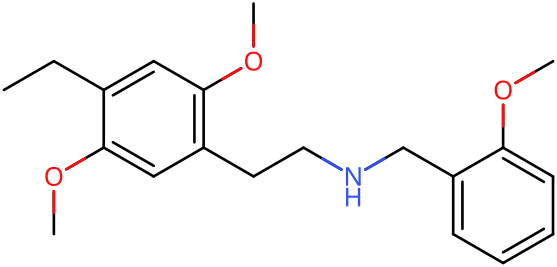
25E-NBOMe Stats & Data
COc1ccccc1CNCCc1cc(OC)c(CC)cc1OCPXDVGFGXPVCNAB-UHFFFAOYSA-NHistory & Culture
25E-NBOMe first appeared in scientific literature around 2012, emerging as part of the broader NBOMe series of substituted phenethylamines. This class of compounds, which includes related substances such as 25I-NBOMe and 25C-NBOMe, gained attention during this period as novel psychoactive substances. Following its initial scientific documentation, 25E-NBOMe subsequently appeared on the recreational drug market alongside other members of this chemical family.
Effect Profile
Curated + 1 ReportsMild visuals with moderate body load, low headspace
Tolerance & Pharmacokinetics
drugs.wikiTolerance Decay
Cross-Tolerances
Experience Report Analysis
ErowidDemographics
Gender Distribution
Too few reports for a chart: gender is known from 3 reports, and a split is drawn only from 20 reports or more. Counts are shown instead. Why 20?
- Male 3 of 3
Age Distribution
Reports Over Time
Form / Preparation
Most common forms and preparations, as a share of the 3 reports that give one
Too few reports for bars: these forms come from 3 reports, and a bar is drawn only from 20 reports or more. With fewer, a percentage cannot tell a common effect from a rare one. Counts are shown instead. Why 20?
- Liquid 2 of 3
Legal Status
| Country | Status | Notes |
|---|---|---|
| Sweden | Narcotic substance | Classified as a narcotic substance by Sweden's public health agency on January 18, 2019. This classification places it under the same regulatory framework as other controlled narcotics in Swedish law. |
| United Kingdom | Class A | Controlled under the Misuse of Drugs Act 1971 through the N-benzylphenethylamine catch-all clause. Class A substances carry the most severe penalties, with possession punishable by up to 7 years imprisonment and supply offenses carrying maximum life sentences. |