
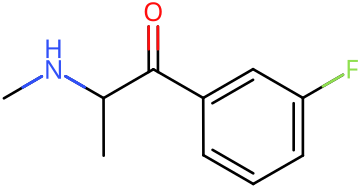
3-FMC Stats & Data
CNC(C)C(=O)c1cccc(F)c1PQIBROLLUQSNQI-UHFFFAOYSA-NReceptor Profile
Receptor Actions
History & Culture
3-Fluoromethcathinone emerged as part of the wave of novel cathinone designer drugs sold online, appearing alongside numerous other synthetic cathinones marketed as alternatives to controlled stimulants. As a structural isomer of flephedrone (4-fluoromethcathinone), it belongs to a family of fluorinated methcathinone derivatives that were developed and distributed primarily through online research chemical vendors. The compound is structurally related to mephedrone, sharing the core cathinone scaffold while differing in the position of the fluorine substituent on the phenyl ring. Limited documentation exists regarding the specific origins, initial synthesis, or timeline of 3-FMC's appearance on the designer drug market. Like many novel psychoactive substances of the cathinone class, it appears to have been introduced without formal pharmacological characterization, with most available information derived from user reports and subsequent analytical identification by forensic laboratories.
Effect Profile
CuratedModerate stimulation with mild euphoria, sensory enhancement, and empathy
Moderate euphoria with strong anxiety/jitters, mild stimulation and focus
Tolerance & Pharmacokinetics
drugs.wikiTolerance Decay
Cathinone stimulants often exhibit rapid within‑session tolerance with partial recovery over 1–2 weeks and nearer‑baseline by 4–6 weeks; values are heuristic from community reports and analogous agents, not formal PK/PD data.
Cross-Tolerances
Legal Status
| Country | Status | Notes |
|---|---|---|
| Czech Republic | Banned | Prohibited substance under national drug legislation. Possession, production, and distribution are illegal. |
| Germany | Anlage II BtMG | Listed in Anlage II of the Betäubungsmittelgesetz (Narcotics Act). Unlike Anlage I substances, Anlage II compounds are marketable but require prescription and are subject to strict regulatory controls. |
| United Kingdom | Class B | Controlled under the cathinone blanket ban implemented through the Misuse of Drugs Act 1971. All substituted cathinones were classified as Class B substances in 2010. |
| United States | Schedule I | Classified as a Schedule I controlled substance under federal law. Considered to have high abuse potential with no accepted medical use. Possession, distribution, and manufacturing are prohibited. |
Harm Reduction
drugs.wiki• Identity/Isomer confusion: 3-FMC (meta‑fluoro) is distinct from 4‑FMC (flephedrone); vendors and user reports have historically mixed these—obtain analytical confirmation where possible. • Severe market mislabeling across cathinones is currently common; drug-checking services have repeatedly found 3‑MMC samples to contain more potent stimulants like NEP or α‑PVP—start with an allergy test dose and get products checked. • Very caustic to nasal mucosa: user reports consistently describe intense burn and lingering rhinitis; rotate nostrils, finely crush, consider oral ROA to reduce damage. • Cardiovascular strain (tachycardia, hypertension) and peripheral vasoconstriction can occur; avoid overheating, heavy exertion, and hot environments; take cooling breaks and monitor for chest pain or cold, numb extremities. • Hydration: sip small amounts of water with electrolytes; avoid both dehydration and overhydration. • Sleep deprivation and redosing escalate risk for panic, paranoia, compulsive behavior; pre‑plan a hard stop time and secure sleep support (non‑alcoholic). • Avoid stacking with other serotonergic agents (especially MAOIs and tramadol); if on prescription antidepressants, expect blunted effects and increased unpredictability. • Use an accurate milligram scale; do not eyeball powders. • Rectal/IV routes can magnify potency/risks; avoid injecting RC stimulants due to unknown impurities and high harm profile. • Space sessions widely (minimum several weeks) to allow mood/monoamines to recover and to reduce reinforcement.
References
Data Sources
Cited References
- Bluelight: 3-Fluoromethcathinone (3-FMC) Discussion
- ChemSpider: 3-Fluoromethcathinone Structure
- Siedlecka-Kroplewska et al. (2018) - 3-FMC Induces Oxidative Stress and Autophagy
- Wojcieszak et al. (2018) - Methcathinone and 3-FMC Elevate Dopamine and Serotonin
- Bluelight Megathread: (3-FMC) user experience & dosing reports
- PsychonautWiki: 3 FMC
Additional references
- PubChem – 3′-Fluoromethcathinone (compound identity, synonyms)
- Drugs‑Forum – 3‑FMC experiences (doses, onset, duration, nasal burn)
- Bluelight – 3‑FMC discussion incl. EMCDDA early warning excerpt and CAS 1049677‑77‑1
- Drugs‑Forum Wiki – 3‑FMC (basic chem data; reagent reactions; adverse effect list)
- TripSit – Drug combinations guide (general interaction framework used by HR orgs)
- Saferparty (Zurich Drug Checking) – frequent mislabeling of cathinones (3‑MMC sold as other potent stims)
- EU Drugs Agency (EUDA/EMCDDA) – synthetic cathinones market harms and acute toxicity presentations
- Effect Index – Compulsive redosing (reinforcement risk with short-acting stimulants)