
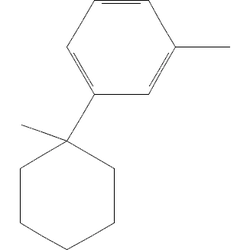
3-Me-PCPy Stats & Data
JZVMREFYFTZXGN-UHFFFAOYSA-NReceptor Profile
Receptor Actions
History & Culture
3-Me-PCPy is a synthetic arylcyclohexylamine that has emerged as a novel psychoactive substance on the research chemical market. As a structural isomer of phencyclidine, it belongs to the broader family of dissociative compounds that have been systematically explored for their pharmacological properties. The substance has attracted attention from the research chemical community due to its unusual pharmacological profile, combining potent NMDA receptor antagonism with triple monoamine reuptake inhibition—a combination that produces both dissociative and stimulant effects. This dual activity profile distinguishes it from many other arylcyclohexylamines and has generated discussion among online harm reduction communities.
Effect Profile
Curated + 3 ReportsStrong dissociative depth with strong mania and motor impairment
Moderate euphoria with low stimulation and anxiety/jitters
Duration Timeline
BluelightCommunity Effects
TripSitTolerance & Pharmacokinetics
drugs.wikiTolerance Decay
Anecdotal dissociative tolerance builds within 1–2 days of repeated exposure and decays over about 1–2 weeks; stimulant-like tolerance may build/resolve faster. Data derived from user reports of ACHs; no controlled studies.
Cross-Tolerances
Experience Report Analysis
ErowidDemographics
Gender Distribution
Too few reports for a chart: gender is known from 4 reports, and a split is drawn only from 20 reports or more. Counts are shown instead. Why 20?
- Male 3 of 4
- Not Specified 1 of 4
Age Distribution
Reports Over Time
Effect Analysis
ErowidEffects aggregated from 3 experience reports (3 single-substance Erowid)
Effect Sentiment Distribution
Confidence Distribution
Each bar is the share of reports mentioning the effect; its whisker, and the band on the rows below, is the 95% interval: where the share could plausibly be with other reports of the same kind.
Too few reports for bars: these effects come from 3 single-substance Erowid reports, and a bar is drawn only from 20 reports or more. With fewer, a percentage cannot tell a common effect from a rare one. Counts are shown instead. Why 20?
Positive Effects 2
Adverse Effects 0
Show 1 neutral or unclassified mention
Also reported in combinations. In the 1 3-Me-PCPy report where another drug was taken too, 0 mention hospital, emergency services or an overdose, 0 a seizure and 1 psychosis (too few reports for percentages). In the 3 single-substance reports: 0, 0 and 1. These are not in the figures above: they cannot be put down to 3-Me-PCPy alone, and a mention is not always something that happened to the writer.
Real-World Dose Distribution
ErowidFrom 21 of 21 recorded dose entries: those that state a weight (mg, g or µg), in routes with at least five of them. Values above Q3 + 3×IQR, far above what people typically take, are left out; they can include real heavy doses and overdoses, not only mistakes.
Insufflated (n=10)
Rectal (n=10)
Form / Preparation
Most common forms and preparations, as a share of the 4 reports that give one
Too few reports for bars: these forms come from 4 reports, and a bar is drawn only from 20 reports or more. With fewer, a percentage cannot tell a common effect from a rare one. Counts are shown instead. Why 20?
- Powder / Crystals 2 of 4
Legal Status
| Country | Status | Notes |
|---|---|---|
| Australia | Controlled (analogue) | Covered under analogue provisions as an arylcyclohexylamine derivative and structural isomer of phencyclidine. Treated as equivalent to the controlled parent compound under Australian drug law. |
| Germany | Controlled (NpSG) | Covered under the Neue-psychoaktive-Stoffe-Gesetz (New Psychoactive Substances Act) as a generic arylcyclohexylamine derivative. The NpSG prohibits production and distribution but not personal possession. |
| Japan | Controlled (Designated Substance) | Controlled under designated substance legislation as a generic arylcyclohexylamine derivative and structural isomer of phencyclidine. Manufacture, import, and sale are prohibited. |
| United Kingdom | Controlled (analogue) | Covered under drug analogue laws as a generic arylcyclohexylamine derivative and structural isomer of phencyclidine. Likely controlled under the Psychoactive Substances Act 2016 which prohibits the production, supply, and importation of psychoactive substances. |
Harm Reduction
drugs.wikiInsufflation: Multiple user reports describe intense, short-lived burn with prolonged rawness and next-day epistaxis; mitigate by finely crushing, using your own clean tool, alternating nostrils, and performing isotonic saline rinses pre/post. Acute effects: rapid rush (especially intranasal), sensory tunneling, limb numbness/ataxia, manic sociability; peaks within ~40–60 minutes and often fades by 2–3 hours. Redosing: short plateaus encourage frequent bumps—plan a hard cap on total session dose and time; waiting at least 90–120 minutes reduces stacking and helps gauge peak. Functionality trap: stimulation can feel higher and headspace shallower than 3-MeO-PCP, giving a deceptive sense of control; risky decisions (urban wandering, social disinhibition) and bingeing are common themes in reports. Urinary health: as with ketamine/MXE-class ACHs, frequent/heavy use is associated with LUTS and sometimes severe bladder injury; space sessions widely, hydrate moderately, and stop if any urinary pain, urgency, or hematuria appear. Combinations: avoid depressants (alcohol, GHB, opioids) due to aspiration/unconsciousness risk; avoid MAOIs and strong stimulants due to tachycardia/hypertension/mania potential; tramadol adds seizure and serotonergic risk. Mental health: dissociatives can precipitate paranoia/psychosis, especially with binges or sleep loss; avoid if you have a history of psychosis and ensure sleep after sessions. Driving: impairing even when you feel ‘functional’—do not drive or operate machinery until the next day and fully rested. Route-specific: rectal administration requires dilution and lubrication with gentle technique; avoid intravenous use (no documentation; unknown excipients). Equipment: use 0.001 g scales; never eyeball milligram quantities. Drug checking: mislabeling of ACHs is common—use reagent tests where available and prefer certified drug checking services to confirm identity/purity. Session hygiene: plan a sitter for higher doses; avoid eating heavy meals just before dosing to reduce nausea; have a calm, seated environment to reduce fall risk.
References
Data Sources
Cited References
- Asante – Bluelight Trip Report (5mg + 5mg rectal, Jun 2021)
- Bluelight: The Small & Handy 3-Me-PCPy Thread
- Erowid Experience: 'Low Dose Explorations' by Zirconium
- Erowid Experience: 'Revelers Fire' by Nervewing
- Erowid Experience: 'Taking Two for the Team' by Asante
- PsychonautWiki: 3-Me-PCPy
- Wallach J et al. Arylcyclohexylamines. In: New Psychoactive Substances (Maurer & Brandt, eds) 2019
- Bluelight: The Small Handy 3 Me Pcpy Thread.902963
Additional references
- Isomer Design chemical entry
- Bluelight - 3-Me-PCPy 20 mg intranasal trip report (burn, onset, duration)
- Bluelight - general ACH nasal causticity mentions (comparative)
- Reddit - recent 3-Me-PCPy nasal dosing timeline (urge to redose, stimulation)
- Erowid Ketamine Health page (depressant combinations, aspiration risk; bladder/LUTS)
- Erowid Ketamine FAQ (precautions; respiratory and aspiration risks; general safety)
- Erowid Ketamine Basics/Health mentions paranoia, bladder irritation with frequent use
- Erowid Ketamine: KLUTS (case series and severity of bladder injury)
- Erowid Ketamine Use & Health Micro-surveys (urinary problems prevalence rises with frequent use)
- TripSit Drug Combinations (alcohol/benzos/opioids with ketamine dangerous; MAOIs caution; stimulants with MXE raise HR/BP/mania)
- Hi‑Ground: Ketamine page (safer using; redose wait ≥2 h; bladder cautions)
- Hi‑Ground: Cathinones page (safer snorting tips applicable to powders)
- Drug Users Bible – ‘10 Commandments of Safer Drug Use’ (use 0.001 g scales; dose sensitivity)
- PubChem CID 137332188 (3-Methyl-PCPy)
- Saferparty.ch – DMXE mis-sold as MXE (illustrates mislabel risk among ACHs)
- EUDA Council Implementing Decision on Methoxetamine (MXE) (ACH risks incl. agitation, tachycardia, hypertension, psychosis; deaths reported)